


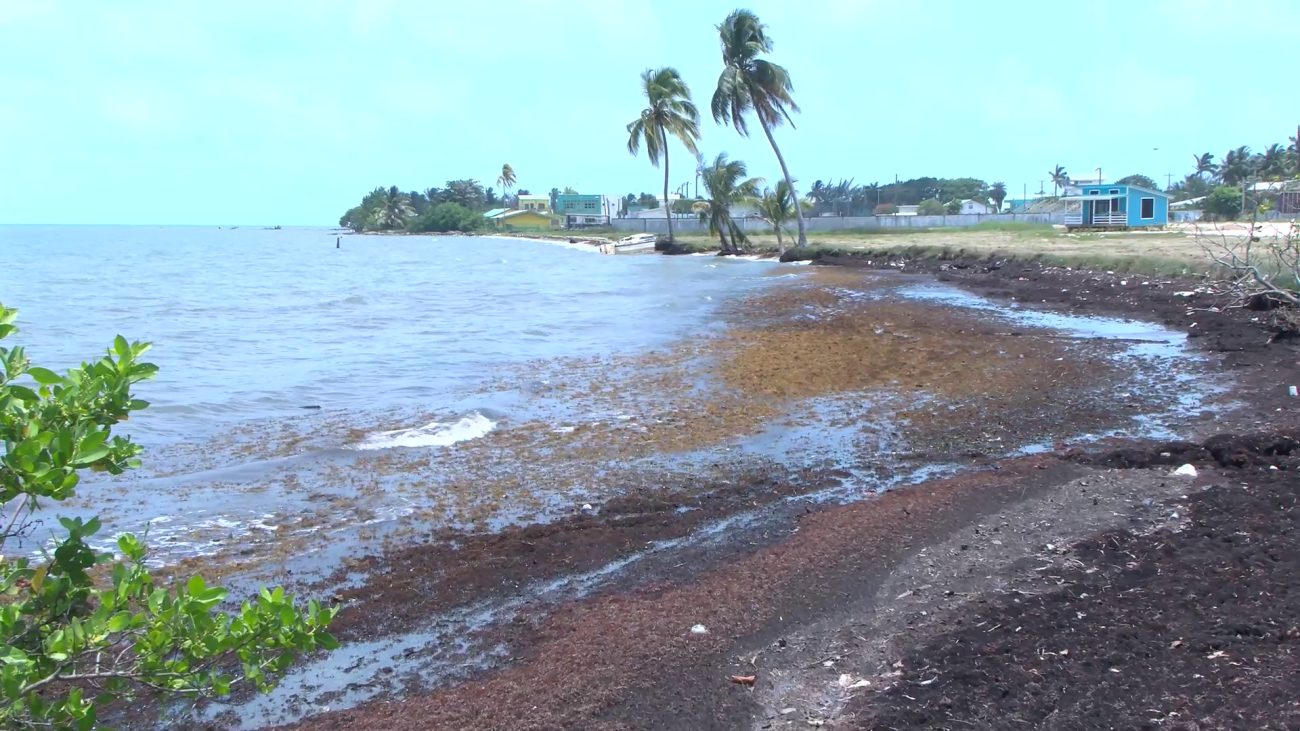
Coastal Erosion Crisis Drives Action in Dangriga
Along the shores of Dangriga, the effects of climate change are no longer a distant warning, they are already impacting daily life. For years, residents have watched the sea steadily claw away at the coastline, threatening beaches, livelihoods, and community spaces. That growing concern took center stage today with the official launch of a major coastal resilience project aimed at protecting vulnerable communities. Backed by international funding and government support, the initiative targets erosion hotspots in Dangriga, offering hope that the shoreline residents value can still be saved for future generations. Paul Lopez has the story.
 Paul Lopez, Reporting
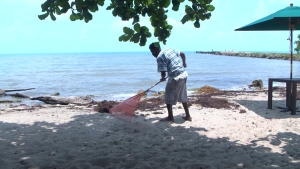
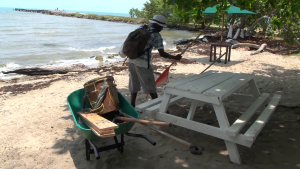
For years, Melvin Diego has had a front-row seat to a slow-moving threat, and he hasn’t just stood by. Long before the Coastal Project officially launched in Dangriga, he was already doing his part, clearing the shoreline near his home and watching the coastline steadily disappear. As the sea crept closer year after year, his quiet efforts became a personal fight to protect the place he calls home. The change is slow but it’s already transforming the seashore and the way people utilize it.
Melvin Diego
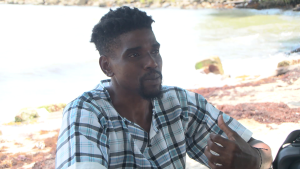
Melvin Diego, Resident, Dangriga
“For me, this use to be my gym, right where we are sitting around, my running gym because I love track and field and this is a place where I would train and become stronger. And I actually believe it has to do with the sand. I made a lot of gold medals. So, I was just thinking about it. While I see people still try to run on the beach, they have to dodge different areas, because the sea already come all the way in already.”
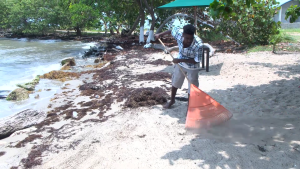
Diego was out from five a.m. today, cleaning up after residents who used the area to socialize last night before. He volunteers his time, doing it all for free whenever he can.
 Melvin Diego
“So it’s a sacred place for me and this is where I would come and take pictures of sunrise and rejuvenate while going through the ups and down in my entrepreneurial life. Dangriga is a place where there is a lot of breeze and the sea comes drastically hard. So it worries me that we are not going to have any beach, ten years, twenty-five years from now for our children.”
Those same concerns formed the backdrop for the launch of the Coastal Project, an initiative being spearheaded by the Protected Areas Conservation Trust, the Adaptation Fund and the Government of Belize. It’s aimed at strengthening the resilience of Belize’s coastal communities.
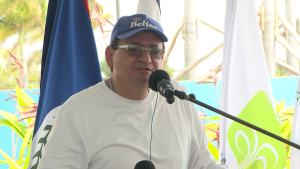
Louis Zabaneh
Dr. Louis Zabaneh, Area Representative, Dangriga
“Over the years we have seen the impact of climate change and the erosion of the beaches. Between the town pier and Pelican you will see a big carve out, a big U. Where the stones are on the pier, that is where the sand use to be. You will see a big carve out right to the point by social security by the ministry of education and all the way to commerce bight.”
 A four-million-dollar U.S. project is targeting twenty-seven coastal communities already feeling the effects of climate change. Leaders plan to boost coastal planning, strengthen monitoring, and roll out protections to slow the damage. In Dangriga, the focus is on safeguarding the northern shoreline.
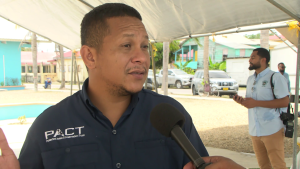
Eli Romero
Eli Romero, Climate Finance Manager, PACT
“The study that the Cubans did a couple years ago inform us that all the sand that has eroded along the beach is fright in front of Dangriga. So, it’s just a matter of relocating that sand back to the beach. We prioritized on the northern part, the community took that decision along with the municipality and it is focused a lot on the specific type of infrastructure that is along this northern part, there are schools, parks and other important community areas. So, this is where a majority of the intervention is going to focus.”
For Melvin Diego, today’s launch signals hope.
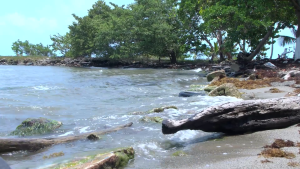 Melvin Diego
“The beach is for relaxing and people love to put their feet in the sand. And if the beach is eroded people don’t come to sit on the beach because it is eroded and there is a lot of water.”
In the end, the real test isn’t today’s ceremony, it’s whether the shoreline Melvin Diego has fought for will still be there for the next generation. Reporting for News Five, I am Paul Lopez.
Attention readers: This online newscast is a direct transcript of our evening television broadcast. When speakers use Kriol, we have carefully rendered their words using a standard spelling system.
Watch the full newscast here: