


Dean Barrow Challenges Appeal Court Ruling in Cats Caye Battle
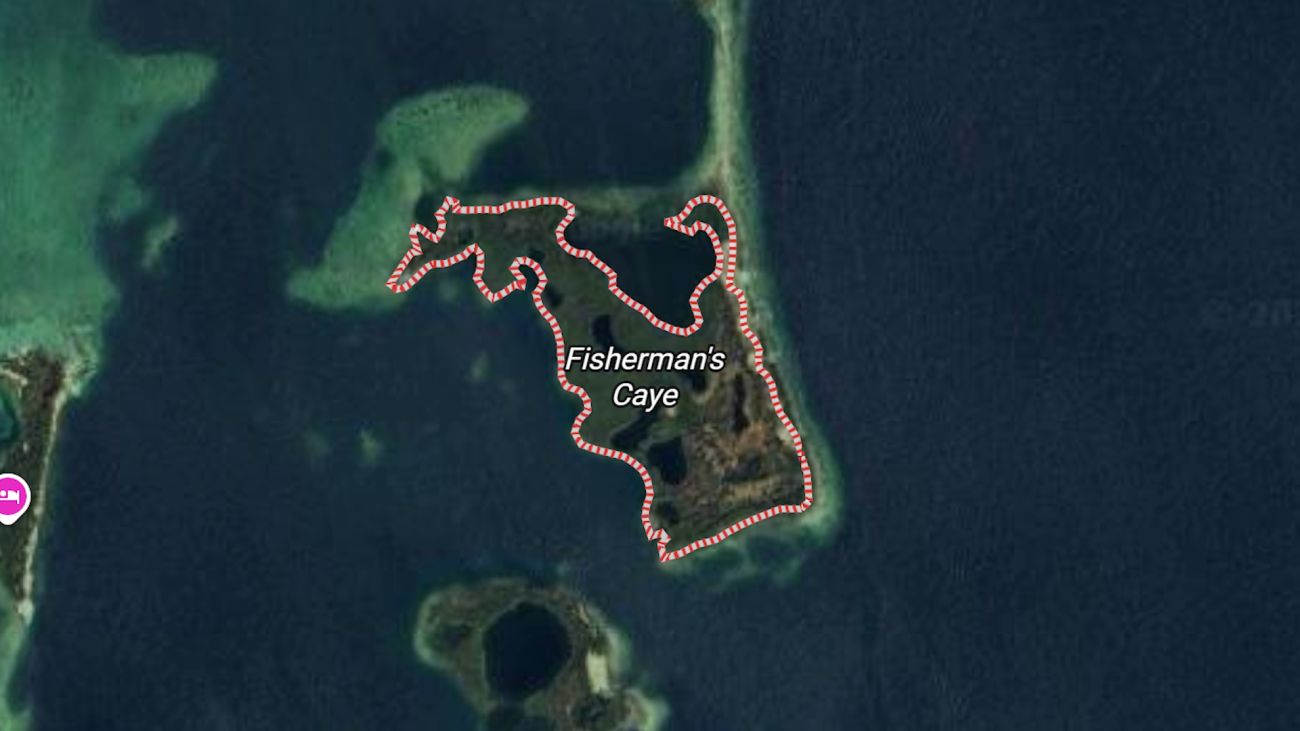
A disputed land deal at Fisherman’s Caye has now landed before the Caribbean Court of Justice, and the stakes are high. At issue is whether Rudolph Ramirez and Julius Zabaneh should receive millions of dollars in compensation for more than fourteen acres of prime island property, or simply get back the two thousand eight hundred seventy-eight dollars originally paid for the land. The dispute began after government issued a land grant to Ramirez in 2008, even though the property had already been transferred years earlier. The High Court awarded the claimants more than two million dollars, but the Court of Appeal overturned that decision and ruled that the grant was void. After hearing more than three hours of arguments, the CCJ has reserved judgment. Senior Counsel Dean Barrow, representing Ramirez and Zabaneh, argued that the Court of Appeal wrongly reopened questions of liability after judgment had already been entered against government. Here’s what he had to say.
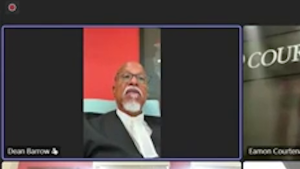
Dean Barrow
Dean Barrow, SC, Attorney-at-Law
“That notice of intention to vary, cross appeal in short, challenged the award of the two million and odd made by the trial judge on several grounds. One of those is the contract made between the claimant, the defendants, the appellants and the respondents was a nullity and that the court at first instance was therefore wrong to have made judgment and was wrong to have made the liability order. The judgment was entered after the claimants made an application to strike the defense on the basis that it was wholly defective, that it did not disclose any proper case. And what is important, sightly peculiar feature of all of this is that the respondents, the defendants in this instance, agreed with the application to strike. The way the judges strike out order framed it is that hearing Mr. Lindo, who was appearing then for the claimants and then being no objection from Ms. Matute, who was appearing then for the defendants, the court would proceed to make the order and enter judgement, Now the strike out application succeeded.”
 Was Government Liable for an Impossible Land Deal?
On the other side of the argument, government says this is not a case where taxpayers should be on the hook for millions of dollars. Senior Counsel Eamon Courtenay told the CCJ that the land in question had already been granted to another party, meaning government had nothing legal to pass on to Ramirez and Zabaneh. He argued that Ramirez knew that, still accepted a second grant, and is now trying to collect damages from a transaction that was flawed from the start. Courtenay says even government’s rectification notice shows the grant was issued by mistake.
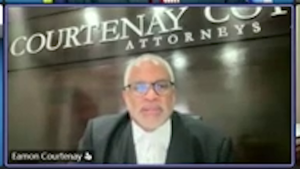
Eamon Courtenay
Eamon Courtenay, SC, Attorney-at-law
“It is impossible for the government to grant title to land that it does not own an on the pleadings, which was the only thing before the court, what the claimants said was that I found that out, I knew it, I told the government and the government gave me a second grant for the same piece of land which it did not own and I am now coming to ask the court for a remedy. The rectification reads your honor, fiat grant 204 of 2008 was erroneously issued to Rudolph Ramirez. So the minister is saying I gave you a title in error.”
Following more than three hours of submissions, the CCJ reserved its decision, with a judgment date yet to be announced. Here’s what Barrow had to say following the hearing.
Attention readers: This online newscast is a direct transcript of our evening television broadcast. When speakers use Kriol, we have carefully rendered their words using a standard spelling system.
Watch the full newscast here: