



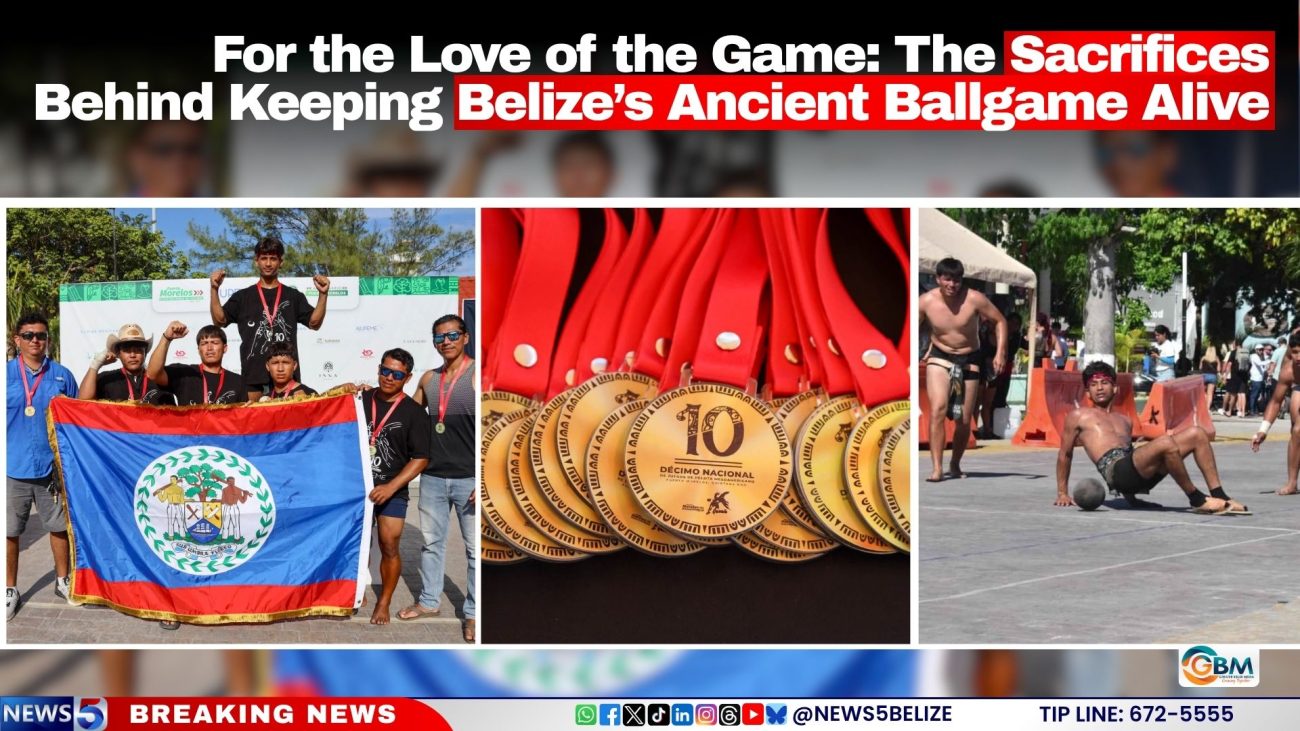
For the Love of the Game: The Sacrifices Behind Keeping Belize’s Ancient Ballgame Alive
What keeps a culture alive? Ask around and you will hear about tourism campaigns, heritage programmes and language classes. For a group of young men in Orange Walk, the answer boils down to “passion”, one strong enough to cover the price tag of keeping an ancient game alive.
The Mesoamerican ballgame dates back thousands of years. “So we want this to keep it on going and growing it, so it survives more years. When the colonisers came here, they prohibited this game from being played. And throughout the Mundo Maya and in the Americas, we have more than 2000 courts. And if we would have been able to play this game from since then, I believe this would have been the most popular sport,” said President of the Belize Hipball Association, Eric Cal.
The game is played with a ball made of rubber. It weighs about seven pounds, it leaves behind bruises, and it is easily lost in the dark on a poorly lit basketball court on a Tuesday night at 7 o’clock. The players of Yo Creek’s Sak Xikim team accept that challenge, as long as they get a few hours of practice.
Belize’s Sak Xikim Team Takes Ulama Crown in Mexico
After a full day’s work, most of them on construction sites, they meet in Orange Walk Town between six and nine at night to practise Pok Ta Pok and Ulama, two versions of the game played with the hips alone.
Over the weekend, those nights paid off. The Sak Xikim team came through a nail-biting tournament at the 10th Mesoamerican Ballgame National Championship in Mexico. While the team is no stranger to winning in Pok Ta Pok games, the players took on Ulama for this year’s games, a tougher version of the ancient hipball game. The team edged Mexico 11 to 10 in the Ulama final match.
Belize’s Sak Xikim Team Takes Ulama Crown in Mexico
“I am so proud of myself and the team that we brought first place for this,” said player Daniel Flota. He’s only had about four months of training the Ulama modality. “My mind was giving all my best. I just imagined myself hitting that ball as hard as I can to make enough points for my team to win.”
“It was pretty exciting to be at the tournament and see the new players, the new generation, and how competitive they are,” added team coach and vice president of the Belize Hipball Association Nelson Blanco.
He added, “And even for me as an ex-player, all I can do right now as a coach is tell them what I learned when I started playing Ulama. I had to explain to them the rules because they are accustomed to a completely different set of rules. And when they start up, I think from the players that we took this time around, only one of them had competed in the past in Ulama.”
Belize’s Sak Xikim Team Takes Ulama Crown in Mexico
The six-man team arrived back home proudly raising the Belize flag. “It was an honour to be there representing Belize as an ex-player. Now these guys are representing Belize,” Blanco added. “Every time we go out, we just want for people to know that Belize can compete against these bigger countries out there.”
While the host country, Mexico, covered food and lodging. Everything else came out of the players’ wages.
“We used to go around and ask for
donations, and we did receive a few monetary donations. But we find that it’s very hard, and at times you feel that actually you have to be begging at times,” said Cal.
“So what we decided afterwards is we’ll just work. And from what we earn from work, we’ll do a little savings on the side, and then we will pay for our shirts and for the transportation,” Cal added.
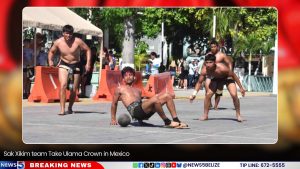
Belize’s Sak Xikim Team Takes Ulama Crown in Mexico
Other expenses quickly add up. A single rubber ball can cost $600 to $700 BZD, and the denser it is, the pricier it gets.
“And then there’s also protective gear,” Cal said. “The suit has an approximate value of $150 to $180 BZD, which is quite expensive. And that’s per player.”
But for 24-year-old team captain Angel Suchite, the sacrifice is worthwhile, saying, “I just love this sport. So, I always take time from my job, go to the trips we have, do what I have to do and try to balance it out however I can.”
“For me, I play mostly because of my friends and the passion for my culture, playing to keep my culture alive,” added the youngest player of the team, 17-year-old Erick Cawich.
That same passion secured Sak Xikim’s victory against some of Mexico’s and Guatemala’s best Ulama players
The ancient Maya ballgame has survived centuries of change, but its future depends on those willing to keep playing it. Whether that means showing up after a long day’s work or setting aside their hard-earned money for the next tournament, Sak Xikim hopes they will not be the last generation to carry the tradition forward.
“I would just like to invite other young persons if they want to play; they are invited to come and join us. We are willing to help them with the practices and take them around a lot of this work,” said team captain Suchite.