



From Sea to Plate: The Story Behind Every Bite of Belize’s Seafood
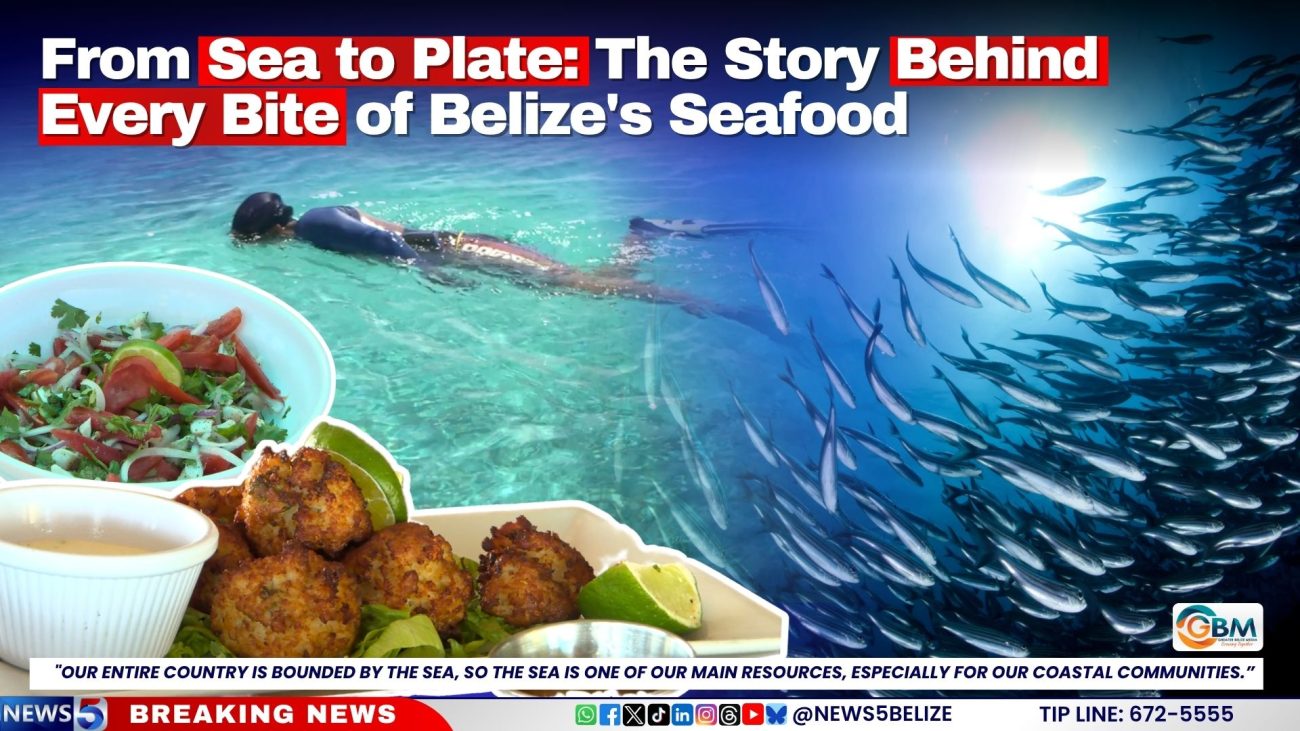
It starts with the first bite. Tangy ceviche. Crispy conch fritters. Golden fried fish with rice and beans. It tastes fresh. It tastes like Belize.
But here is a question many do not ask. What did it take to get this fish on your plate?
The answer lies in a system working together over the past few years. From the moment fish and conch are harvested to the point they are served, multiple layers of regulation, monitoring, and decision-making shape what ends up on the table.
Fishing zones, size limits, and closed seasons are all part of that system. The ultimate goal is to protect Belize’s marine resources and keep the industry alive for generations to come.
At the heart of Belize’s push for sustainable fishing is the Belize Fund for a Sustainable Future, backing programmes that help manage fisheries, protect marine life, and connect what happens at sea to what ends up on your plate.

But keeping that system working is not easy. It is constantly evolving.
From Sea to Plate: The Story Behind Every Bite of Belize’s Seafood
A Missing Link in the Chain
Out at sea, fishing remains a way of life for many Belizean families, it’s where every seafood journey begins. At this stage, each catch carries a growing responsibility: it impacts the health of the ocean, supports the livelihoods of communities, and ultimately shapes what ends up on Belizean plates.
This is where enforcement is most visible. But according to the Fisheries Department, the bigger challenge may not be what is caught but what happens after.
Senior Fisheries Officer Adriel Castañeda says one of the weakest points in the system lies with those in the middle of the supply chain.
“We are going through the revision of our regulations, and some of the things that we’re including are for vendors, for those middlemen that buy from fishers to sell to the hotels and so on, to also be registered. Because they are currently not registered. So, there’s a little gap, per se,” Castañeda said.
“Even for us collecting data, they would be essential for them to be also reporting what they’re buying and where that extra resource is going,” he added.
That gap leaves part of the seafood trade unaccounted for. It raises key questions about where products come from, how they are caught, and whether they meet national regulations.
Closing that gap would not only protect Belize’s marine resources; it would also reinforce the growing responsibility that everyone in the system carries.
From Sea to Plate: The Story Behind Every Bite of Belize’s Seafood
Protecting What’s Left in the Sea
Beyond regulations, local communities play a key role in sustainable fishing efforts in Belize. The Wildlife Conservation Society (WCS) has worked in the country for over 40 years, focusing on research, education, and conservation to protect marine species and their habitats.
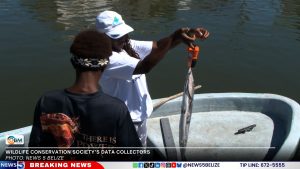
Local fishers play a key role in this effort. By involving them in data collection, the fishing community can better understand which species are being caught, where, and in what quantities. This information feeds directly into conservation strategies and ensures fishers are part of the solution, rather than feeling targeted or restricted.
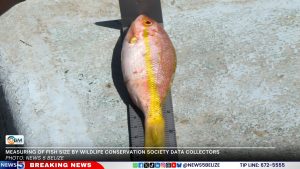
Henry Brown, Technical Research Assistant at WCS, explained why this matters. “Take the Nassau Grouper, a critically endangered species. Size limits help juveniles grow to maturity, while the larger ‘mega spawners’ hold the most eggs to replenish the population. These measures give the species a chance to bounce back.”
From Sea to Plate: The Story Behind Every Bite of Belize’s Seafood
Simple rules like size limits and closed seasons do heavy lifting; they give fish time to reproduce and keep the ecosystem healthy.
“Once a fisher has more than ten undersized conch, for example, he automatically commits an infraction. Once he has less than ten, we issue a written warning, and it all depends on our discretion because we can charge them for one, two, or three,” added Kiefer Alvarez, Enforcement Coordinator at the Turneffe Atoll Sustainability Association (TASA).
“Our entire country is bounded by the sea, so the sea is one of our main resources, especially for our coastal communities, so by properly managing it as well as using sustainable fishing activities,” Brown added.
The Power of the Buyer
Responsibility doesn’t stop at the water’s edge. So, here’s where it hits closest to home. Restaurants, vendors, and even consumers play a critical role in shaping demand for sustainable seafood.
What they choose to buy can either support or undermine sustainability.

From Sea to Plate: The Story Behind Every Bite of Belize’s Seafood
At this end of the chain, Smokeez Seaside Restaurant & Bar is one business taking that responsibility seriously. Owner Ramon Salgado explained that Smokeez works with a select group of trusted local seafood suppliers to ensure what reaches the kitchen is legally caught, ethically sourced, and traceable.
“I think restaurants play an important role because we are the purchasers. If we continue as restaurants to purchase anything just so that we can sell it… at the end of the day, five or 10 years from now, we may not even have any conch or seafood to sell,” Salgado said.
He also credits the spontaneous checks from fisheries enforcement teams for keeping restaurants accountable.
“That keeps us in compliance,” he said. “It creates a habit for us to source sustainably.”
Meanwhile, buyers are the final link in a chain that begins at sea. Your choices shape the market, influence fishers’ practices, and ultimately determine whether Belize’s waters remain abundant.

From Sea to Plate: The Story Behind Every Bite of Belize’s Seafood
There is a Shared Responsibility
From fishers and middlemen to regulators, restaurants, and consumers, every bite of that tangy ceviche or golden fried fish tells the story of a journey shaped by many hands committed to sustainable fishing.
Each decision, from what species to catch to what seafood ends up on a plate, carries real impacts for the continuity of our oceans, livelihoods, and Belizean cuisine.
It is a shared responsibility.
Facebook Comments