


Government Fast-Tracks Solar During Energy Emergency
Belize has long depended on imported electricity to keep the lights on, but recent load shedding has exposed just how vulnerable that dependence can be. Now, the government is moving to generate more power at home. During his State of the Nation Address, Prime Minister John Briceño announced that the recently declared energy emergency will allow Belize Electricity Limited to fast-track major solar and battery-storage projects. The plan calls for thirty megawatts of new solar capacity by June 2027, with a longer-term target of one hundred and twenty megawatts nationwide. News Five’s Britney Gordon examines whether this ambitious expansion can strengthen Belize’s energy security and prevent future blackouts.
 Britney Gordon, Reporting
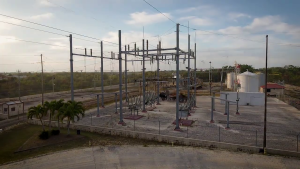
How does Belize keep the lights on when imported power suddenly disappears? As Mexico’s power supply becomes less reliable, Belize is racing to generate more renewable energy at home.
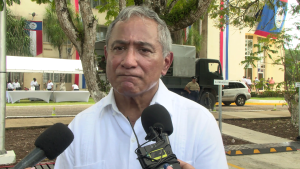
Prime Minister John Briceño
Prime Minister John Briceño
“Under the recently declared an emergency situation, covering the next five years, BEL with work with local investment partners to rapidly deploy several medium sized solar farms. Together with battery storage systems, we expect approximately thirty megawatts of new solar generation, supported by five hour duration battery storage to be installed by June of 2027.”
 Belize wants to generate more electricity at home, but government says that does not mean cutting ties with Mexico. Prime Minister John Briceño says construction on new domestic power projects will begin in the coming months, with plans for one hundred and twenty megawatts of solar generation and forty megawatts of battery storage. The expansion should provide greater protection when Mexico cannot meet Belize’s energy demands. Still, CEO Dr. Leroy Almendarez, of the Public Utilities Ministry, says imported power will remain a critical part of the country’s energy mix.
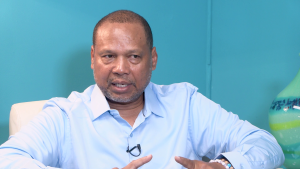
Leroy Almendarez
Dr. Leroy Almendarez, CEO, Ministry of Public Utilities
“The data from Mexico is very important for us. We didn’t just connect with Mexico. There had to be a feasibility study to see, okay, yes, there’ll be reliable power, that that transmission line will be reliable, that that line won’t be falling, and of course, that the tariffs that we get from that power that’s passing through there to our country, that the power is something that, you know, in affordable prices, for example. But remember, there are certain things that you can’t control. There’s still a war going on in the Middle East, and that does affect the cost of power when you acquire it from Mexico.”
Government is studying whether Belize can import electricity from Guatemala. Dr. Almendarez explained that this does not mean that purchasing energy from Guatemala is in the pipeline, rather the government is simply studying whether a future connection to their power grid would be practical, reliable and affordable.
 Dr. Leroy Almendarez
“There is no discussion on buying power from Guatemala. The pre-feasibility would tell us, first of all, what are the ABCs that we need? And that’s the engineering part of it. And if the engineering part of it saying, “Okay, you can interconnect,” et cetera, the next steps that you have to look at, you have to look at the risk of it. What’s the implication for Belizean consumers?”
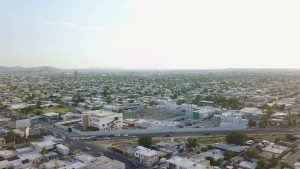 Belize plans to produce enough power to meet local demand and eventually export the surplus. Until then, Mexico remains a vital energy partner.
Dr. Leroy Almendarez
“There’s SIEPAC, that’s the regional, that’s a Central American grid. Uh, Belize’s objective, and people might find this cynical, is to one day being able to send back power, sell power as well, not become what you refer to as a net exporter of energy. Meaning we can meet all the demand that we necessarily need or meet every challenge, you know, where demand is concerned, and the excesses to be sell/sold back to somewhere like the SIEPAC.”
Belizeans can install private solar systems and potentially sell unused power to the national grid, helping increase the country’s energy supply. Britney Gordon for News Five.
Attention readers: This online newscast is a direct transcript of our evening television broadcast. When speakers use Kriol, we have carefully rendered their words using a standard spelling system.
Watch the full newscast here: