


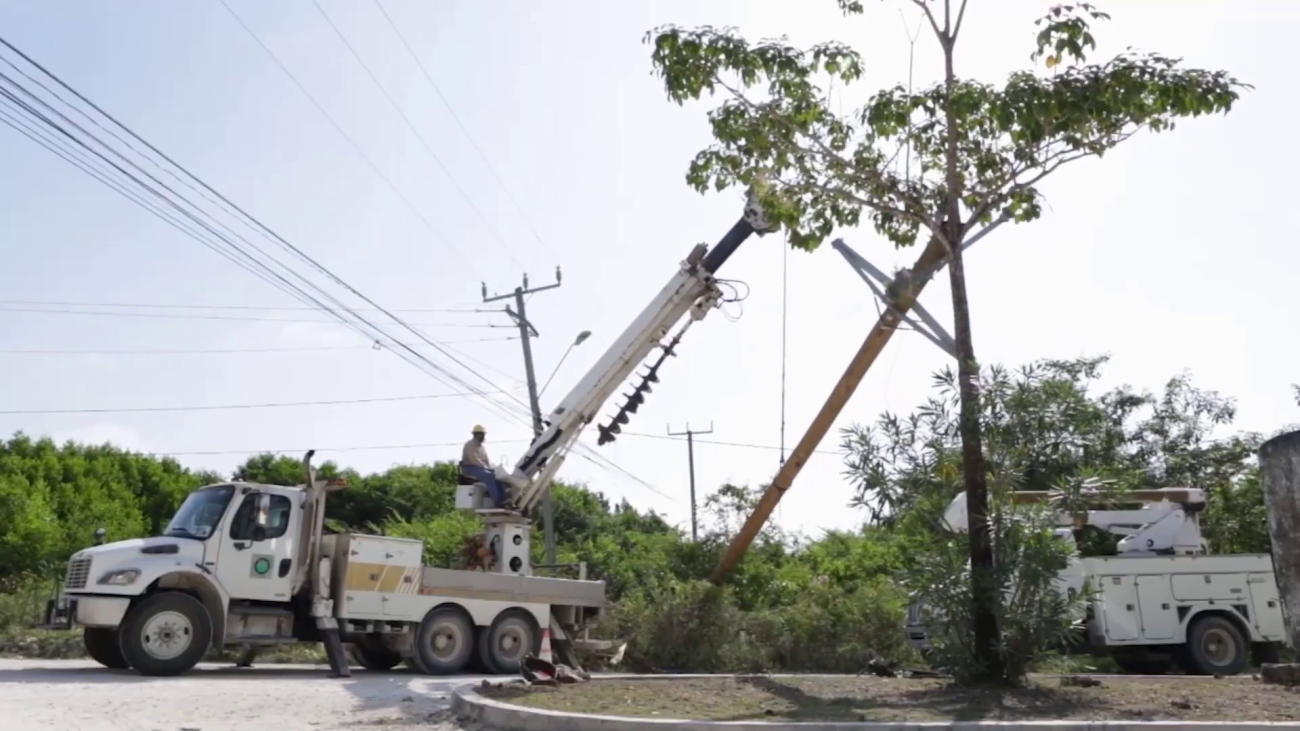
Government Throws BEL a $73 Million Lifeline
BEL owes tens of millions of dollars to CFE and Hydro Belize, and government is stepping in with a seventy-three-million-dollar financial lifeline. Through the BEL Investment Bill, the government will purchase preferential shares in the utility, injecting money officials say will strengthen BEL’s finances without immediately driving up electricity rates. But the move raises an important question: why should public funds cover the company’s mounting obligations? Today, Dr. Leroy Almendarez explained why government chose the share purchase and why officials believe it offered the best way to protect both BEL and its customers.

Leroy Almendarez
Dr. Leroy Almendarez, CEO, Ministry of Public Utilities
“You would have heard about the BEL Investments Bill, that was the bill where BEL puts out, there are three ways of fixing this. With all the cost going up, with all the money that is owed to them, because they have seventy-five million that is parked that they cant recover, how do you do it? One, you can increase tariffs. Tariffs at this point is about forty-two, forty-three cents per kilowatt hour to recover that seventy-five million you would have to recover tariffs by at least five cents. That is option A, it is out. Option B is you go to your shareholders, the Government of Belize and Social Security. The other option would be BEL going to the banks. BEL is so indebted that what a bank will do when it assess your viability, your ability to repay a loan, the ratios does not allow them to go into the debt market. They don’t have the leverage. So therefore they issue these preferential shares, two dollars per ordinary shares and then there is a premium for nine dollars and so they sold, or issued to the government, or approached the government to purchase eight million, one hundred and thirty-eight thousand and twenty shares, times nine. That is what adds up to the seventy-three million we are talking about.”
 $73 Million Later, BEL Still Needs More
Seventy-three million dollars may sound like a major financial lifeline, but BEL says it will not solve all its money problems. Government’s purchase of preferential shares will help the utility meet some of its obligations, while the requested COPA adjustment could push electricity bills higher. Chairman Lynn Young explained how much more consumers may have to pay, but says that additional revenue may still not cover BEL’s monthly operating costs.

Lynn Young
Lynn Young, Chairman, BEL
“The average price from BEL to costumers is forty-four cents and if you add the COPA it is about forty-five and a half cents and if the PUC was to approve this adjustment to the COPA it could go as high as forty-seven cents per kilowatt hour. For diesel right now, it is costing us almost a dollar per kilowatt hour, just for the diesel, and of course you have operation and maintenance and whatever. So we try to run the diesel as little as possible. But there are times when CFE is less expensive than that. CFE prices moves at the time of the day and depending on the situation in Mexico. They have different component to their rates including the cost of transmission and the line and things like that. This Sunday gone CFE was averaging thirty-cents U.S. per kilowatt hour. And so we ran the diesel a lot, actually CFE was not available to. There are times when CFE has gone a dollar U.S. per kilowatt hour and there are times when it is as low as ten cents per kilowatt hour.”
Attention readers: This online newscast is a direct transcript of our evening television broadcast. When speakers use Kriol, we have carefully rendered their words using a standard spelling system.
Watch the full newscast here: