



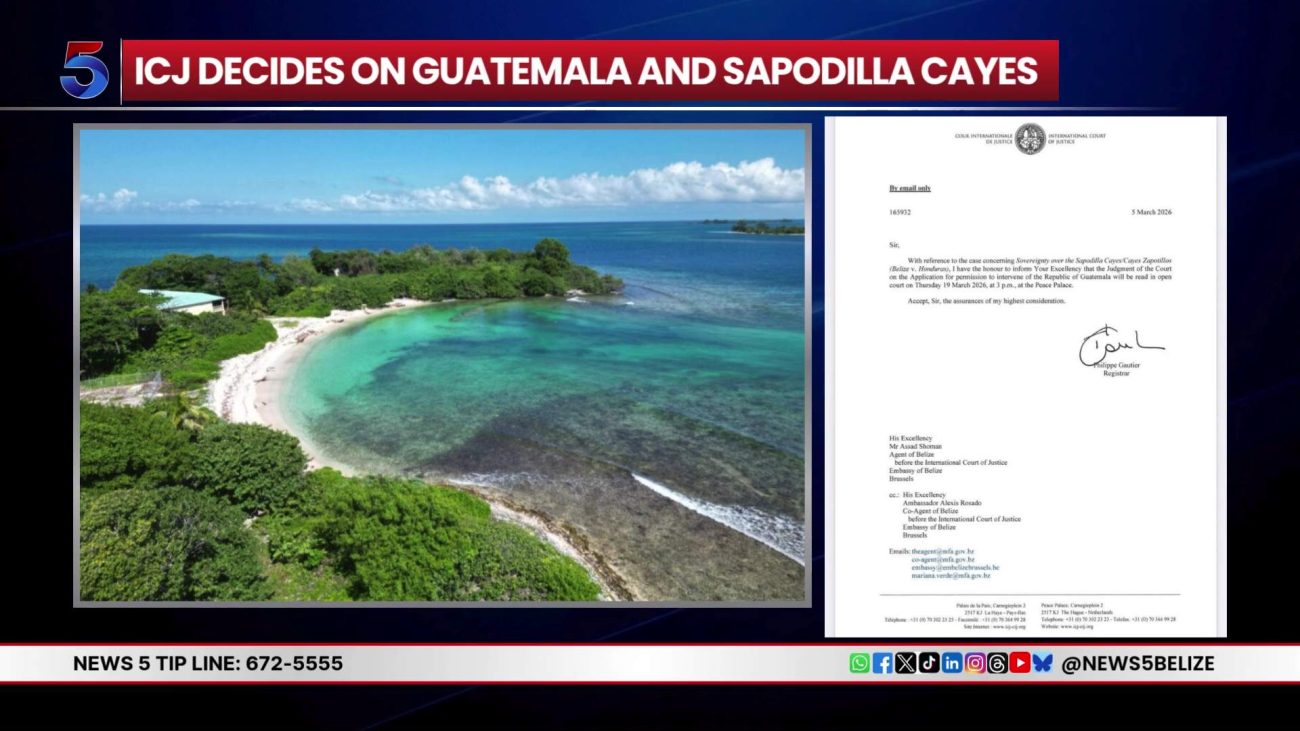
Guatemala is Cleared to Intervene in Sapodilla Cayes Dispute
A new wrinkle emerged today in the Sapodilla Cayes dispute at the ICJ, this time bringing Guatemala into the room, though not to take sides as a full party. In a decision handed down today, the International Court of Justice ruled that Guatemala has a “real and concrete” legal interest in the outcome, noting that the islands overlap with claims it already placed before the ICJ in its own 2019 territorial case against Belize. This isn’t a routine border‑drawing exercise. Unlike maritime disputes where judges can simply adjust lines to avoid involving a third country, the Sapodilla Cayes case demands a clear ruling on who actually owns the islands. And that’s territory Belize, Honduras, and Guatemala each lay claim to. Honduras tried to block Guatemala’s participation, calling it an abuse of the World Court’s process. But the ICJ wasn’t convinced. In a unanimous decision, the judges said Guatemala met every requirement under Article 62 of the court’s statute, clearing the way for its intervention.
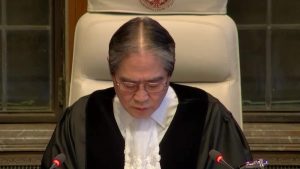
Iwasawa Yuji
Iwasawa Yuji, President, International Court of Justice
“Having concluded that all the requirements under Article 62 of the Statute and Article eighty-one of the Rules of Court are satisfied, the Court does not accept the argument put forward by Honduras that the Application for permission to intervene should be rejected on the ground that Guatemala has abused the process. The Court observed that intervention as a non-party, in relation to the scope of the case as a whole, necessarily involves limitations of the right of the intervener to be heard. The scope of an intervention by a non-party is thus circumscribed. The Court recalls that Guatemala has sought permission to intervene to protect its legal interests in relation to the question of sovereignty over the cayes. In the present instance, therefore, Guatemala’s intervention is to be limited to the issue of sovereignty over the Sapodilla Cayes/Cayos Zapotillos, including fishing rights in the waters surrounding them. I shall now read out the operative part of the judgment. For these reasons, the court unanimously, decides that the Republic of Guatemala is permitted to intervene as a non-party in the case, pursuant to Article sixty-two of the Statute.”
The move adds new weight, and new complexity, to a case already steeped in history, geopolitics, and national pride.
 Belize Responds to Guatemala Formally Joining Sapodilla Case
The Briceño administration is trying to steady nerves tonight after the International Court of Justice ruled that Guatemala can now intervene in the Sapodilla Cayes case between Belize and Honduras. The move stirred unease among Belizeans already sensitive to Guatemala’s historic territorial claims. But Foreign Minister Francis Fonseca says there’s no need to panic. He explains that Belize didn’t oppose Guatemala’s participation; in fact, the government sees it as a strategic opportunity to wrap up all remaining territorial issues once and for all.
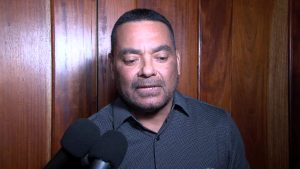
Francis Fonseca
Francis Fonseca, Minister of Foreign Affairs
“Yeah, not surprised at all as Belize offered no objections to Guatemala joining the case. So it was, our legal team expected that would be the result. And so we’re not surprised at all. And in, in fact, we, the thinking of the legal team is that is in Belize’s interest. That’s our objective. We want the entirety of these matters to be resolved. And so Guatemala’s involvement there will help to achieve that objective. Belize in our submissions before the court, of course, we have asked that these matters be dealt with concurrently. We would hope that a substantive case with Guatemala would be dealt with and then this case was with Honduras as well. If that’s entirely up to the court. They will determine that. Our legal team made submissions to the court. I would invite people to review those submissions. They were very clear about our position on this matter. We’ve thought it was in the interest of all the parties, and of course, in the interest of Belize that Guatemala joined the case so that all these issues can be resolved once and for all definitively no surprise at all in terms of decision, the Belizean people should not be excited about the fact that Guatemala has joined the case and the court has rule that Guatemala can join the case. That was expected. And as I said, I believe that is in interest of Belize’s case moving forward.”
Belize views Guatemala’s entry not as a threat, but as a real opportunity to resolve every outstanding border issue permanently.
Attention readers: This online newscast is a direct transcript of our evening television broadcast. When speakers use Kriol, we have carefully rendered their words using a standard spelling system.
Watch the full newscast here:
Facebook Comments