


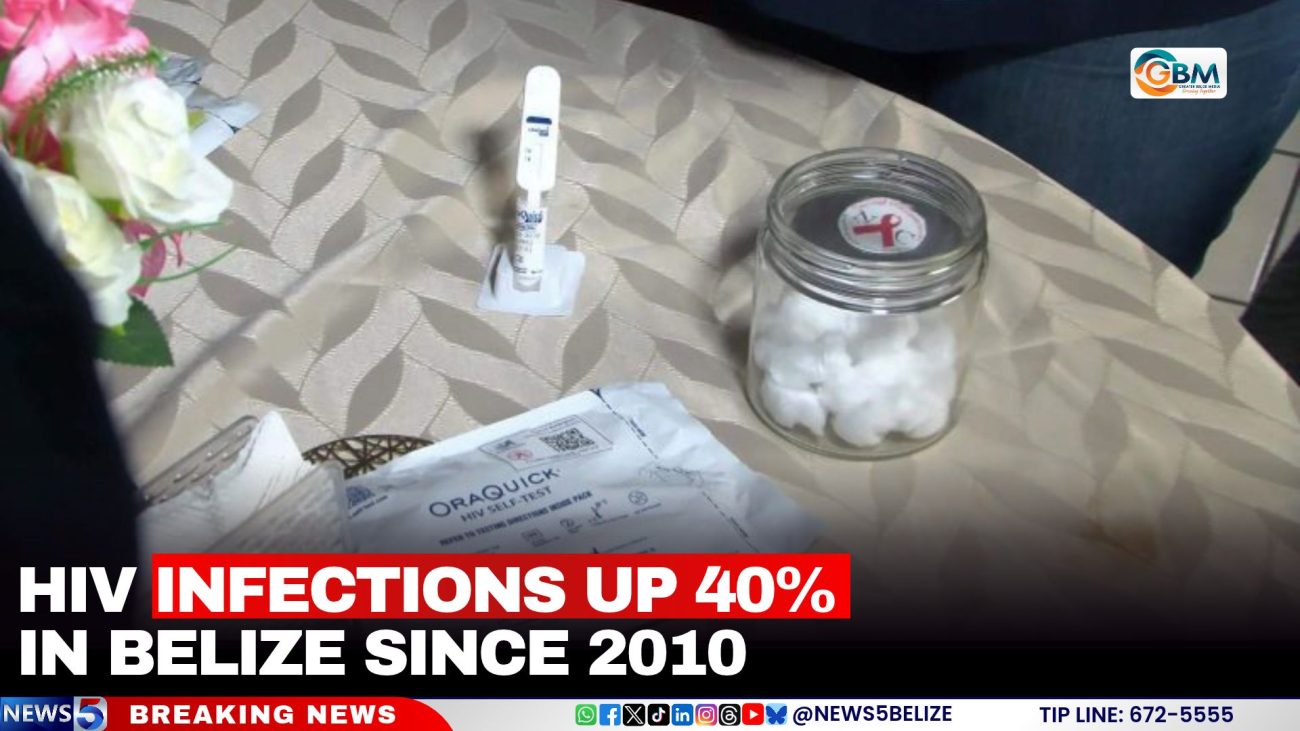
HIV Infections Up 40% in Belize Since 2010
New HIV infections in Belize have risen by about 40% since 2010, even as they fell across the wider Caribbean, according to a new UNAIDS report.
The report, “Ending AIDS Starts with Access”, was released on November 24th ahead of World AIDS Day. It says the Caribbean cut new HIV infections by 30% and AIDS-related deaths by 65% between 2010 and 2025, but that progress has been uneven. Belize is one of two countries where new infections went up. The other is Suriname.
Belize does fund its own HIV response. The report’s financing data show that all of Belize’s HIV spending in 2025 came from domestic sources. This means it came from the Government’s own budget, through the Ministry of Health and Wellness, the National AIDS Commission and public clinics. It also includes people paying for their own care, private insurance or local businesses.
The report also pointed out that Belize repealed laws criminalising HIV transmission, non-disclosure and exposure in 2023.
Across the region, UNAIDS warns that cuts in international funding are already hitting prevention. The number of people taking pre-exposure prophylaxis (PrEP), medicine that prevents HIV, fell by 55% to about 22,000 in 2025. Condom distribution dropped by 26% between 2024 and 2025.
The Caribbean remains the region most dependent on US bilateral HIV funding. US money made up about 40% of the region’s HIV resources in 2025, despite a 37% cut from the year before.
“The world is sleepwalking into a preventable crisis,” said UNAIDS Executive Director Winnie Byanyima.
“We know what happens when HIV prevention collapses. People become infected, treatment needs rise, costs soar and lives are lost. Every clinic that closes, every outreach worker who loses their job and every young woman turned away from prevention services today risks becoming a new HIV infection tomorrow,” she added.
About 340,000 people in the Caribbean live with HIV. Of those, 73%, or 250,000 people, are on treatment. The region recorded about 13,000 new infections and 4,800 AIDS-related deaths in 2025. An estimated 43,000 people with HIV do not know they have it.
“HIV infections do not happen because prevention tools do not exist. They happen when people cannot access those tools,” Byanyima said. “It is unconscionable that just as the world has breakthrough prevention technologies capable of dramatically reducing new infections, funding cuts are putting those tools out of reach for the people who need them most.”
UNAIDS says the full impact of last year’s funding cuts has not yet shown up in its estimates.
The agency says ending AIDS as a public health threat by 2030 is still possible. “Achieving that goal could prevent 3.2 million new HIV infections and avert 1.3 million AIDS-related deaths by the end of the decade,” the agency said in its press release.