



How Managing Wastewater Saves Belize’s Coral Reefs
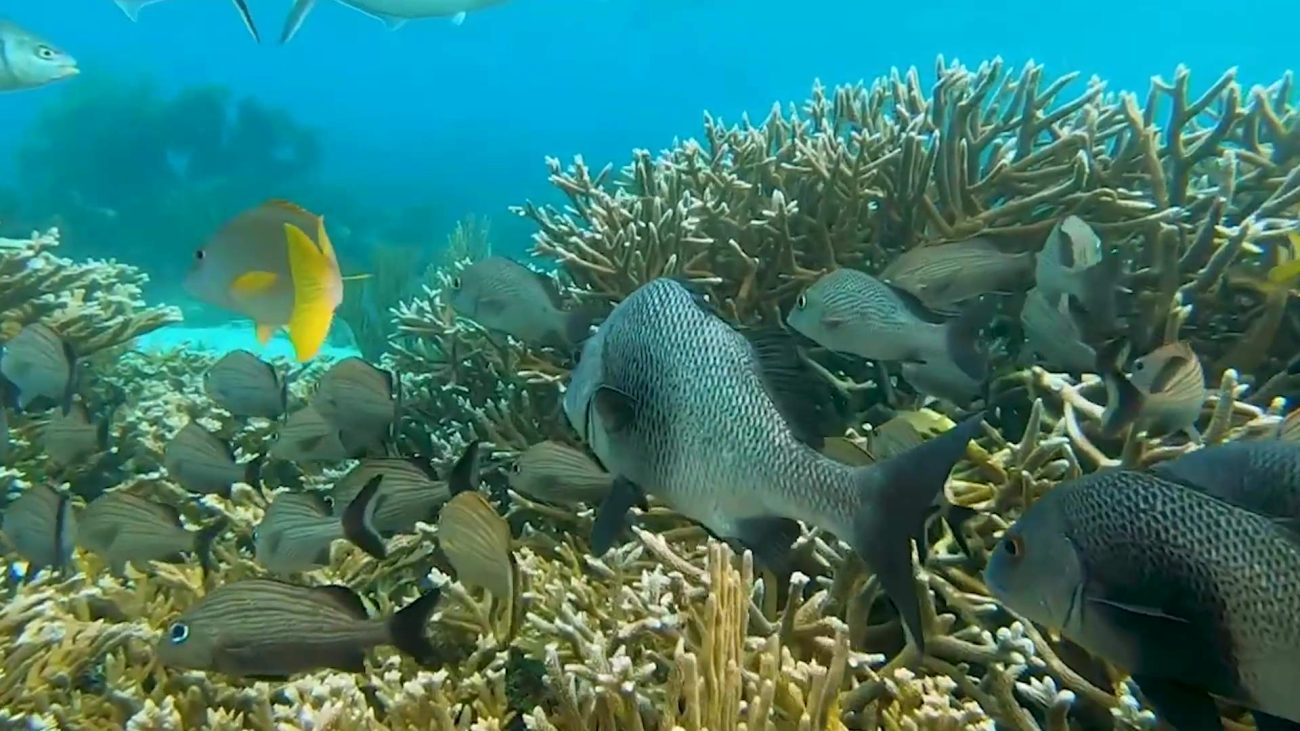
Belize’s barrier reef is one of our proudest treasures, the second largest in the world and vital to tourism, fishing, and coastal life. But its future is under threat. Climate change, coral disease, and human activity have taken a toll, and experts now warn that poor wastewater management is accelerating the damage. What flows from our homes and communities can end up in the sea, hurting water quality and fragile coral systems. Monitoring marine water health is now critical to understanding what’s happening below the surface and how to respond. Tonight, News Five, in collaboration with the Belize Fund for a Sustainable Future, examines how wastewater is impacting our reefs, and what Belizeans can do to help protect this national jewel. News Five’s Britney Gordon reports.
“With every drop of water you drink, every breath you take, you’re connected to the sea. No matter where on Earth you live.” -Sylvia Earle, American Marine Biologist

Britney Gordon, Reporting
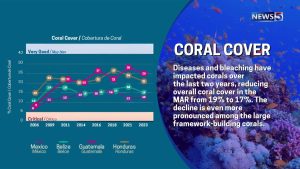
When you think of Belize’s barrier reef, you picture vibrant corals, crystal-clear water, and an underwater world bursting with life. It’s one of our greatest natural treasures, but there’s a troubling reality beneath the surface. A new 2024 Mesoamerican Reef Report Card shows that more than a third of Belize’s reefs are now in poor condition, and over twenty percent are considered critical. Conservationists say one major issue continues to rise to the top: that’s improper wastewater management. Raphael Martinez Jr., Belize’s Country Coordinator for Healthy Reefs for Healthy People, explains why what happens on land is having serious consequences at sea.

Raphael Martinez Jr.
Raphael Martinez Jr., Country Coordinator, Healthy Reefs
“Water quality is a factor that we’ve also looked into in including sewage waste. This is something that, that has impacted the reef in terms of introducing excess nutrients into this and into these environments. Also pathogens that could be entered these environments from wastewater. So these are some things that we also look at and factor in when we’re assessing the reef. Excess nutrients could actually cause macroalgae growth, macroalgae proliferation it could actually weaken or make the corals more susceptible to diseases as well as reduces oxygen levels in these waters.”
In Belize, anyone releasing waste into the environment must first get a license from the Department of the Environment and meet strict standards to limit pollution. Environmental Officer Kenrick Gordon says that before 2018, solid waste and poor water quality were among the biggest environmental challenges facing the country.

Kenrick Gordon
Kenrick Gordon, Environmental Officer, Department of Environment
“We do work closely along with BWS as the major industry to deal along with wastewater. But our responsibility too is also at the industries in terms of the wastewater from the banana sector, from the BSI, from the sector, from the citrus sector, right? From and from the hotels, resort, all of those have to meet standards. We do have some an initiative that we are going to try to promote even more for the private sector to tap into the crew, which is a revolving fund to be able to help small investors retrofit or change their septic system that are not the ideal thing that we want to see along the water ways.”
Britney Gordon
Britney Gordon
“Data shows sewage waste and grey water run off remain a leading contributor to pollutants entering Belize’s ocean space. When unclean water is disposed of, it seeps into the ground and sediment ends up on rivers that eventually carry it to the sea. And it’s not just sewage waste that’s harmful, something as simple as the soap you wash your hands with can have devastating impacts on reefs.”
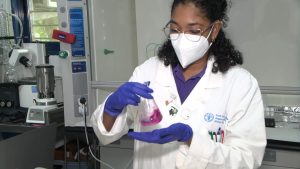 Zeida Franco-Leon is one of three lab analysts at the Hummingbird Analytical Laboratory at the University of Belize, where water samples from across the country are tested daily. She explains how even small changes in the environment can have serious consequences for the reef.
Zeida Franco-Leon
Zeida Franco-Leon, Laboratory Officer, Hummingbird Analytical Laboratory, UB
“We are looking at the ph of the water, the conductivity. When it comes to the oceans, the salinity is also very important. And when it comes to the chemical parameters, nitrates, phosphates, and even the sulfates are very important when it comes to the health of the ocean Waters. Nitrates, as we know, is very important to monitor. It does give an indication of potential algal blooms. Phosphates do have an indication whether you have suds from soap that are running off, perhaps from home use, and also from agricultural runoffs. Because if you think about the nitrogen, phosphates and potassium that are put into the soil, those eventually can cause a runoff and then go into our oceans as well.”
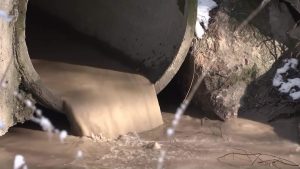 The Department of the Environment notes that major stakeholders, including Belize Water Services, are making efforts to better manage wastewater disposal. However, immediate action needs to be taken by all stakeholders for lasting change. That includes the average Belizean building a home and farmers watering their crops.
 Raphael Martinez Jr.
“Water quality is something that we can actively control. Ensuring that our agricultural farms are well equipped and are using sustainable practices so that they, the runoff from these farms are not entering into the environment. And so that, the proper septic systems are put in place in the, at the cayes and in homes because a lot of us or some of us might have septics that are not in an enclosed system, right? So this could also trickle down into the groundwater. And enter the water table eventually enter into the marine environment.”
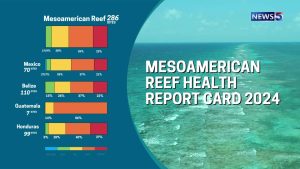 The latest 2024 Healthy Reefs Report Card raises red flags, most reef areas are only rated fair, and not a single subregion ranks as good. The health of the reef depends on clean, balanced waters, and when that balance is disrupted, the entire ecosystem suffers. Regular monitoring and water testing have become essential tools, helping scientists track changes over time and identify areas at risk. Lab Analyst Janivi Quiroz, says these efforts help shape strategies to protect marine life.
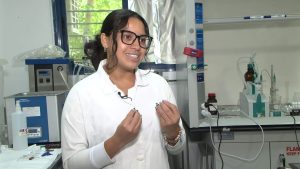
Janivi Quiroz
Janivi Quiroz, Lab Analyst, Hummingbird Analytical Laboratory, UB
“We have a very beautiful and diverse culture with a lot of resources, and by understanding what we have, especially water quality. We know how to better move on from here, how we could better our water quality or how we can maintain it. In the household, or in the sea.”
The Belize Fund for a Sustainable Future is calling on all Belizeans to raise awareness about the issue and reevaluate how their actions are impacting Belize’s valuable barrier reef and the and the communities that depend on it. Britney Gordon for News Five.
Facebook Comments