


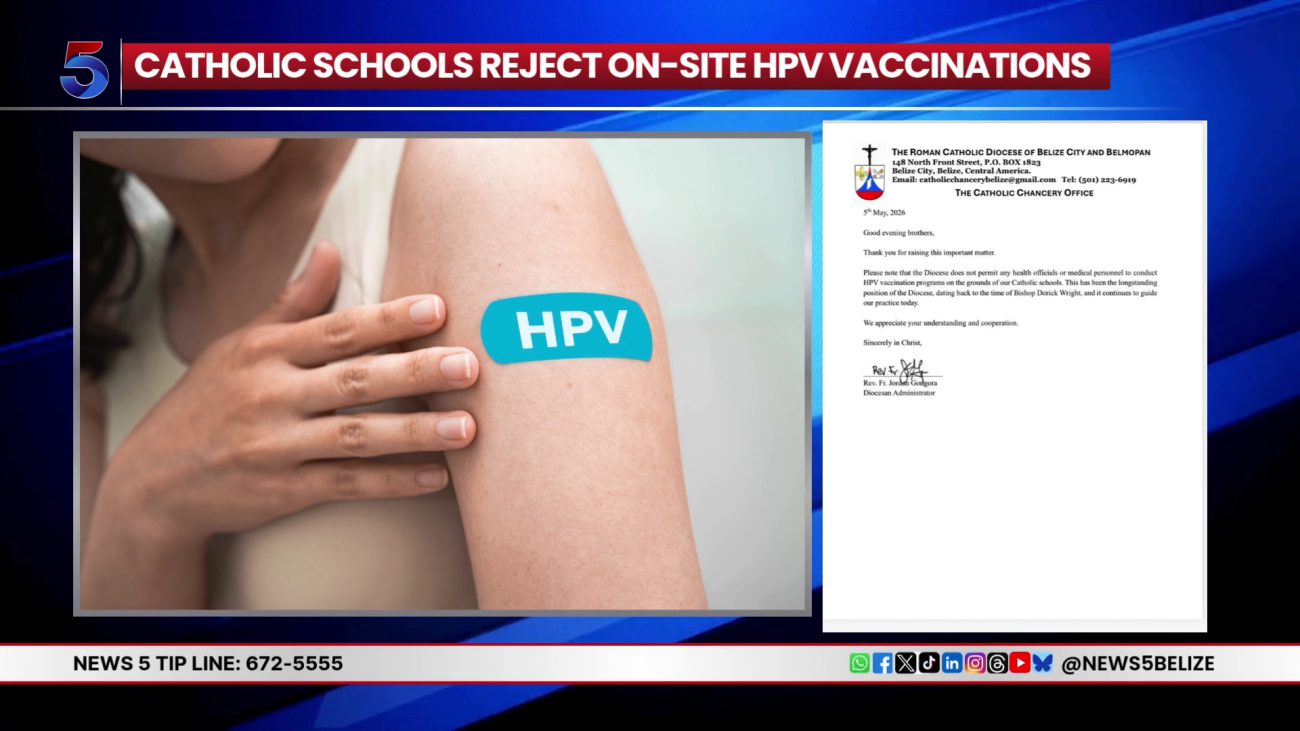
HPV Vaccine Rollout Sparks Renewed Church-State Clash in Schools
A new clash is putting children at the center of a long-running divide. The Catholic mission and the Ministry of Health and Wellness are once again at odds over how HPV vaccines are delivered in church-run schools. The vaccine has been part of Belize’s national program for years, but the debate isn’t going away. Now, questions over faith, public health, and parental choice are surfacing once again, with students caught in the middle. Shane Williams reports.
 Shane Williams, Reporting
Ten years after its rollout in schools, Belize’s HPV vaccine program is back in the spotlight, but this time, it’s not just about public health. As the Ministry of Health and Wellness prepares for another round of vaccinations, resistance from the Diocese is reigniting a longstanding debate over who gets to decide what happens inside church-run classrooms. Citing policy dating back to Bishop Dorick Wright, church leaders are drawing a line, setting the stage for a renewed standoff over health, authority, and access.
The Human Papilloma Virus, commonly known as HPV, is linked to cervical cancer and several other forms of cancer. Belize introduced the HPV vaccine into its national immunization schedule back in 2016 as part of a major public health push aimed at protecting children before exposure to the virus. At the time, health officials described Belize as having one of the highest cervical cancer mortality rates in Central America.
Marvin Manzanero
Dr. Marvin Manzanero, Director of Health Services (File: Nov. 13th, 2016)
“The WHO suggest that we should be vaccinating girls nine to thirteen years that is before they start to have sexual life. But we had to establish a cohort as we are introducing this and based on the attendance rate that we have from schools, which is where most of the girls of this age group are, the standard four classrooms are the ones being selected.”
At the heart of the debate is access, and for some schools, the rollout is moving ahead. St. Martin De Porres RC School is gearing up to vaccinate its Standard Four students on May twenty-seventh, staying on track with the national program. As a Jesuit institution, it operates outside the Diocesan directive, highlighting a growing divide within the church itself over how, and whether, students should receive the HPV vaccine.
 The Office of the Special Envoy for the Development of Families and Children issued a press release calling HPV vaccination a key step in protecting children and preventing HPV-related diseases, including cervical cancer. Tonight, the Catholic Mission stance remains firm objection. But what about the long-term consequences this objection will have on students attending Diocesan schools? News Five attempted to get answers from the Catholic Mission, the Ministry of Health and Wellness, the Ministry of Education, and the Office of the Special Envoy for Women and Children. None agreed to interviews or questions regarding the implications of the objection.
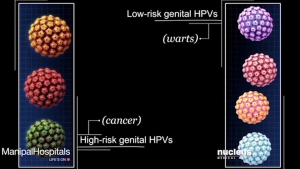 As the debate grows louder, the stakes become clearer. The Catholic Diocese oversees roughly one hundred and ten of Belize’s three hundred fourteen primary schools, meaning a significant share of young girls could face limited access to a vaccine health experts say can save lives. What’s more, this comes at a critical point, nearly a decade after the program’s launch, when officials expected to see measurable progress. Instead, access and outcomes now hang in the balance.
Dr. Marvin Manzanero
“We have more than one hundred and fifty different types of HPV; thirteen of them are related to cancer. Sixteen and Eighteen are what contain in the vaccine currently that we will be using, confer protection against seventy percent of the causes of cervical cancer. We won’t see numbers falling when it comes to cervical cancer because that is a process that takes fifteen year, ten years.”
Nearly a decade later, the fight over HPV vaccines is back, caught between public health advice and church policy. With the next rollout ahead, the debate is stark: is this a lifesaving shot, or a moral line some refuse to cross? Shane Williams for News Five.
Attention readers: This online newscast is a direct transcript of our evening television broadcast. When speakers use Kriol, we have carefully rendered their words using a standard spelling system.
Watch the full newscast here: