



ICJ Nears Key Ruling on Guatemala’s Bid in Sapodilla Cayes Dispute
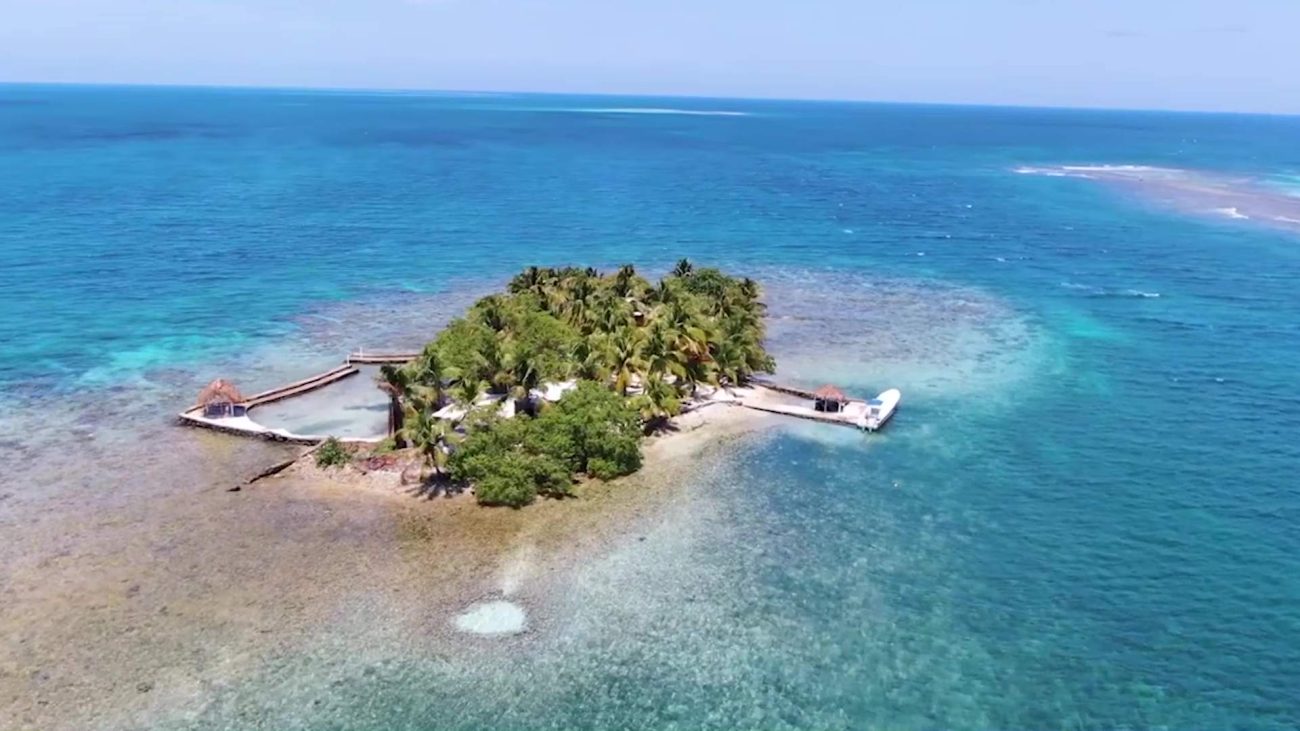
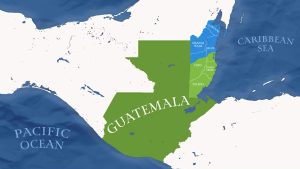
The long running tensions over the Sapodilla Cayes are now heading into a decisive moment. On March nineteenth, 2026, the ICJ is expected to decide whether Guatemala can formally intervene in Belize’s case against Honduras, a dispute Belize brought to the court in 2022 after negotiations with Honduras broke down over its constitutional claim to the cayes. Guatemala stepped in late last year, arguing that whatever the court rules could directly affect its own ongoing territorial and maritime case against Belize. With the clock ticking down, the stakes are rising. The court’s decision on Guatemala’s involvement could influence not just the pace of the proceedings, but also the regional dynamics surrounding the contested waters. As anticipation builds, News Five’s Britney Gordon digs deeper into the arguments presented and what this moment could mean for the wider dispute. Here’s her report.
 Britney Gordon, Reporting
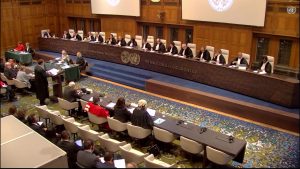
It’s been almost four years since Belize submitted its claim to the Sapodilla Cayes against Honduras at the International Court of Justice (ICJ) and the decades-long dispute is yet to reach its final resolution. Another twist is coming as the ICJ gets ready to rule on Guatemala’s request to intervene. Guatemala says the case touches on its claim to Belizean territory. Belize didn’t oppose the move, but Honduras fired back, accusing Guatemala of abusing the system and urging the court to throw out the request.

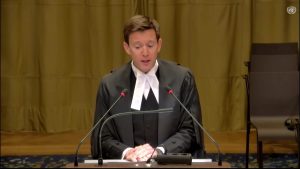
Ben Juratowitch
Ben Juratowitch, Legal Counsel, Belize (File: November 26th, 2025)
“The court was instead told on Monday, as it was this morning, that it is just obvious that Guatemala should be permitted to intervene because the three states claim the same territory. Guatemala told you that this was a textbook example of a case for which Article sixty-two of the statute was designed. That might be so if the Guatemala/Belize case did not exist. But in light of the unique features we identified, it is not enough to meet Guatemala’s burden, in the very particular circumstances of this case.”
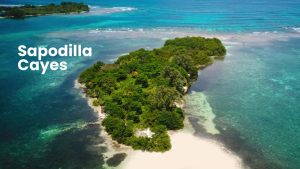 The Sapodilla Cayes, fourteen tiny sand and mangrove islands covering more than thirty-eight thousand acres at the southern tip of the Belize Barrier Reef, have long been a point of tension. Honduras wrote a claim to the cayes into its constitution in 1982, a claim Belize dismisses outright. Worried that Honduras might jump into the Belize–Guatemala case at the ICJ, Belize moved to put the issue before the court on its own. Then–Foreign Minister Eamon Courtenay explained the move.
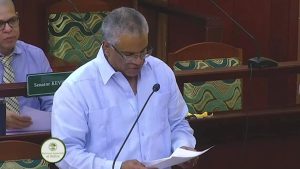
Eamon Courtenay
Eamon Courtenay, Minister of Foreign Affairs (File: October 24th, 2022)
“Because both Belize and Guatemala claim the Sapodillas in the I.C.J case, which said cayes are claimed by Honduras in its constitution, it is our understanding that Honduras will feel obliged to intervene in the Belize-Guatemala case now before the I.C.J to assert its claim to the Sapodillas. Madam President, Belize and Honduras have excellent relations. After taking legal advice, we have engaged the Honduran Government with a view to negotiating a resolution of their claim to the Sapodillas on the basis of Honduras acknowledging Belize’s exclusive sovereignty over the Sapodillas. Regrettably, this has not been successful. If, as we believe is likely, Honduras applies to intervene in the case now before the court, it is likely to affect the Belize-Guatemala case.”
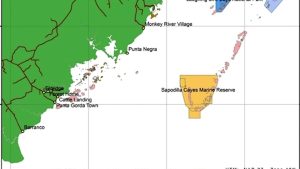 The Briceño administration argued that once the ICJ became aware of a claim by Honduras to the Sapodillas, the court may potentially not define the boundaries of the Cayes in the dispute with Guatemala, leaving a large part of Belize’s maritime entitlement unresolved.
 Eamon Courtenay
“Indeed the I.C.J may decide not to pronounce on sovereignty over the Sapodillas as well, even as Belize and Guatemala. This would mean that sovereignty over a very important part of our sovereign domain, the Sapodillas and the Maritime Areas pertaining to it, would remain unresolved.”
These waters are teeming with marine life, manatees, turtles, fish, and coral gardens make the area a crucial biodiversity hub. Resolving the issue allows for strengthening protection of the environment and Belize’s borders. Ambassador Assad Shoman, Special Envoy for the Prime Minister of Belize called for an efficient and timely resolution to these conflicts at the Hague last year.
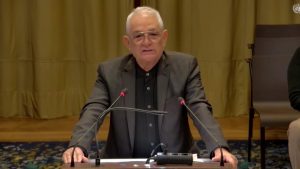
Assad Shoman
Ambassador Assad Shoman, Special Envoy for the Prime Minister of Belize (File: November 25th 2025)
“For Belize, the pressing issue remains the need for an efficient and complete resolution of all claims against Belize’s territory by both Guatemala and Honduras. Belize considers that this objective will be best served by coordination of the two cases. How to achieve such coordination is, of course, a matter for the court. It would be logical for the court to hear Guatemala/Belize first and then immediately, or very shortly thereafter, to hear the more confined case of Belize/Honduras. That would facilitate efficient use of the court’s resources. Participants in the second case could refer to matters already covered in the first and so, minimize repetition.”
These two cases may potentially reshape Belize’s map, as we know it. And as the court weighs Guatemala’s request to intervene, the decision may set a precedent for how the ICJ manages overlapping disputes across the globe. Britney Gordon for News Five.
Attention readers: This online newscast is a direct transcript of our evening television broadcast. When speakers use Kriol, we have carefully rendered their words using a standard spelling system.
Watch the full newscast here:
Facebook Comments