


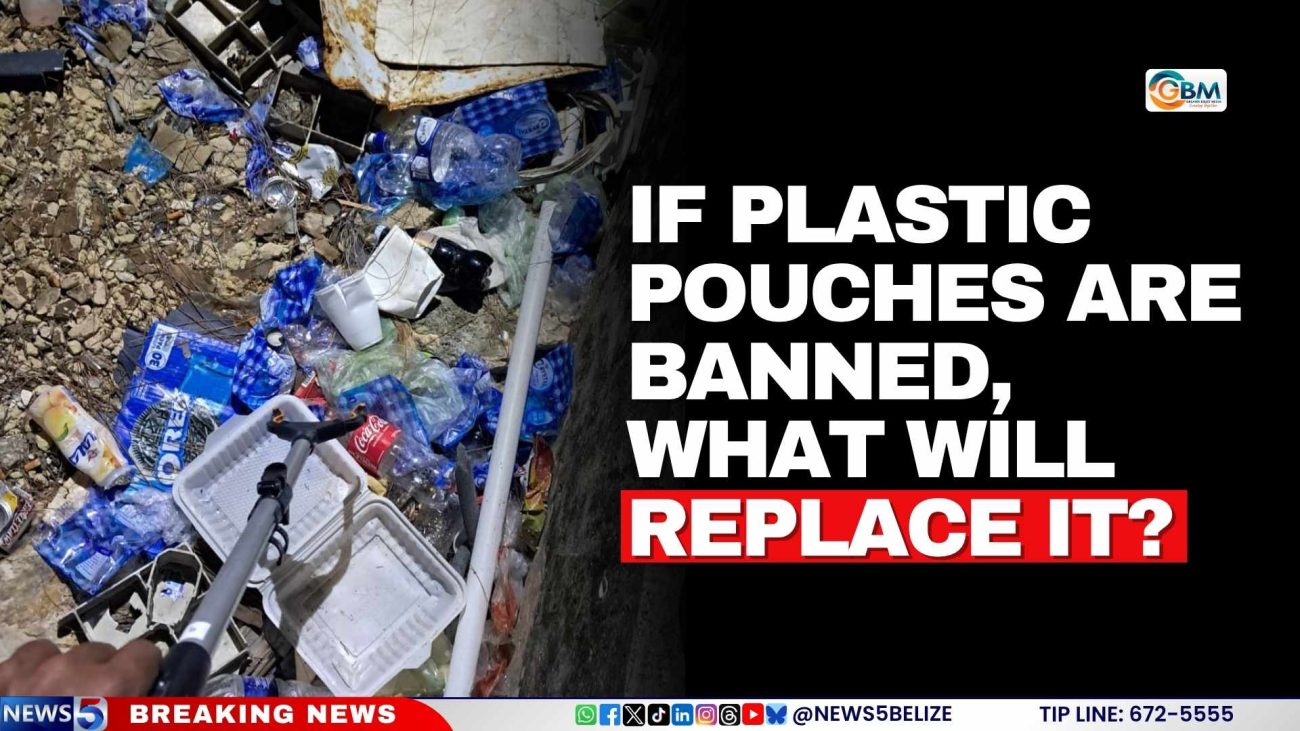
If Plastic Pouches are Banned, What Will Replace It?
The Minister of Sustainable Development agrees that single-use plastic pouches are a problem. The challenge, he says, is finding something affordable to replace them.
Minister Orlando Habet recognised the mounting pressure from a coalition of more than 40 organisations calling for a phased three-year ban on plastic pouches. However, he says that Belize’s existing biodegradability standards have not delivered the results the government hoped for.
“Perhaps we went a little bit ahead of our time saying we have to have these standards of 52% or more biodegradability. We didn’t look at the source for where that would come,” Habet said.
According to him, the core obstacle is a regional supply problem. “If the other countries aren’t doing the same, then there’s no requirement for their industries to produce the biodegradable products, and it makes it scarce to produce,” he said.
He suggested Belize could eventually develop its own biodegradable industry using materials such as bagasse, bamboo pulp and plantain suckers, but added that these would require developing entirely new industries and a viable market.
He also pointed out what many residents have said online as well, and that is that many rely on water pouches because of their low cost and that a ban could affect small entrepreneurs without affordable alternatives already in place.
The coalition’s proposal calls for a ban starting in government buildings, expanding to schools, and culminating in a full national ban within three years. The Department of the Environment (DOE) had previously said that it is still consulting with 36 importing companies, but the answer of banning the plastic pouches does not reduce to a yes or a no but instead a “process” that needs to undergo consultations first.