



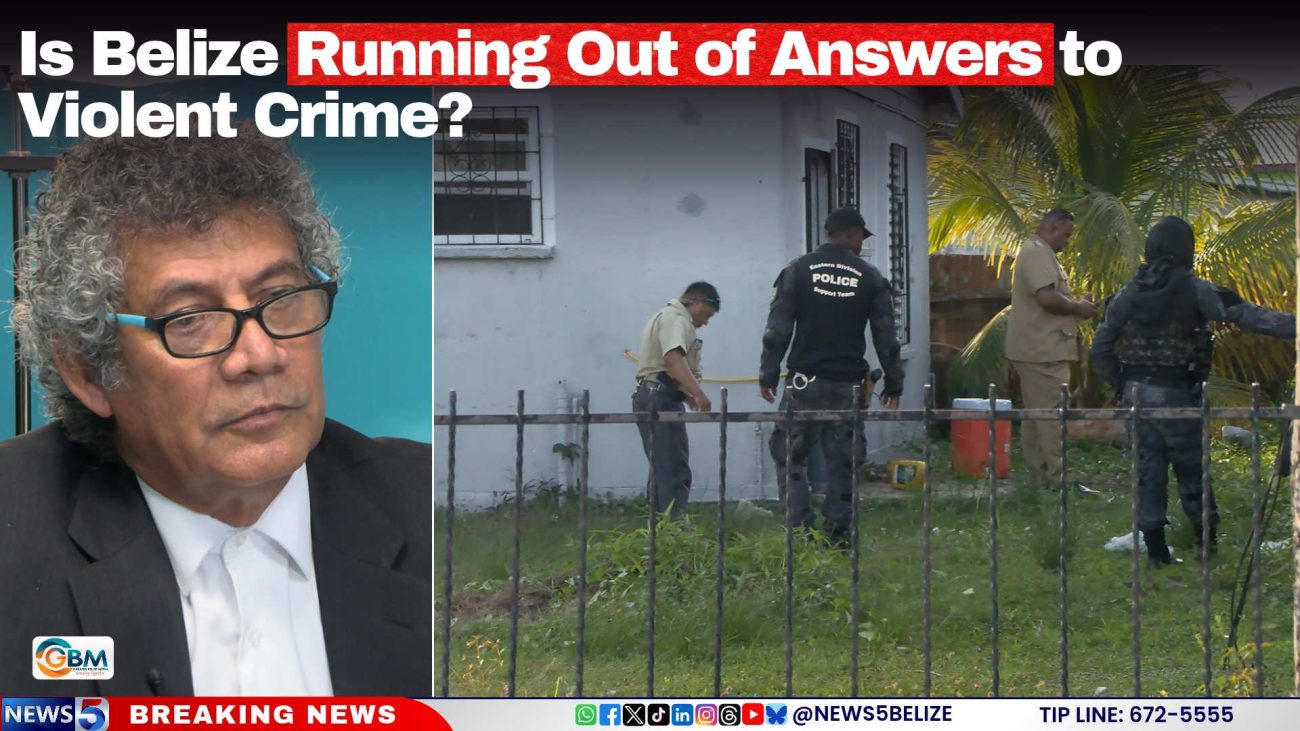
Is Belize Running Out of Answers to Violent Crime?
Is Belize relying too heavily on states of emergency to tackle violent crime? Attorney Richard “Dickie” Bradley says argues that the latest restrictions do little to address the poverty and social problems he believes are fuelling the violence.
Speaking about the house arrest regulations introduced under the latest State of Emergency, Bradley recognised that the restrictions could offer some assistance to police. However, he questioned whether confining individuals to their homes would produce lasting results, particularly as the country continues to grapple with gang-related shootings.
“It is asking a lot just to expect the police, on and of themselves, to be the ones that are in crosshairs in regards to the fight against crime. Because, this is an old, old saying, but crime is the result of poverty, crime is a major social problem, and certainly a major economic problem,” Bradley said.
His criticism draws attention to October’s quadruple murder on the Coastal Plains Highway, where four Belize City men were ambushed in broad daylight. Police recovered more than fifty expended shells at the scene, but have not established a motive.
Bradley says the government keeps returning to the same emergency measures instead of developing broader solutions.
“If you’ve got your alright job, if you consider yourself making a headway, you’re not going to grab no body change, you’re not going to grab no Chiney man grocery store. Those two things wouldn’t make sense,” he added.
Bradley instead criticised the government’s interest in adopting the security model of El Salvador under President Nayib Bukele, which he warns are approaches that rely heavily on mass arrests and harsh detention conditions.
On the house arrest regulations, Bradley said they could give police some help in controlling criminal activity. But he questioned the safeguards surrounding the notices and the possibility of restrictions being imposed unfairly.
“A statutory instrument allows the police to serve a notice on a person, anybody. They could not like you. They could want to take your girl. They could give you a notice that, hear what? You have been informed that you can’t come out of the yard. You can’t be out on the street. You only could go buy things you really need. You could go to hospital. You could go to work. But between this hour and that hour, you’re not allowed to go out, and so on and so forth. I would think it’s a little help in terms of the police trying to get a grip on what is happening,” he said.