



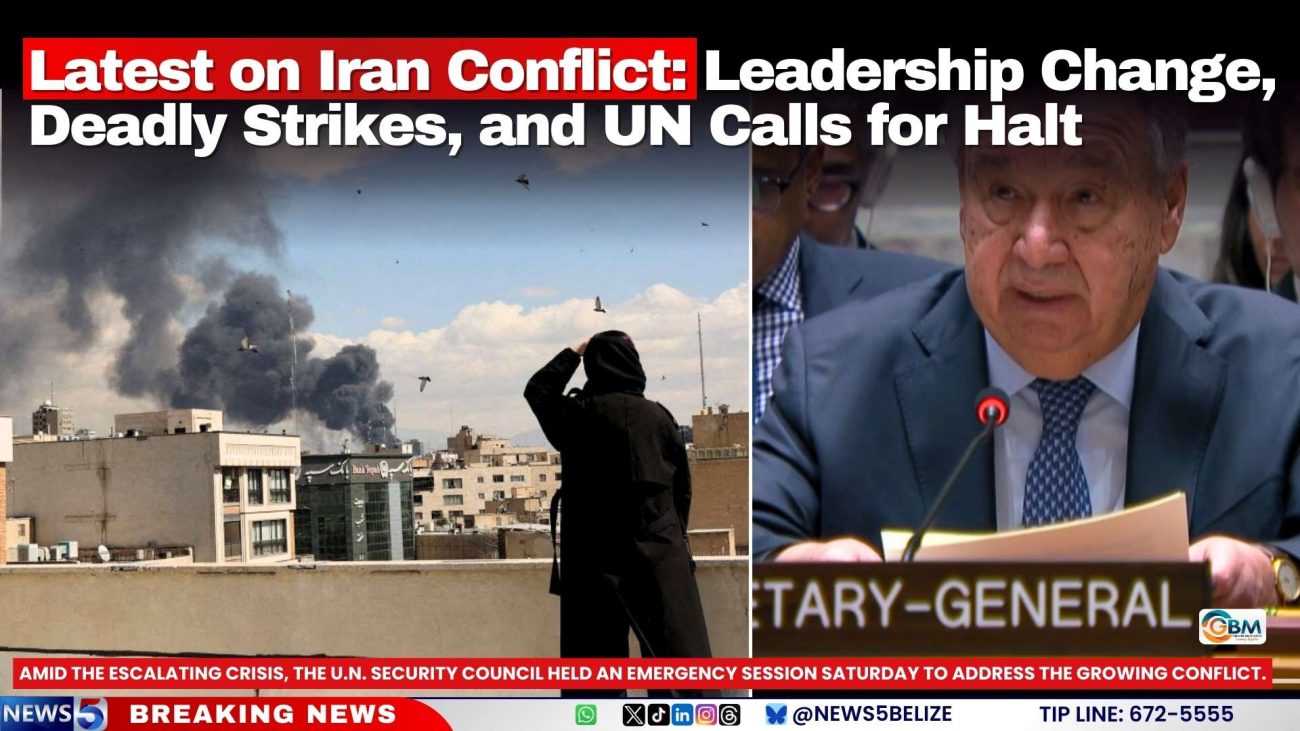
Latest on Iran Conflict: Leadership Change, Deadly Strikes, and UN Calls for Halt
Iran has formed a transitional council to lead the country following the death of Supreme Leader Ali Khamenei in U.S.-Israeli strikes, officials said. U.S. President Donald Trump told reporters that the new leaders “want to talk”, though he did not specify who they are, according to CNN.
Meanwhile, the violence continues to spread across the region. Israel carried out a fresh wave of attacks in the heart of Tehran, while Iran launched retaliatory strikes. One Iranian attack killed people sheltering under a synagogue near Jerusalem, and more details are emerging about a deadly strike on an Iranian primary school.
The strikes have disrupted travel across the Middle East, affected densely populated areas, and hindered the flow of oil through a vital shipping lane, raising fears of broader regional instability.
Amid the escalating crisis, the U.N. Security Council held an emergency session Saturday to address the growing conflict. Secretary‑General António Guterres urged all sides to halt attacks and return to negotiations, warning that “the alternative is a potential wider conflict with grave consequences for civilians and regional stability.”


Sponsored by RF&G Insurance
He condemned airstrikes by both sides for violating international law and the sovereignty of multiple countries, including Bahrain, Iraq, Jordan, Kuwait, Qatar, Saudi Arabia, and the United Arab Emirates.
U.S. Ambassador Mike Waltz defended the airstrikes as lawful, saying, “Iran cannot have a nuclear weapon. That principle is not a matter of politics. It’s a matter of global security. And to that end, the United States is taking lawful actions.” While Israel’s U.N. Ambassador Danny Danon described the attacks as necessary to prevent a nuclear-armed Iran from threatening the region.
Iran’s ambassador, Amir Saeid Iravani, accused the strikes of killing hundreds of civilians and called them war crimes. He criticised the Security Council for ignoring Tehran’s warnings and demanded immediate action. Tensions escalated further in a rare direct exchange between the U.S. and Iranian ambassadors, with mutual warnings and accusations of past atrocities.
Other council members expressed concern. Russia condemned the U.S. and Israeli strikes and called for diplomatic solutions, while China voiced alarm over escalating tensions and supported a return to negotiations.
European leaders from Britain, France, and Germany also urged renewed talks on Iran’s nuclear programme, stating that “the Iranian people must be allowed to determine their future.”
Facebook Comments