



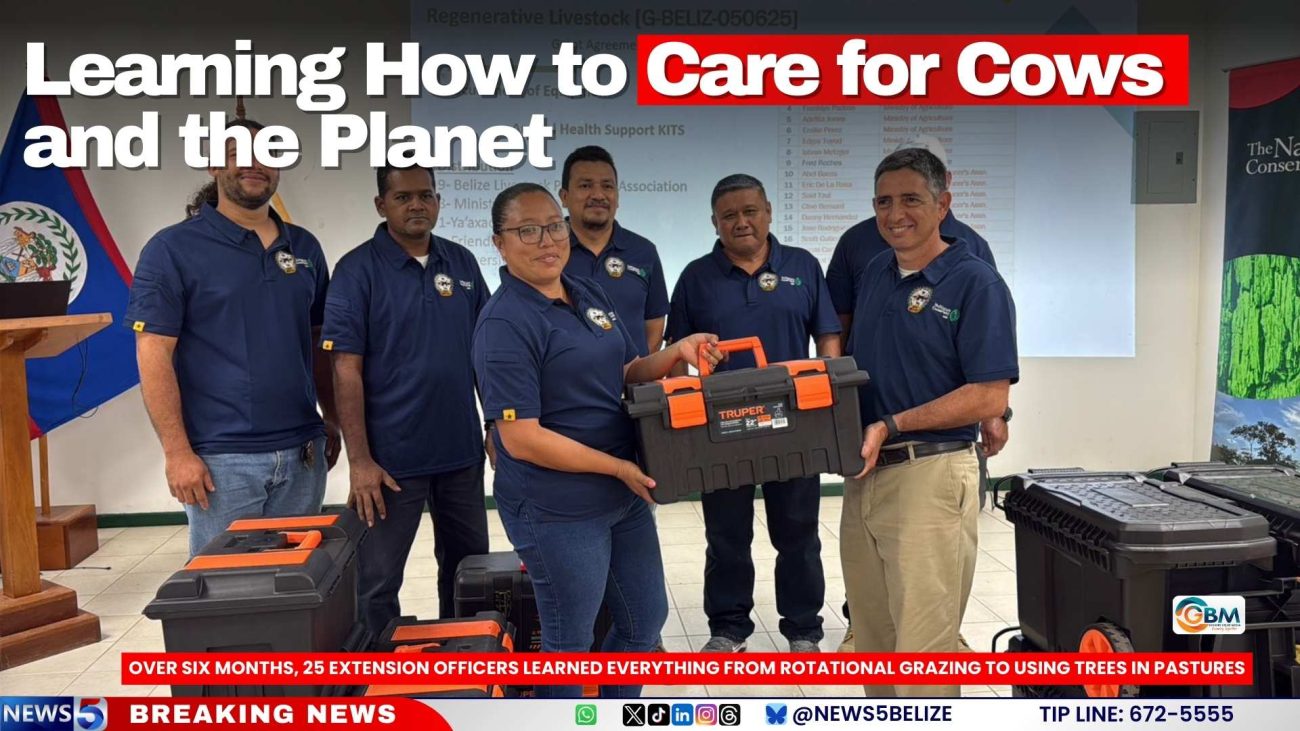
Learning How to Care for Cows and the Planet
Last week, the University of Belize Central Farm Campus buzzed with energy as Belize’s cattle farmers and extension officers gathered for a very special training: learning how to make livestock farming not just productive, but also kind to the planet.
Belarmino Esquivel, Principal Agriculture Officer in the Ministry of Agriculture, said it best: “I think this is a very important extension strategy… we need to move and transform the cultural sector into one that is no longer traditional but more productive, competitive, sustainable, and… more resilient. Very importantly, with a regenerative focus, meaning that we want to… take care of our soil, we need to take care of water management practices… This is a refresher course… farms are already in place in some districts and are being used to train our cattle farmers in the area of regenerative agriculture.”
In simple terms, the idea is to help farmers raise cattle in a way that’s healthy for the land, water, and animals, so future generations can keep enjoying farming in Belize.

Luciano Chi, Regenerative Agriculture Specialist for The Nature Conservancy, explained that this isn’t a one-group effort. “The extension strategy basically is a collaboration effort between different… stakeholders within the livestock sector in Belize, including the Ministry of Agriculture, the Belize Livestock Producer Association, the University of Belize, Belize Maya Forest, and The Nature Conservancy… Because we want to continue… doing the transition towards a more sustainable regenerative livestock system in Belize.”
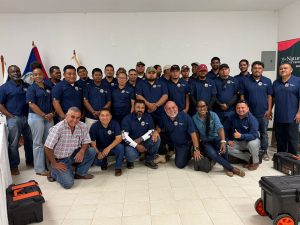
Over six months, 25 extension officers learned everything from rotational grazing to using trees in pastures, improving animal nutrition, and the full concept of regenerative agriculture. “Phase one has to do with the capacity building of the extension officers… we had a guest speaker, Dr Martin Battaglia, who discussed the entire concept of regenerative agriculture and the different principles that can be implemented by farmers,” Chi added.
Learning How to Care for Cows and the Planet
Now comes the fun part: putting all that knowledge to work. The second phase of the programme sends extension officers out to five model farms and 50 satellite farms, where they’ll train farmers on all these greener, smarter practices. As Chi explained, “These extension officers… go and train the livestock farmers… towards that transition.”
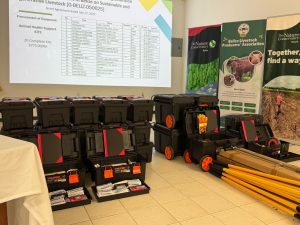
The programme also gave participating organisations practical tools to make the transition safer and more effective. Daniel Juan, a livestock lecturer at the University of Belize, said, “There were two sets of kits that were handed over. The first kit was primarily for animal health purposes. All of our participants who successfully completed the training deal on a regular basis with livestock, whether it’s through their extension service or the BLPA services that are provided to the farmers. One of the things that we want to do… safeguard as much as possible the wellbeing of the animals, of course, but in particular the wellbeing and health of the people who are handling these animals… So the kit includes things like gloves, masks, rubbing alcohol and an array of items that are used on farms with livestock… But they will also ensure that the farmers are safe, the personnel are safe, and the animals are handled properly, uh, with care… When they’re performing the husbandry practices on these farms… we feel that it’s very important that the people working with animals have the right tools, the right equipment, and the right knowledge and skills so that they can impart the new knowledge to move the industry forward.”
The second kit was designed to help extension officers demonstrate sustainable farm practices directly to farmers. “Using one of those tools is a self-pastoral system… A big component of the self-pastoral system is being able to rotate your cattle… One aspect of allowing or facilitating that rotational grazing is the use of electric fencing… In the kits, it is set up for the technicians to be able to demonstrate, again, keeping safety in mind… So there are leather gloves for safety, earth rods, wires, poly wire… all the tools and equipment that will allow the technicians to demonstrate with safety to the farmers how to install and operate an electric fence.”
Learning How to Care for Cows and the Planet
Juan stressed that soil health is just as important as the animals. “We have other tools such as a soil auger. Because soil health is a super important component of that transition mechanism… One of the things that we are going to strongly encourage farmers to do is take soil samples and have these analysed. The technicians will then be able to assist the farmers in interpreting that soil analysis so that they can then plot a way forward of how to go about amending their soils… Hopefully one of those amendments will include things like using cover crops, using legumes that are native to the areas and so on… So it’s a very comprehensive set of tools and equipment that are in the kits to, again, promote the industry for the long term and to safeguard the individuals working with the industry.”
Facebook Comments