



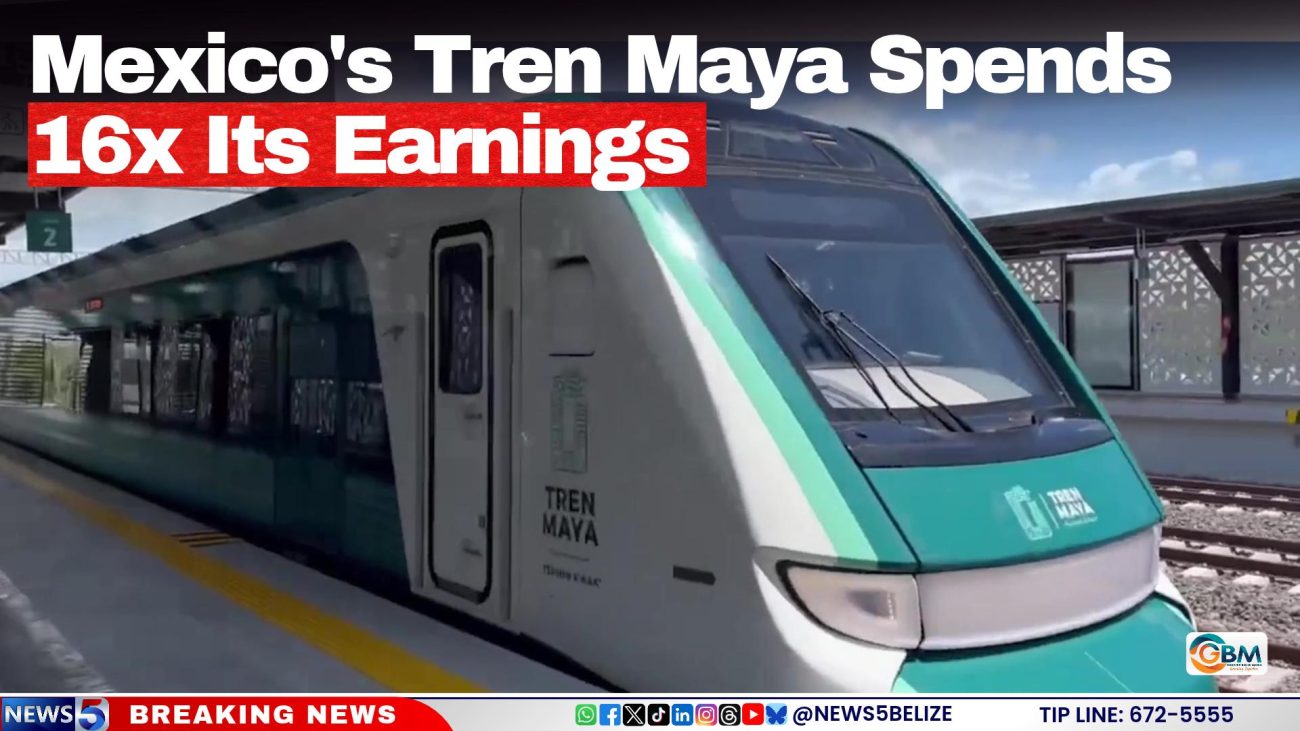
Mexico’s Tren Maya Spends 16x Its Earnings
Mexico’s Maya Train is facing a widening financial gap as operating expenses continue to climb while revenue from tickets and other services declines.
The railway earned 119.3 million pesos between July and September 2026, but its expenses reached 1.893 billion pesos, leaving a shortfall of approximately 1.77 billion pesos. That means the company spent nearly 16 pesos for every peso it earned.
PM Says IDB Study Will Test Whether Tren Maya Can Reach Belize
The figures, reported in the railway company’s financial statements and published by Riviera Maya News & Events, show a worsening position compared with the same quarter last year. Revenue fell by 17.6%, from 144.7 million pesos, while expenses increased by 43.5%, from 1.32 billion pesos.
The gap is also seen in the figures for the first nine months of the year. The railway generated 356.7 million pesos from commercial activities but recorded 4.647 billion pesos in operating expenses.
To keep the service running, the company continues to rely heavily on public funding. Between January and September, it received 2.764 billion pesos in government transfers, subsidies and grants, along with approximately 1.879 billion pesos from a trust funded by Mexico’s non-resident visitor fee.
Together, those sources provided more than 4.64 billion pesos, which is over 13 times the revenue generated directly by the railway.
The Maya Train, operated by Mexico’s military, opened in December 2023 under former President Andrés Manuel López Obrador. The company has also increased fares for the end of 2026 as it approaches its target of three million passengers.
In October, Prime Minister John Briceño said that the Inter-American Development Bank (IDB) is studying whether and how the railway can extend from Mexico into Belize and onwards to Guatemala.
In that October interview, Briceño said that “if we can get Tren Maya to come into Belize and then connect Belize City and then connect onto Guatemala, it opens up not only for the tourism industry but also for using the port facilities.”