



New Year, New You? The Science Behind Why New Year’s Resolutions Fail
That burst of motivation on January 1st is a familiar feeling. So is the guilt when your new gym routine or budget plan falls apart a few weeks later. If this cycle sounds familiar, you are in the overwhelming majority. Research suggests nearly 80% of New Year’s resolutions fail within weeks. This is not a personal failing. It is the result of a 4,000-year-old tradition colliding with modern psychology. The good news is that understanding why we fail is the first step to building habits that finally stick.
The Ancient Urge for a “Clean Slate”
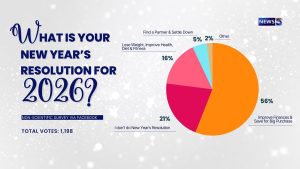
The pressure to make a yearly promise is not a modern invention. It is a tradition stretching back to ancient Babylon. Today, the goals are more about personal health and finances than pleasing gods, but the compulsion remains. A News 5 non-scientific survey revealed that over 75% of people are actively feeling the need to set a resolution when the calendar turns to 2026.

This urge has a scientific name: the ‘Fresh Start Effect.’
“It refers to the motivation people experience whenever something new is going to happen,” explained clinical psychologist Elicia Habet. “You have this feeling of creating a new identity. Forgetting your past failures.” The new year acts as a powerful psychological reset button that creates a sense of a clean slate.
Making these plans even feels good chemically. “The brain’s dopaminergic reward pathways activate,” Habet told News 5. “You anticipate what’s going to happen rather than completion.” In simple terms, you get a hit of dopamine, the brain’s ‘feel-good’ chemical, just from the optimistic planning. This explains why writing the goal can feel as satisfying, even before actually doing the work.
The “False Hope” Trap: Why Motivation Crashes
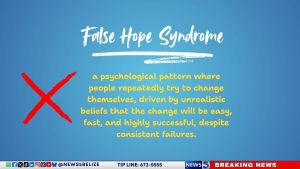
However, this initial rush often sets the stage for failure. Many fall into a pattern therapists call ‘False Hope Syndrome’.
Professional therapist Dr Denise Lenares-Solomon described it, stating, “You set this unrealistic goal. I’m going to lose 20 pounds by February 1st,” she says. Initial commitment brings excitement and action. “First week you hit it. And you’re feeling good.” Then, reality intrudes. Work, family, and daily demands resurface.
“You start missing. Then what happens is that you start to feel bad about it. That shame, the embarrassment because you’re not keeping up this high expectation.”
The eventual result? “You give up,” she added.
The cycle continues especially when a resolution is made for external validation rather than internal desire. “So many New Year’s resolutions are externally motivated rather than intrinsically motivated,” Habet added. “When you seek external validation from people, this does not keep you on the path. It is less sustainable.”
A Better Blueprint: Build Systems, Not Just Goals
Shifting from failure to success requires a change in strategy. The key is to build supportive systems, not just declare ambitious goals.
- Make Good Habits Obvious and Easy.
Instead of relying on willpower, redesign your environment. Habet gives a clear example: if you want to read more but always collapse on the sofa to watch TV, create a reading nook. “Maybe just designating a certain area of the living room, getting a new chair and putting the book right there.” This small environmental tweak makes the desired behaviour the path of least resistance. - Use the SMART Formula.
Vague promises fail. Concrete plans succeed. Experts recommend the SMART framework:
- Specific: “Exercise more” becomes “walk for 30 minutes.”
- Measurable: You can track your progress.
- Achievable: Be brutally honest about what fits your life.
- Relevant: The goal must matter deeply to you, not to someone else’s expectations.
- Time-bound: Set a clear timeframe for review.
“Resolutions have to be relevant to you, not anyone else,” Lenares-Solomon added. “That commitment, that motivation, will be there only if it’s relevant to you.”

The Hard Truth About Popular Resolutions
News 5’s survey’s data shows the top resolutions are improving finances and personal health. These are also the areas where people struggle most.
Financial consultant Rumille Arana warns that money management does not conform to a calendar reset.
“Finances are continuous. It’s a flow,” Arana told News 5. “People think it cuts off at December 31st, and then you can start anew. But the decisions that you make in the previous year will always come over to follow you.” His advice focuses on patience and mindset over a quick fix.
“A budget is a piece of paper; it doesn’t hold a gun to your head… It’s a mindset, and when you start developing that mindset, that’s when your life starts to change.”
The second most popular category, health and fitness, is also commonly abandoned just weeks into the new year.
- Fitness trainer Keith Jones advises that sustainability comes from small, consistent lifestyle integration, not all-or-nothing routines. “If you have 20 minutes a day, just move,” he says. The focus should be on sustainable lifestyle integration. “Don’t call it a diet; call it a choice of living.”

New Year, New You? The Science Behind Why New Year’s Resolutions Fail
The Final Word: Your Start Date Is Today
The central lesson from experts is that meaningful change is not owned by a single calendar date. The pressure of January 1st often promotes the unrealistic “all-or-nothing” thinking that leads to failure.
Lasting improvement is built through intrinsic motivation, realistic planning, and small, consistent steps that endure long after the January motivation fades. If your 2026 resolution has already stalled, you do not need to wait for 2027. The most effective day to build a better habit is “any day.”
Facebook Comments