


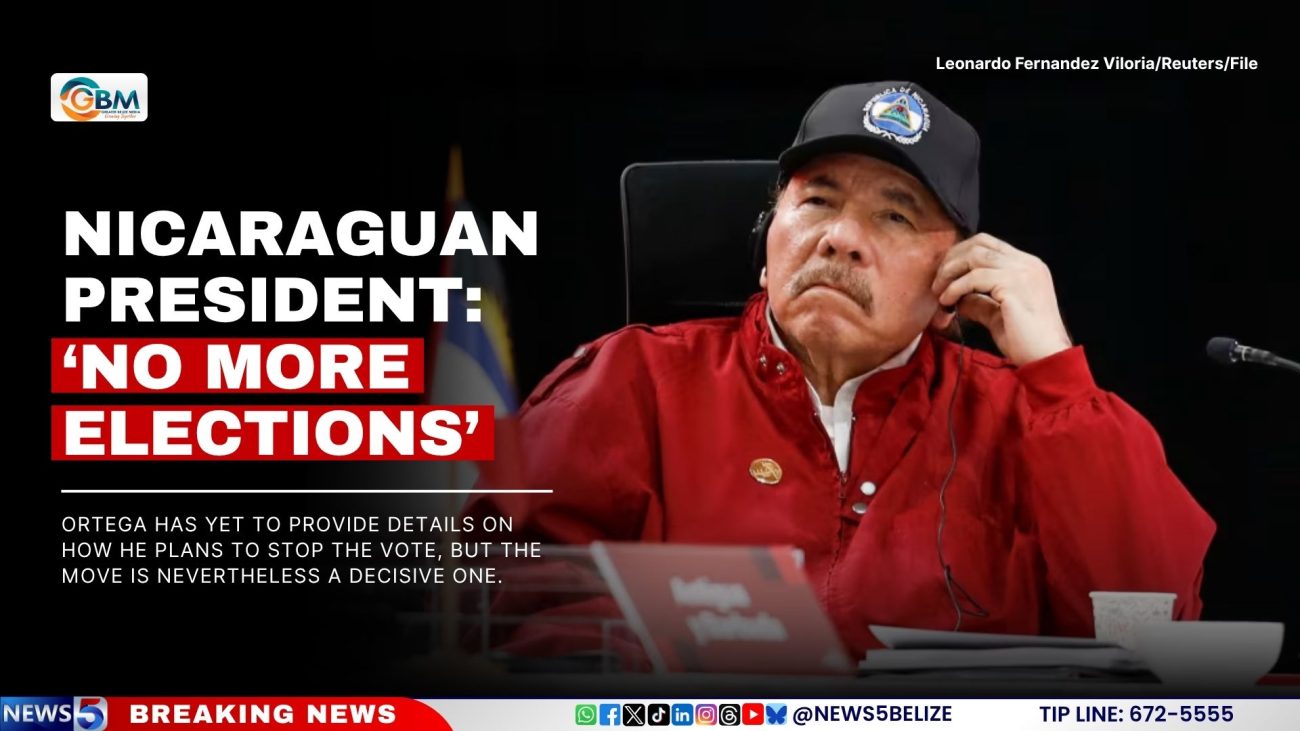
Nicaraguan President: ‘No More Elections’
Nicaragua’s president, Daniel Ortega, announced that he would cease elections moving forward. The move is an attempt to further solidify the hold on power held by the 80-year-old authoritarian leader and his wife. He framed it as an effort to protect the country from the opposition, whom he referred to as “coup plotters” and “traitors who sell out their country”.
At an official ceremony commemorating the 47th anniversary of the Sandinista Revolution, Ortega said, “There won’t be any more elections here for them to try to seize the government and seize power.” This was the president’s first public appearance in two months.
Ortega and his administration have been in power continuously since 2007, with the last election held in 2021. In that election, Ortega maintained his hold on power by jailing candidates and outlawing the opposition. The next vote was scheduled for next year, but following this latest statement, that prospect has effectively been cast aside. Felix Maradiaga, a former presidential candidate who was jailed and later exiled to the US, told Reuters, “Ortega publicly acknowledged what has always been his true intention: to prevent his tyrannical project from being subjected to any form of democratic competition.”
Ortega has yet to provide details on how he plans to stop the vote, but the move is nevertheless a decisive one. Whether intended or not, this manoeuvre will cement his perception as a dictator. The change is unlikely to be seen as sudden or unexpected, considering that last year Ortega appointed his wife, Rosario Murillo, as co-president. Following that appointment, he gave her authority over a majority of the government, including the armed forces and judiciary. He went on to implement rolling constitutional reforms that extended his term as president and moved the country to what is, in effect, a one-party system, with opponents risking jail, death, or exile.
Ortega’s administration has also come under continuous criticism for its brutal tactics, with the UN Human Rights Council accusing it of systematic human rights abuses. These accusations are by no means unfounded, as Ortega’s administration has repeatedly used systemic violence and murder in response to protests and threats to its power.
The measure has been interpreted by analysts abroad as effectively a desperate attempt to stamp out even the faintest hints of opposition, for fear that the administration could be overthrown. Tiziano Breda, a senior analyst at the Armed Conflict Location & Event Data Project, said, “Ortega and Murillo are evidently afraid of the idea that the slightest political opening could create the conditions for dissent to manifest and threaten their grip on power.”