


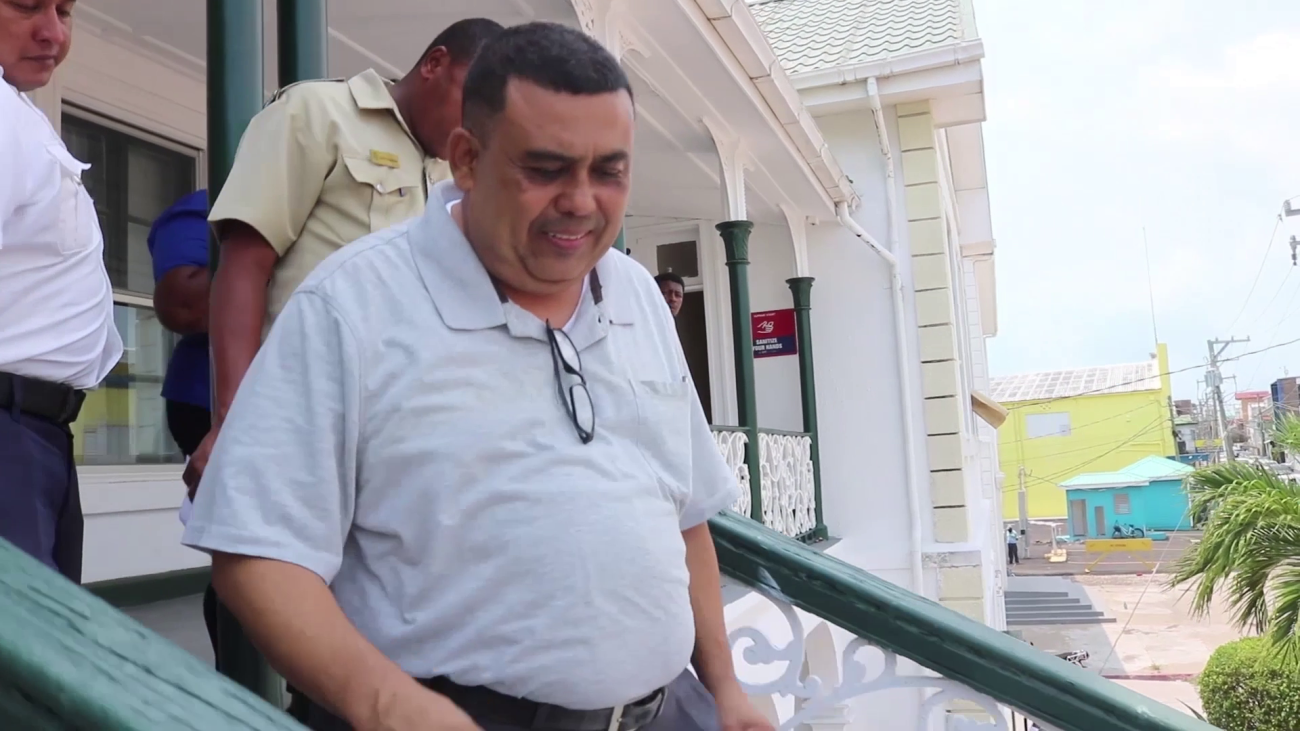
Prosecutors Fight to Reinstate Selgado’s Conviction
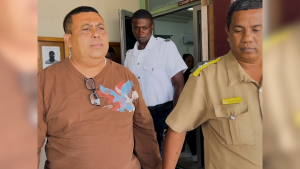
The freedom of Oscar Selgado now rests with the Caribbean Court of Justice. Prosecutors want the regional court to restore the attorney’s abetment of murder conviction, while his lawyers argue that doing so would revive the result of a fundamentally unfair trial. The case went before the CCJ in St. Lucia today, where both sides sparred over hearsay evidence, judicial discretion and Selgado’s constitutional right to defend himself. Cheryl-Lynn Vidal, Belize’s Director of Public Prosecutions, argued that the Court of Appeal applied the law incorrectly when it overturned the conviction. But Selgado’s attorneys, Arthur Saldivar, Michelle Trapp and Emmertice Trapp, maintained that the appellate court reached the right decision because the original proceedings placed their client at an unfair disadvantage. The CCJ must now decide whether Selgado’s acquittal will stand or whether his conviction will be restored. News Five’s Britney Gordon reports.
 Britney Gordon, Reporting
At the heart of the Oscar Selgado appeal is a critical legal question: even if the evidence against him was admissible, was it fair to use it? That question dominated arguments before the Caribbean Court of Justice in St. Lucia today, as Belize’s prosecution sought to restore Selgado’s abetment of murder conviction. Selgado was accused of soliciting the murder of Marilyn Barnes after she filed a complaint against him with the General Legal Council. A trial judge convicted Selgado, but the Court of Appeal overturned the ruling and freed him. DPP Cheryl-Lynn Vidal argued that the appellate judges misread the law and wrongly second-guessed the trial judge.
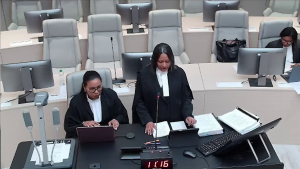
Cheryl-Lynn Vidal
Cheryl-Lynn Vidal, Director of Public Prosecutions
“The grounds of appeal that leave was given to argue are: one, that the court below misunderstood and misapplied the principles set out by this court in its decision in Japhet Bennett against the Queen regarding the test for the admissibility of hearsay statements, and as a result, erred in finding that the learned trial judge had wrongly admitted the hearsay statement of Giovanni Ramirez.”
The dispute comes down to one question: Was the statement legally admissible, but still unfair to Selgado? Vidal argued that the Court of Appeal focused too heavily on the statement’s prejudicial impact and wrongly second-guessed the trial judge. But Selgado’s legal team said admissibility was only the first hurdle. Even if the statement met the legal requirements, the judge still had to decide whether using it would deny Selgado a fair trial.
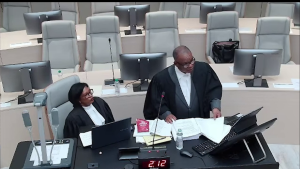
Arthur Saldivar
Arthur Saldivar, Attorney-at-Law
“We are saying that where fear has been established, it is proper for a statement under Section 105 to be admitted. But that is not where it stops. There’s a second requirement. That second requirement is whether or not it’s fair in the particular circumstances. The Court of Appeal in this case expressly held that the trial judge identified those two stages, identified them correctly, but failed in the second stage.”
 Saldivar maintained that the courts still had a duty to exclude the statement if its prejudicial effect outweighed its value as evidence. He argued that the case goes beyond the technical rules governing admissibility and strikes at Selgado’s constitutional right to a fair trial.
Arthur Saldivar
“The entire evidential picture should be taken into consideration. The state did not establish guilt through a constitutionally fair process in the original case. The admissibility under Section 105 does not answer the constitutional fairness question. And that’s, I believe, where the gravamen of the Court of Appeal decision lies. Was it constitutionally fair, even if you believe it was admissible?”
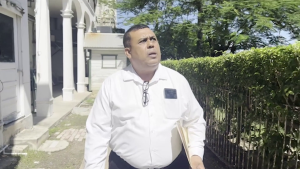 The Court of Appeal said Selgado did not get a fair trial, pointing to missing recordings, prejudicial evidence and his inability to challenge a key witness. Vidal disagreed, arguing that the court wrongly applied the fairness test. The law allows hearsay from a fearful witness, but judges can block it if it unfairly hurts the defense.
 Cheryl-Lynn Vidal
“However, we consider that, as this court held in relation to Section 105 in Michael Lee Williams, the admissibility of such a statement will nevertheless remain subject to the rule of common law that a judge in a criminal trial has an overriding discretion to exclude it if its prejudicial effect outweighs its probative value, or if it is considered by the judge to be unfair to the defendant in the sense of putting him at an unfair disadvantage or depriving him unfairly of the ability to defend himself.”
After roughly three hours of arguments, the CCJ reserved its decision. Until that judgment is delivered, Oscar Selgado remains free and continues to practice law. Britney Gordon for News Five.
Attention readers: This online newscast is a direct transcript of our evening television broadcast. When speakers use Kriol, we have carefully rendered their words using a standard spelling system.
Watch the full newscast here: