



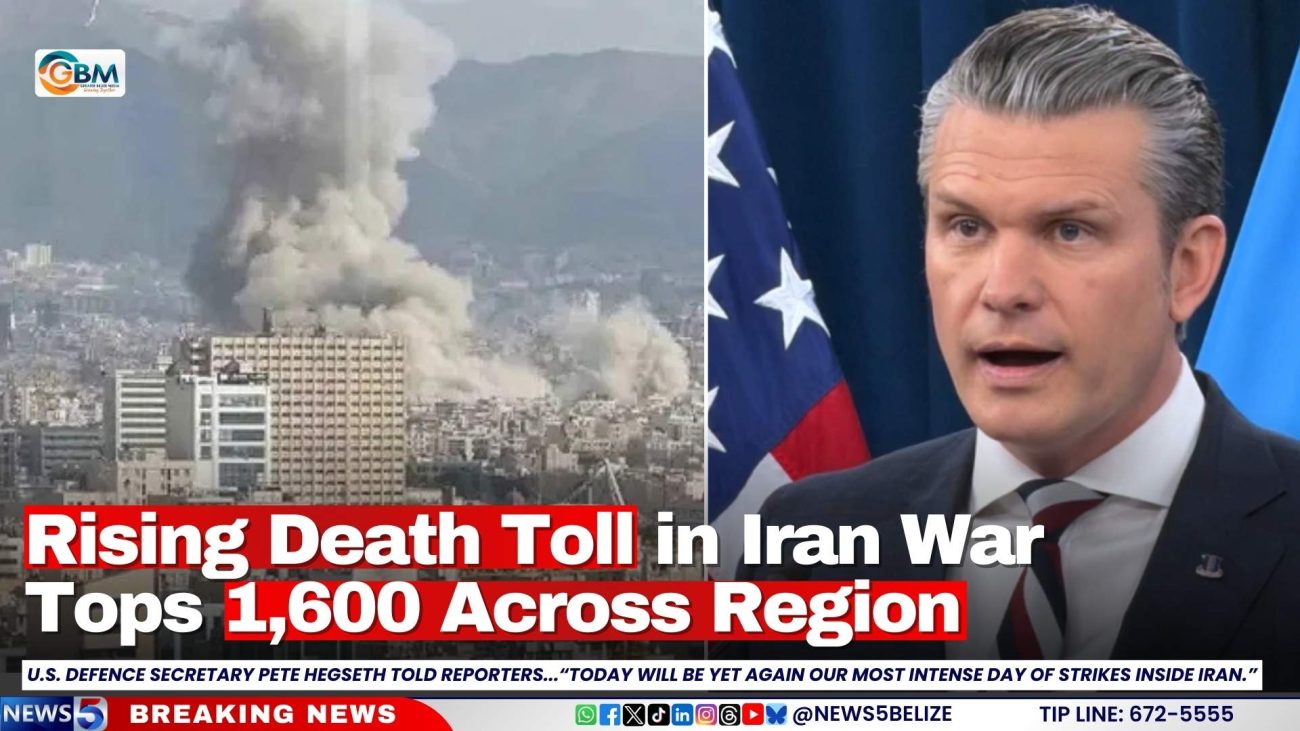
Rising Death Toll in Iran War Tops 1,600 Across Region
The United States says it is escalating military action against Iran, even as the country continues launching attacks across the Middle East.
U.S. Defence Secretary Pete Hegseth told reporters at a press briefing this morning that “today will be yet again our most intense day of strikes inside Iran.” At the same briefing, the chairman of the Joint Chiefs said Iran’s missile attacks have already fallen by about 90%.
Despite that, Iran kept up pressure on its neighbours. The United Arab Emirates reported nine drones hitting the country, killing two people. Bahrain said one person died and eight were wounded. Saudi Arabia destroyed two drones over its eastern oil region, while Kuwait’s National Guard shot down six.
The conflict’s death toll continues to rise. According to the Associated Press, at least 1,230 people have been killed in Iran, 397 in Lebanon, and 11 in Israel.

Meanwhile, President Donald Trump sent mixed signals about the conflict. He told Republican lawmakers the war might be a “short excursion” but later warned online that U.S. forces would intensify attacks if Iran tried to close the Strait of Hormuz.
The strait is one of the world’s most important routes for global energy supplies. Much of the oil exported from Saudi Arabia, Kuwait, Iraq, Qatar, Bahrain, the United Arab Emirates and Iran passes through the narrow waterway, meaning any disruption could quickly affect fuel prices worldwide.
Concerns about the conflict initially pushed oil prices sharply higher. On Monday, Brent crude rose to about $119 per barrel amid fears that shipments could be disrupted before falling to about $88 after Trump suggested the war could end quickly.
Even so, that is still much higher than before the war, when prices were about $72 per barrel.
If the fighting spreads or the Strait of Hormuz is disrupted, the cost of fuel, shipping, and many goods could rise worldwide, affecting economies well beyond the Middle East.
Facebook Comments