



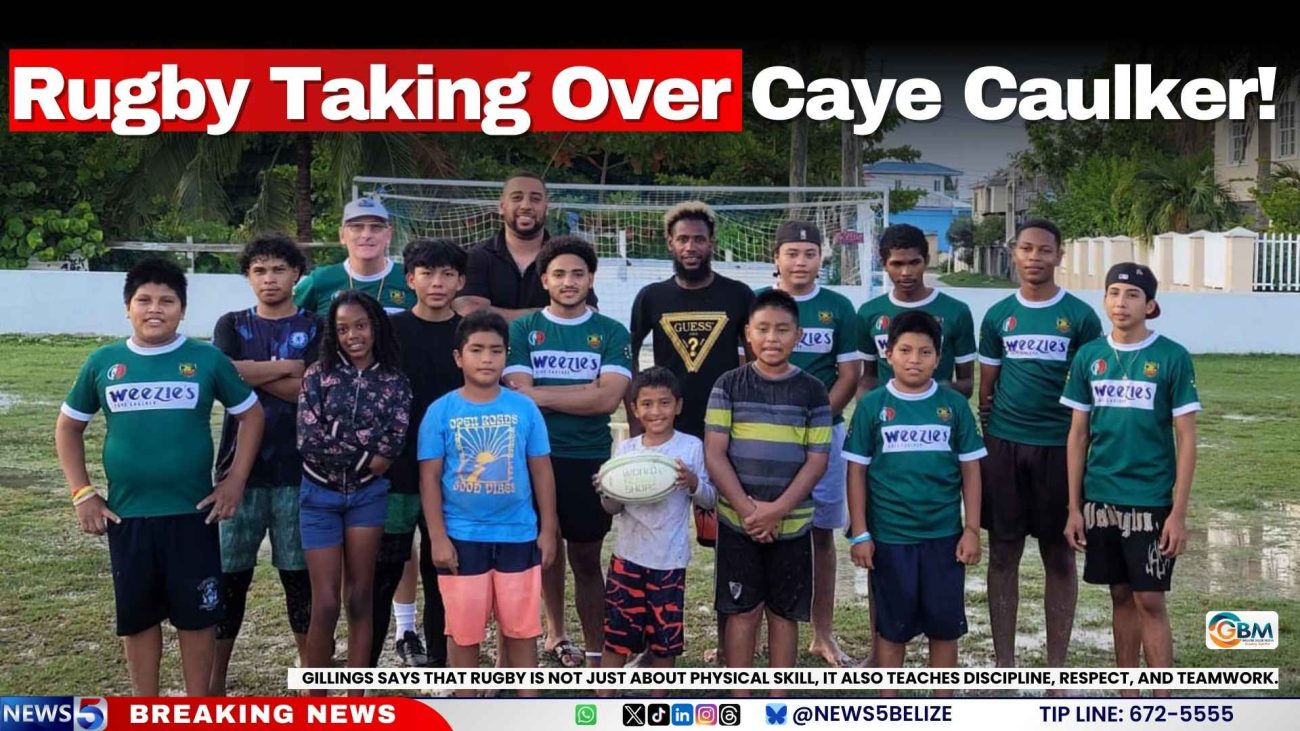
Rugby Taking Over Caye Caulker!
Rugby is steadily gaining ground in Belize, and nowhere is that growth more visible than in Caye Caulker, home to the Caye Caulker Crocodiles Rugby Club. With players ranging from young children to adults, the club is offering an exciting new outlet for athletic youth in the community, and it’s quickly becoming a local favorite.
For 21-year-old Tyler Richards, rugby has been life-changing. Richards has been playing with the Crocodiles for a year and serves as the captain of the under-21 team. He first got involved by helping coach younger players, but soon realised the sport was something he wanted to play himself. “One day, an older friend invited me to try rugby, and I loved it,” he said. “We ended up forming a team for players under 21, and that’s how it all started.”
What makes rugby stand out for Richards is its physicality and intensity. “It’s more physical than football, basketball, or softball. You can get hurt, but it’s a lot of fun. It keeps you in top shape, both physically and mentally,” he explained. Despite the tough nature of the sport, he says the team maintains a positive atmosphere during practice. “We don’t get mad at each other for making mistakes. Everyone is learning, so we support each other.”

Mentoring the Youth
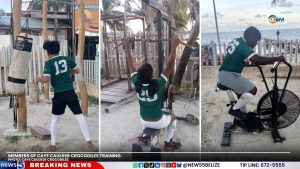
Training at the Crocodiles is rigorous and highly organized. Practices begin in the late afternoon, with players arriving around 5 p.m. Warm-ups, running drills, and physical conditioning dominate the first part of the session. Players then practice tackling, line-outs, and other technical drills, all designed to build strength, skill, and teamwork.
Even with the demanding schedule, camaraderie is key. Richards noted that players enjoy pushing each other but never harbor grudges. “Sometimes we get frustrated when players repeat the same mistakes, but it’s part of the learning process,” he said.
The club also focuses on developing young athletes. Richards helps coach children in the area, guiding them in rugby skills and emphasizing discipline and respect. “Rugby gives kids something to do throughout the day,” he said. “It teaches them how to work together and how to control their aggression in a positive way.”
Coach Tony Gillings, who manages the club, has been introducing rugby to Belize for over a decade. He arrived in the country in 2014 and set up six teams across Belize, including in Hopkins, Belize City, and Orange Walk. In 2018, he helped establish Belize’s first national rugby team, which played its first international match against Guatemala in Belize City.
After moving to Caye Caulker, Gillings was approached by the village council to set up a local rugby club for the community’s youth. Within months, he had 30 children, ranging from ages seven to 23, playing rugby regularly. Today, the club has grown to include an under-20 team of adults who train multiple times a week.
Rugby Sevens: Fast, Physical, and Exciting
The Crocodiles play Rugby Sevens, a shorter and faster version of the sport. Matches are divided into two seven-minute halves, making games more intense and action-packed. Rugby Sevens is also played internationally, including at the Commonwealth Games and the Olympics.
The team is preparing to compete in the Tropical Sevens tournament in Florida, one of the largest Rugby Sevens competitions in the region, bringing together over 100 clubs from around the world. However, administrative challenges have slowed the club’s official registration with the Belize Rugby Football Union, limiting their ability to compete in some regional events.
Gillings says that rugby is not just about physical skill, it also teaches discipline, respect, and teamwork. Unlike other sports, players in rugby must respect the referee’s decisions at all times, with only the captain allowed to speak to officials. “It teaches young people respect and accountability,” Gillings said. “On the rugby field, you can channel aggression safely. It keeps kids off the streets and gives them a sense of responsibility.”
Gillings has also used rugby as a tool to help at-risk youth. In Belize City, he worked with gang-involved teens, mentoring them through rugby training sessions. “I took two kids from difficult backgrounds to help set up a rugby club in Orange Walk,” he said. “They ended up becoming some of the best players we produced. It’s all about guidance, discipline, and consistency.”
Public Response and Growth
Although rugby is still relatively new in Belize, the sport is attracting attention. Tourists often join practices when visiting Caye Caulker, and local youth are increasingly participating. “It’s great to see people from different backgrounds playing together,” Richards said. “Even college students and visiting players come to train with us.”
The team mascot, Charlie the Crocodile, adds a fun and recognisable identity to the club, and while the team does not yet have a traditional chant or cheer, they are working on developing one.
Both Richards and Gillings hope rugby will continue to grow in Belize over the next decade. Gillings envisions the sport reaching the level of baseball or volleyball in popularity and possibly becoming part of the Olympic program for Belize. “We have talented, athletic youth who need opportunities,” he said. “Rugby can help keep them active, disciplined, and away from negative influences.”
Despite funding and organizational challenges, the Crocodiles are thriving, fueled by the passion of players and volunteers who dedicate their time to the sport. “The joy on the kids’ faces, their commitment, their laughter, and the teamwork they show, that’s what keeps me going,” Gillings said.
With dedicated coaching, community involvement, and growing public interest, rugby in Belize is carving out a new path for youth development and sports culture, one tackle at a time.
Facebook Comments