


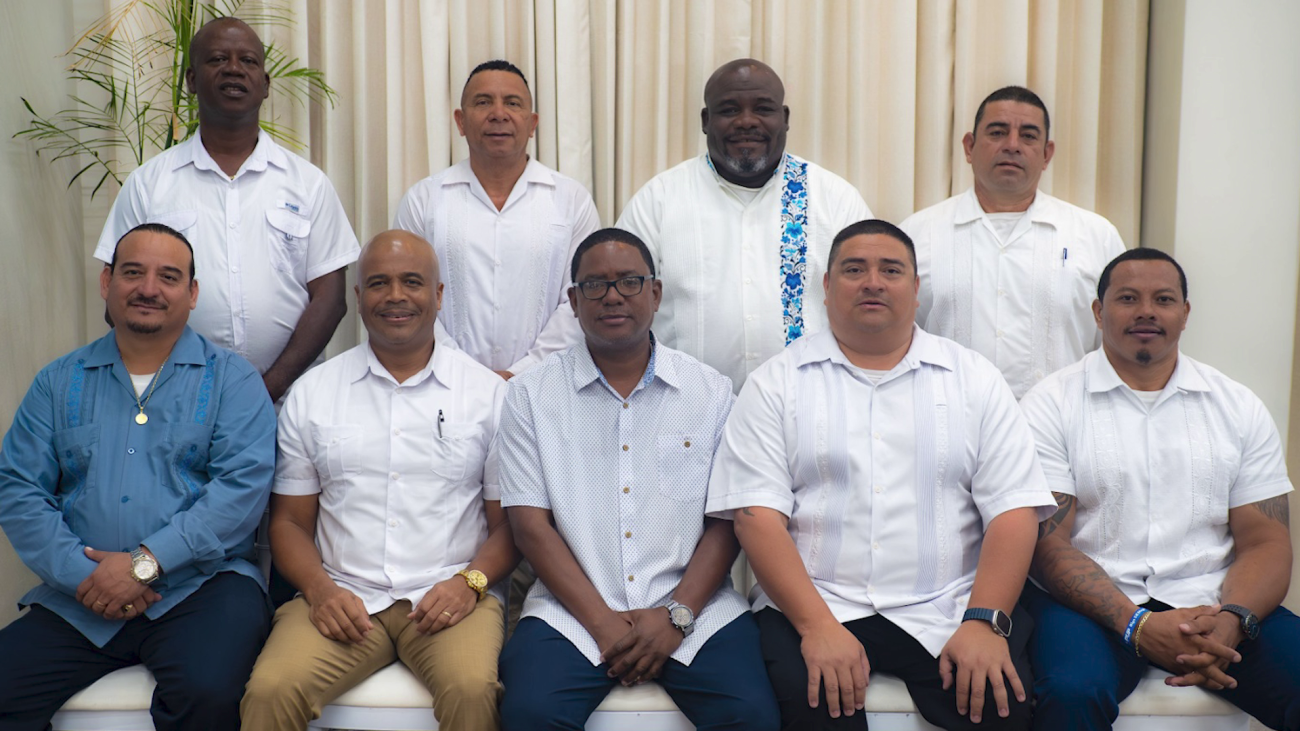
Should Municipal Leaders Have Post-Service Benefits?
Municipal leaders are often seen as part of the elite political establishment, high-profile figures who wield influence at the local level. But behind that perception is a growing debate about what happens when their time in office ends. Unlike many public officers, mayors across Belize leave their posts with no pension, no severance and no formal post-service benefits. As the Belize Mayors Association pushes for change, the question is whether years of public service should come with long-term security or whether that’s a burden taxpayers shouldn’t bear. News Five’s Shane Williams reports.
 Shane Williams, Reporting
Being a mayor in Belize is anything but a part-time job. It’s a full-time commitment that stretches beyond office hours and often into the personal lives of those elected to serve. But when that service ends, so too do the benefits entirely. Corozal Mayor Rigoberto Vellos is the President of the Belize Mayors’ Association. After nearly ten years in office, he says the lack of post‑service support remains a challenge they are now working to fix.
Rigoberto Vellos
Rigoberto Vellos, President, Mayor’s Association
“ We have a lot of mayors who have served for many years. And when they leave with they leave without having any support afterwards. So I am sure that the mayors of the country are looking forward to have something set in place that can assist them eventually, compensate them for all the hard work that they have done. So it is on the table; it is something we will look at and at some point we’ll try to see how we can pass it through the government so that it happens.”
Vellos says the demands of the job are constant. From daily administrative duties to field work, the role requires hands-on leadership every day of the workweek and often beyond.
Shane Williams
“ How many days a week are you here working?”
 Rigo Vellos
“I’m here every day. Every day I’m here. In the morning I’m out looking at work and in the afternoon I come here to deal with work and the people, every day – Monday to Friday.
Shane Williams
“And at the end of this term, how many years would that be that you would have been mayor?”
 Rigo Vellos
“It’ll be nine years and counting ’cause I am running again next year March. I look forward to it. We have worked extremely hard and I know that people will give us the support.”
In Belize City, Mayor Bernard Wagner agrees. Though he is not seeking another term, Wagner has been among the most vocal advocates for change, even if he won’t personally benefit from it.
Bernard Wagner
Bernard Wagner, Mayor, Belize City
“We have discussed it both at the local government level and with the Ministry of Finance but it is important that our municipal leaders have something to fall back on and I don’t only speak for myself. I speak for past mayors. Some mayors serve two terms, some three, so you are at the border line, three terms and you are at the borderline of being a public servant for ten years so to speak. But yet many of our mayors in the past have had little challenges. So we look at how we can better serve our mayors as they move off. If the public servants are able to enjoy some measure of benefits, then why not our mayors who serve in a deeper, higher capacity.”
For some, the issue goes beyond policy. It’s about fairness. Mayor Earl Trapp, who oversees San Ignacio and Santa Elena, is the longest-serving mayor in the country. He has seen firsthand how the lack of benefits affects those who dedicate years to public service.

Earl Trapp
Earl Trapp, Mayor, San Ignacio and Santa Elena
“I’ve been through this at the Town Council in San Ignacio so I know that the severance is the right for the people. You have worked your years, you must be compensated.”
Shane Williams
“You have a unique situation ’cause you have served publicly for a couple decades and you too, even as mayor, when you leave, whether it’s by defeat or by resignation, you have nothing to get from the Town Council.”
 Earl Trapp
“That’s correct. Unfortunately, neither one of the different municipalities or mayors there’s nothing in the Town Council Act that dictates that the mayors should get a pension. It’s something we’ve been fighting for since Darell Bradley was Mayor but since then, neither one of the leaders of government want to amend the Town Council Act to facilitate the different leaders with a pension.”
As the Mayors’ Association presses on, a bigger question hangs in the air: should elected municipal leaders walk away from public service with some form of long‑term security, or is leaving with nothing simply part of the sacrifice? Mayors may not draw much public sympathy, but as severance benefits come under scrutiny, many are asking whether it’s fair to spend years serving a community and have nothing to fall back on. Shane Williams for News Five.
Attention readers: This online newscast is a direct transcript of our evening television broadcast. When speakers use Kriol, we have carefully rendered their words using a standard spelling system.
Watch the full newscast here: