



SIB Reveals 2022 Census Insights: Migration Shifts and Poverty Realities
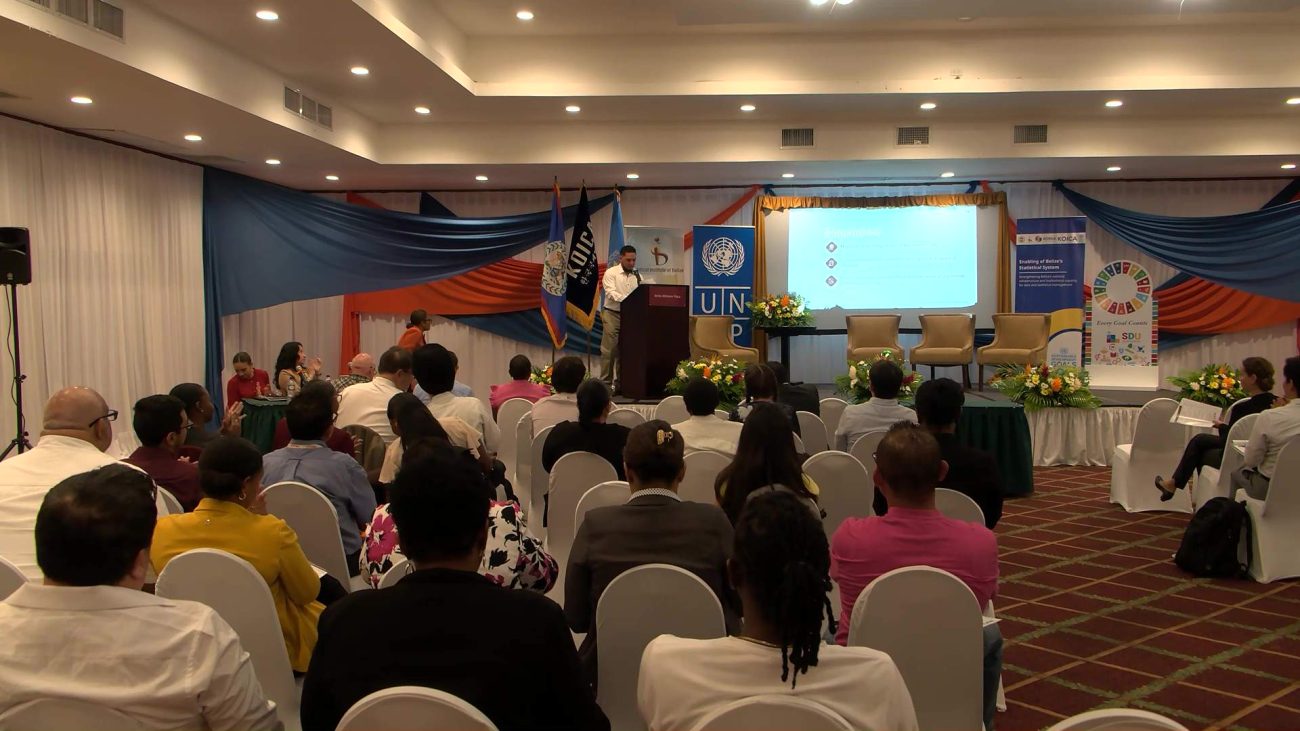
Today, the Statistical Institute of Belize celebrated the final day of Statistics Week. The annual observation highlights the vital role of statistics in national development. The SIB hosted a data users conference in Belize City, which brings together policymakers, researchers, development partners for data-driven collaboration. The event also marked the release of thematic reports from the 2022 Population and Housing Census, including the Migration Report and the Multidimensional Poverty Index Report, providing deeper insights into the dynamics of population movement, living conditions, and social well-being across Belize. Here’s News Five’s Britney Gordon with more details on those findings.
SIB Reveals 2022 Census Insights: Migration Shifts and Poverty Realities
Britney Gordon, Reporting
Statistics Week wrapped up today with a big finale, the Data Users Conference. It’s the one place where stakeholders from across Belize come together to talk numbers, trends, and how data shapes our future. SIB unveiled key findings from the 2022 Census, including two major reports, one on migration trends and another on the Multidimensional Poverty Index. These reports dig deep into how Belizeans are moving, living, and coping in today’s economy.


Diana Castillo
Diana Castillo, Director General, Statistical Institute of Belize
“We are very happy that we are able today to launch two of our census thematic report. We have been working on these since the data processing from the census has been completed. And so today we are presenting the findings of our census migration report as well as our census multidimensional poverty report. So those are one of the highlights of the day. We also have some panel discussions on these topics where we have policy makers and development partners. Who are speaking to the actual policy uses of the data that we are presenting here.”
 According to the report, forty-five thousand, six hundred and forty-four residents of Belize were born abroad, making up eleven-point five percent of Belize’s population. Among the main countries of origin are Honduras, El Salvador and Guatemala. The data also reveals that the average age of the foreign-born population is forty-three years-old in comparison to the native-born’s average age of twenty-three years. SIB Statistician, Lesley Cruz tells us what the data reveals about Belize’s migration trends.

Lesley Criz
Lesley Criz, Statistician, Statistical Institute of Belize
“The reasons for them to come to Belize is, again, the high age or the old age that they have is they’re coming here to work, which also is supported by, when we ask them what is the main reason for them coming into the country most of them had responded that it is to seek employment. However, what is really interesting for persons exiting Belize was that if you look at the different age groups, you have different reasons. So we have the young children and the persons fifty-five ears and older, they’re moving out of Belize to reunite with their families. Now, persons like. Youth and the young adults, they’re moving out for education purposes. And when we have our more the working age population, the twenty-four to forty-four years I think it is, they are seeking moving out to seek employment.”
 Cruz says most foreign-born workers in Belize find jobs in agriculture, construction, and retail. The conference also unveiled the Multidimensional Poverty Index, which measures poverty beyond income, looking at housing, food security, and access to education. The numbers? Twenty-six-point-six percent of Belizeans were classified as multidimensionally poor in 2022. Census Manager Christian Orellana explains what that means.

Christian Orellana
Christian Orellana, Manager, Census & Surveys Dept, S.I.B.
“Rural communities are more effective compared to urban. And also the Toledo District is a district that reported the highest level of incidents across all districts. And in terms of demographics, we see that education plays a role, where we see that persons that doesn’t have an education experience more multidimensional poverty. Households where economic activity, if they’re underemployed or unemployed, and they’re also affected. Other ones are, like, for example, by ethnicity, where we see that the Maya were the ones affected the most in terms of multidimensional poverty.”
The multidimensional poverty index is composed of four dimensions: health, employment, living standard, and education which have a total of seventeen indicators among them. Based on the data, the indicator that is contributing the most to Belize’s poverty rate is a lack of internet access and ICT.
 Christian Orellana
“This indicator looks like if the host will have both internet access and a computer. So this indicator is look from an education perspective, because the one that the hotel have, both the internet and the laptop. And in terms of dimensions, we see that the education and the living standards are the main contributors in terms of dimension to the MPI.”
The data shows a clear gap in quality of life between foreign-born and Belizean-born residents, especially in education. Today’s conference gave stakeholders a chance to pinpoint these gaps and plan solutions. Britney Gordon for News Five.
Facebook Comments