


Signs of Screwworm Infestation in Puma, Scarlet Macaw
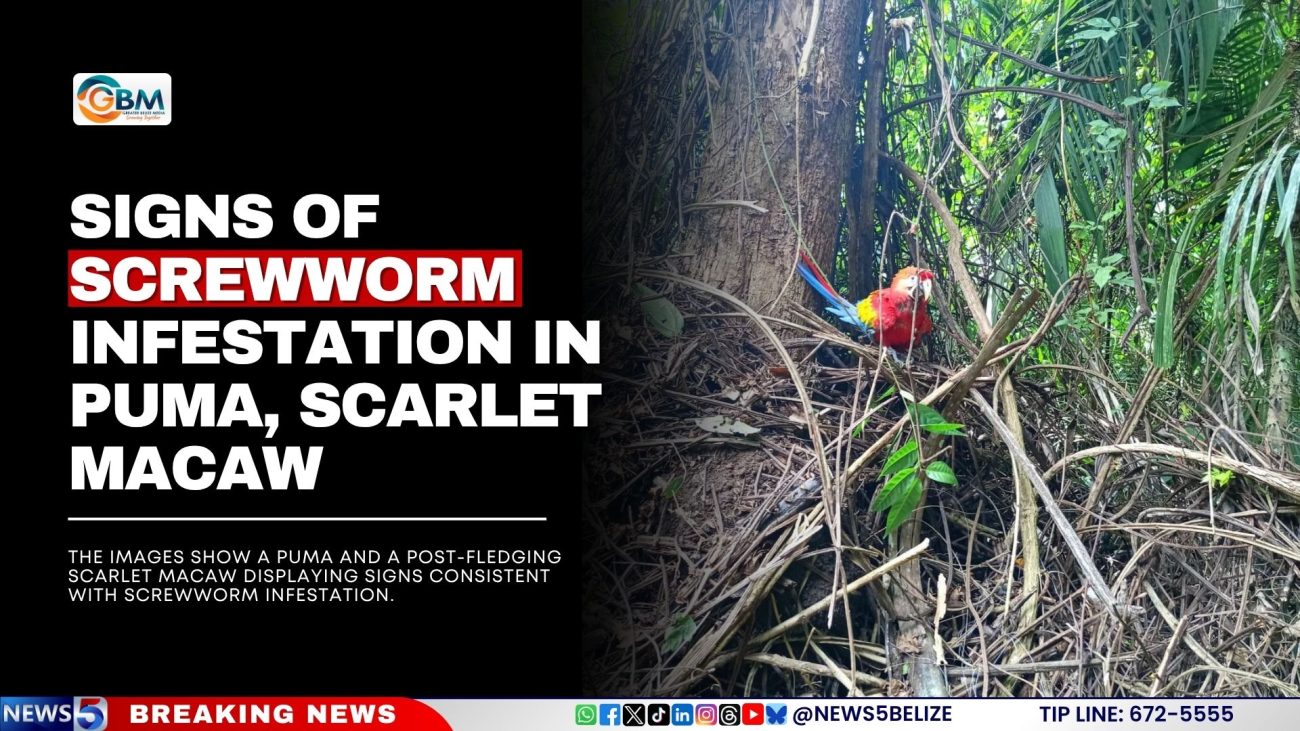
Friends for Conservation and Development, working with the Belize Wildlife and Referral Clinic, says camera-trap images have raised concern over possible New World screwworm infestation in two wild species in the western Maya Mountains.
According to FCD, the images show a puma and a post-fledging Scarlet Macaw displaying signs consistent with screwworm infestation.
The New World screwworm, scientifically known as Cochliomyia hominivorax, is a parasitic fly whose larvae burrow into the living flesh of warm-blooded animals, causing severe tissue damage, secondary infections, and, without treatment, death. The parasite had been eradicated from the region for decades using the sterile insect technique, releasing large numbers of sterilised male flies to collapse wild populations, but it reemerged in Panama in 2023 and has since spread rapidly across Central America, reaching Costa Rica, Nicaragua, Honduras, Guatemala, Belize, El Salvador, and eventually Mexico.
Belize’s Ministry of Health and Wellness, along with the Pan American Health Organization and the U.S. CDC, held a joint seminar earlier this year aimed at strengthening the country’s surveillance and clinical response to the parasite. Officials have flagged Belize as particularly vulnerable due to cross-border animal movement, its livestock production systems, favourable environmental conditions for fly reproduction, and occupational exposure among rural workers.
FCD says the population-level impact of screwworm on wild animals in Belize specifically is not yet fully understood, but the images captured of the puma and macaw highlight the need for continued monitoring, documentation, and research into how the parasite may be affecting wildlife beyond livestock.
The organisation says it will continue using its wildlife monitoring programmes to track emerging threats like this one and contribute data that can support broader conservation efforts across Belize.