



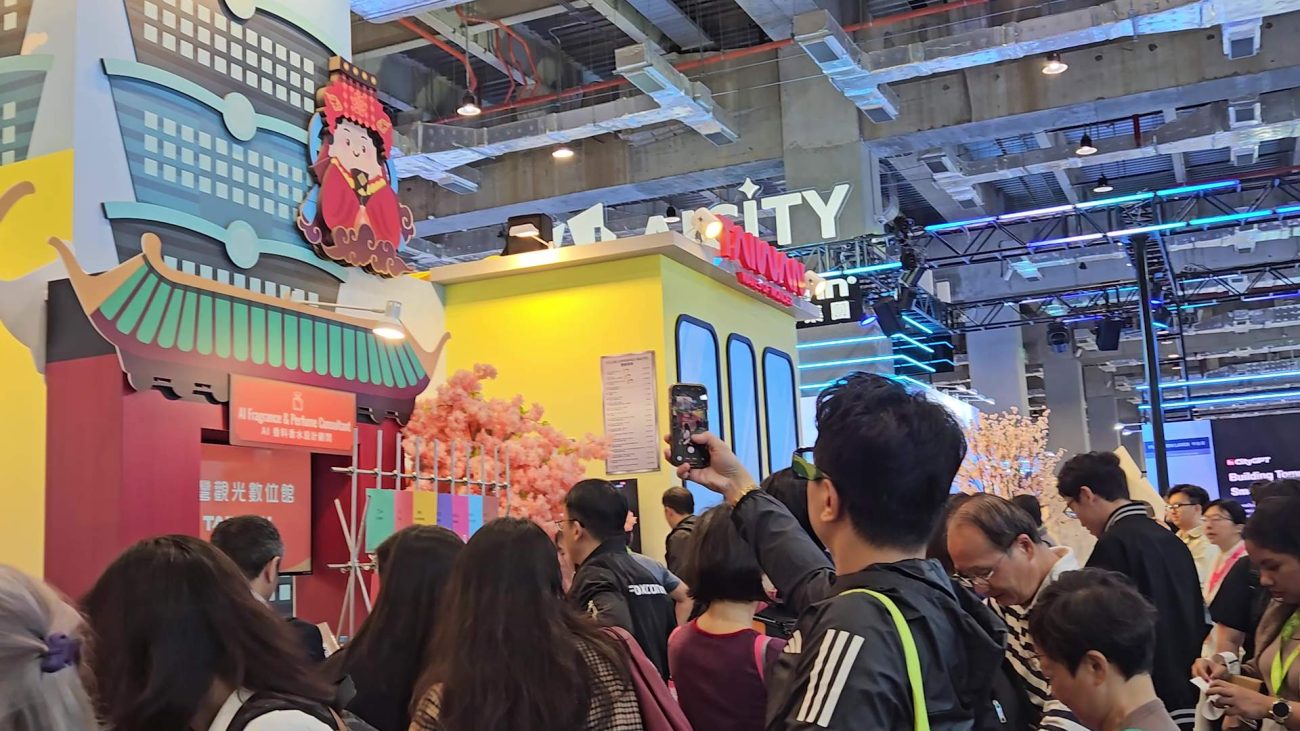
Taiwan Expo Highlights Real‑World Smart Solutions
The buzz around the latest technology continues on day two of the Smart City Expo and Summit in Taipei, Taiwan. From robots helping nurses in the healthcare sector to ones cooking a whole meal on demand, that’s what the exhibit floor looked like today. Our own News Five reporter, Benita Keme-Palacio, has been moving through the expo, testing the technology, and seeing firsthand how these innovations are already being used in real-life situations. Tonight, she breaks down the ones that caught her attention the most.
 Benita Keme-Palacio, Reporting
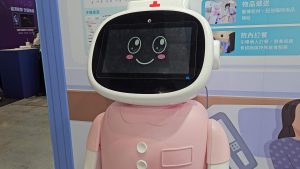
When people think of a smart city, they often imagine sleek, futuristic buildings. But at its core, a smart city starts with technology that assists people, from healthcare to emergency response to even the food we eat. Walking the exhibit halls, we met several technologies and innovations. Meet Eirbot. It’s quickly becoming a nurse’s best friend. By scanning a patient’s wristlet barcode, this robot delivers special packages directly to the bedside.

Voice of: Jian Lee
Voice of: Jian Lee, Medical Researcher, SCSE Exhibitor
“So this is our robotic, she can help the nurses to reduce the work in post-operative care, like dropping masks, and reducing the work of the nurse. Like a helper.”
The goal of Eirbot is simple: keep nurses where they’re needed most, at the patient’s side during critical moments. Packages, or “drops,” are sent by entering the patient’s information and bed number. The robot navigates to the patient, scans their wristband, and delivers the package automatically.
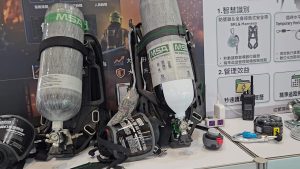
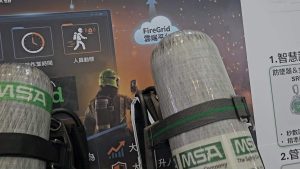 Meanwhile, safety for firefighters is also getting a digital upgrade. New gesar from MSA now tracks a firefighter’s oxygen levels and location in real-time, sending the data directly to a command center.
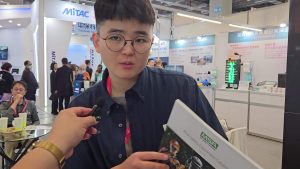
River
River, MSA Representative, SCSE 2026
“This is the Smart Firefighting system. Traditional SCBA (Self-Contained Breathing Apparatus) can’t know how much gas is inside. Now, we got the electrical gas gauge so we can now know how much gas is inside and how many firefighters are at the scene. So, the director can control the situation. The firefighters will get their deserved safety.”
 Benita Keme-Palacio
“Can this gear be adapted in any country?”
River
“Mostly in USA now, but if you subscribe to MSA service, then it can conduct every country.”
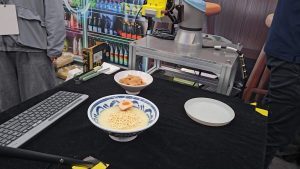 But it’s not all life-and-death. AI is also entering everyday life, like this robot that crafts a bowl of ramen from scratch.
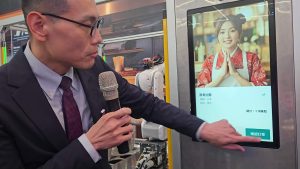
Harold
Harold, Exhibitor, SCSE 2026
“Let me show you, start talking… it’s trying to process your voice, to confirm your order press confirmation. So over here, you see the robotic arm trying to it’s work right now. It gets the noodle and puts it into the boiling water. It’s about 90 seconds that it gets the ramen done. If the noodles are fine, it goes over to the toppings it puts everything that you need for a perfect ramen.”
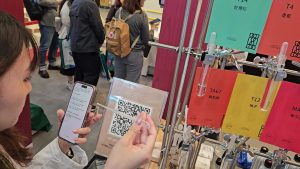 And of course, there’s an interesting use of AI; this one takes personalization to a new level, a system that asks questions about your personality to generate a custom perfume recipe.
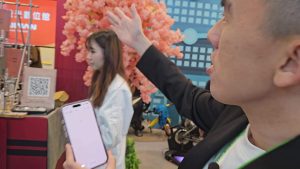
Jacob Chou
Jacob Chou, Exhibitor, SCSE 2026
“So we call this the AI perfume consultant, so once you just scan the QR code and start with this, so you will see there’s a chatbot just really like ChatGPT, where it asks you some questions. First it will ask you to choose the themes. And I just talk to the AI; it’s just thinking about it. and it’s generating…. So here’s the answer. So the AI just suggested, it will tell you what’s the best ratio of this, and when you mix it together, you will get your custom perfume.”
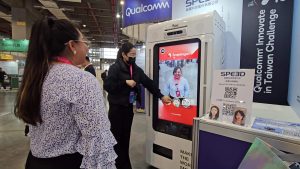 In the Startup Zone, technology turns your photo into digital art almost instantly, ready to download via QR code.
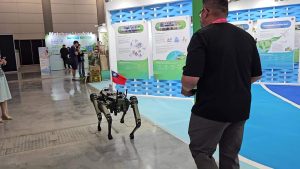 And the showstopper? A four-legged “robotic brain on legs.” Using Sim-to-Real technology, it learns to walk in a virtual environment before stepping into the real world.
Chris Chang, Exhibitor, SCSE 2026
“It is our product for robotic dogs. It focuses on vector inspections of the environment, air, and air conditions. Our main customer is about fabrication. The design needs to be suitable for any kind of situation, like climbing stairs, or cross some bridge, yeah something like that. Cost depends. Because I need to input some sensors suitable for the customer. It’s on customer’s needs.”
Whether it’s keeping nurses by a patient’s side, giving firefighters more safety, or even turning a simple photo into art, these technologies are giving us a glimpse into the innovations bringing us one step closer to the future. Benita Keme-Palacio for News Five.
Attention readers: This online newscast is a direct transcript of our evening television broadcast. When speakers use Kriol, we have carefully rendered their words using a standard spelling system.
Watch the full newscast here:
Facebook Comments