


Teachers Trade Classrooms for Coastline in Mangrove Training
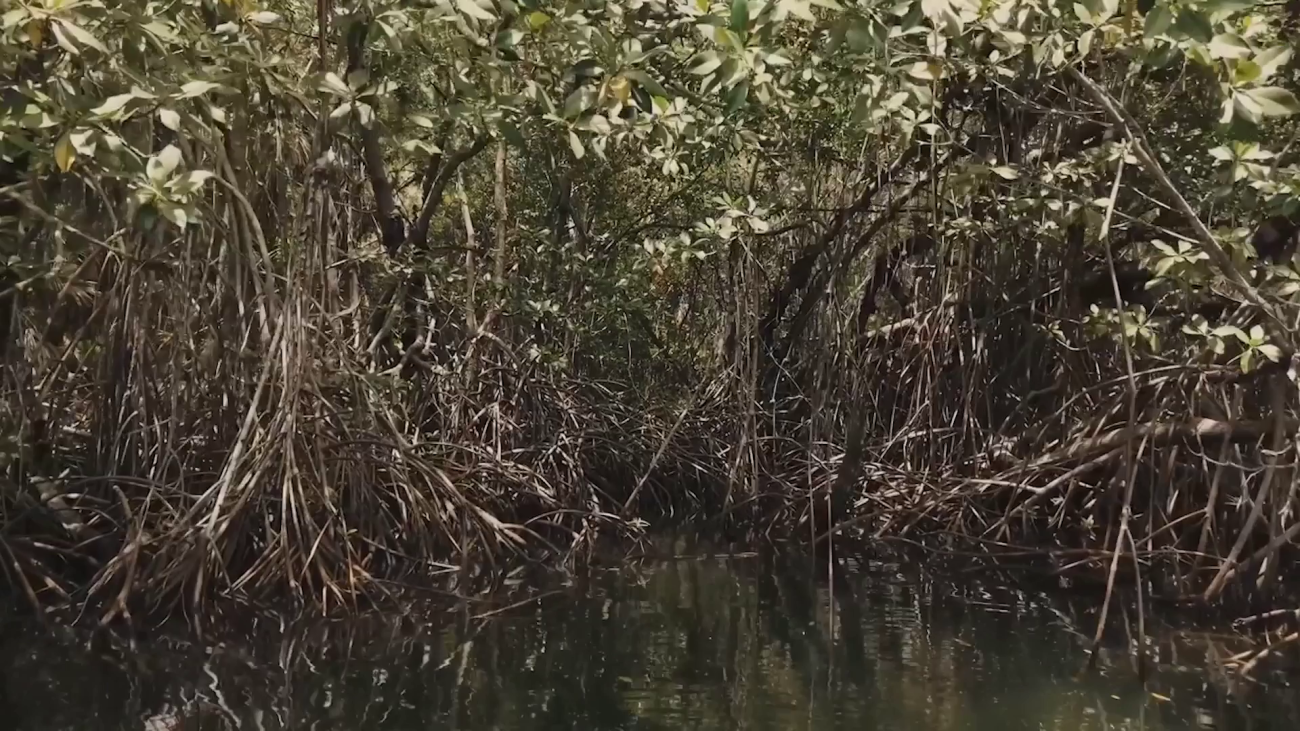
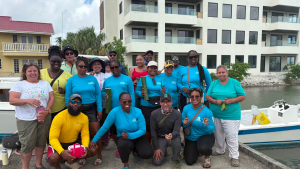
Belizean teachers are trading the classroom for the coastline this week. At Calabash Caye, they’ll spend four days learning how mangroves help protect communities from climate change and how restoration efforts can make a difference. The workshop, led by Belize WaterWays and its partners, gives educators hands-on conservation experience they can take back to their students. News Five’s Britney Gordon reports.
 Britney Gordon, Reporting
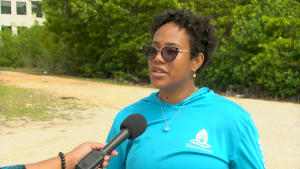
Mangroves do a lot of heavy lifting for Belize. They help shield our coast from storms and erosion, provide a home for marine life, and filter water before it reaches the reef. This week, a group of teachers is getting a firsthand look at just how important these ecosystems are through Project Mangrove: Enhancing Resilience to Climate Change in Belize. WaterWays Program Coordinator Miracle Bood says the goal is to equip teachers with the knowledge and experience to become environmental ambassadors in their schools and communities.
Miracle Bood
Miracle Bood, Program Coordinator, Belize WaterWays
“Usually, teachers tend to do projects and workshops in their classrooms and everything else, but we wanted to do a flip side immersive fun project where teachers get to learn the ridge-to-reef perspective, pretty much to understand the watersheds in Belize. And yesterday we did the freshwater perspective where the teachers learn about the Sibun River watershed. They learn about biotics and abiotics, as well as watershed health and how to regulate it, how to do rapid assessments, as well as to become familiar in the simplest and most fun ways possible.”
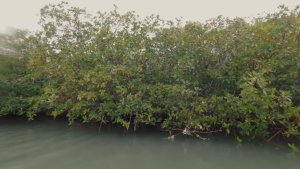 Project Mangrove is a collaborative workshop series led by WaterWays, Galen University, and the University of Belize’s Environmental Research Institute, with support from the CEK Foundation’s Earth Focus Initiative and the World Wildlife Fund. WaterWays Education Coordinator Peri Edwards says the program helps teachers understand the connections between Belize’s watersheds, water quality, mangroves, and climate change, while providing hands-on training.
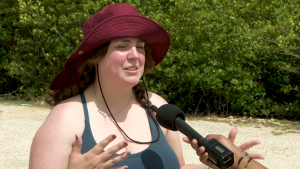
Peri Edwards
Peri Edwards, Education Coordinator, WaterWays
“It’s just a great opportunity to kinda teach them how to make the outdoors a little bit more approachable and make science fun, a little less scary, and just empower not only our teachers but our students and our community to really take ownership of our water and our environment. Belize is blessed to have so much forest cover and so many protected areas as well as mangrove coverage.”
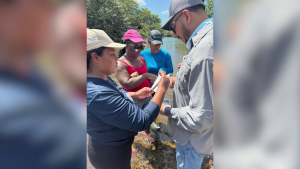 On Monday, participants traveled to Monkey Bay Wildlife Sanctuary and headed to the Calabash Caye today for hands-on training in mangrove restoration. Cyndi Vellos is one of thirteen teachers diving headfirst into the course. She tells us what she has learned from the course so far.
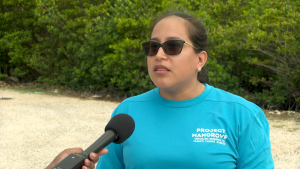
Cyndi Vellos
Cyndi Vellos, Teacher, Corozal Junior College
“People should know the importance of the river and why it cuts in the way that it does. From there then, we started to collect water samples because we wanted to look at the quality of the water. We tested for dissolved oxygen, phosphates, nitrates, and we were given some charts in order for us to be able to look at the water quality. So I can safely say that the Sibun River has excellent dissolved oxygen, phosphates, and nitrates.”
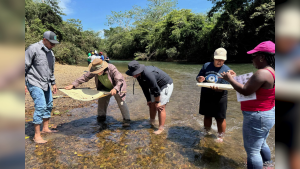 This year, some returning participants are now serving as teacher leaders and helping to train their peers.
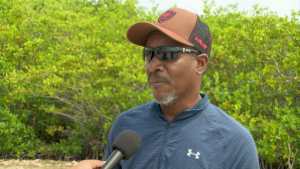
Winston Elijio
Winston Elijio, Teacher, Pallotti High School
“It’s important to pass on the knowledge I’ve gained after being with Project Mangrove for three years, pass it on to other teachers, and this will allow them to, to better understand and to teach their students about seabeds, reef, mangroves, also teach them about conservation, preservation.”
The workshop brings together teachers from across Belize, from Orange Walk to Punta Gorda, and offers more than twenty continuing professional development credits. Britney Gordon for News Five.
Attention readers: This online newscast is a direct transcript of our evening television broadcast. When speakers use Kriol, we have carefully rendered their words using a standard spelling system.
Watch the full newscast here: