

Two Hundred Million Invested in Belize, But Challenges Remain
Belize is attracting more foreign investment, but the country’s latest economic report card shows that investors are still running into familiar roadblocks. The U.S. Department of State says Belize continues to offer strong opportunities, even as bureaucracy, land disputes, corruption concerns and regulatory delays threaten investor confidence. Britney Gordon has the following story.
 Britney Gordon, Reporting
Foreign direct investment surpassed two hundred million dollars during the first half of 2026, continuing a strong run of investor interest in Belize. But behind that growth is a more complicated picture. The latest U.S. Investment Climate Statement credits Belize for economic stability and ongoing reforms, while warning that red tape, governance concerns and slow government processes continue to make doing business difficult. Lincoln Blake says new technology will streamline applications, improve transparency and reduce delays.
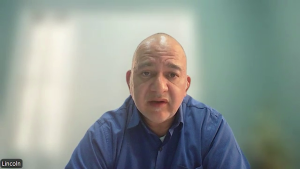
Lincoln Blake
Lincoln Blake, Director, Investment Policy and Compliance Unit
“Belize is a developing country. It has economic structural issues just like any other developing country. So, we have been implementing several reforms so as to improve the investment climate. In fact, we have, we have been doing a very aggressive digitization program which has actually helped or will help with the transparency, not only with policy but also with procedures and whatever type of applications you may have. And also turnaround time. We’re very hopeful the reduced turnaround time with the digitization programs that we have in place right now.”
 The report highlights tourism, agriculture, renewable energy and digital services among Belize’s strongest investment prospects. But as new businesses enter the market and existing industries expand, employers are facing another challenge: finding enough workers with the right skills. Blake says some labor and immigration policies were developed when unemployment was much higher. With the labor market now changing, government is working on seasonal employment program for agriculture, construction and tourism.
 Lincoln Blake
“Right now we have a low unemployment rate, which means that the policies that are in place are not, are not reflecting what is the reality on the ground. Which is a lack of employment and a lack of enough skilled personnel and persons to actually do the lower-end type of jobs. And so we have been working in the Ministry of Immigration, and the Labor had, have a seasonal workers program that they have been working with the Agricultural Department, the construction sector, and the tourism sectors.”
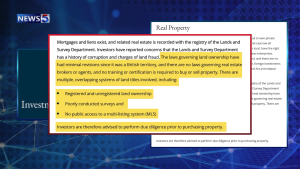
Land ownership remains one of the biggest concerns. The report points to overlapping title systems, weaknesses in land administration and lingering uncertainty over property ownership. Those issues, it warns, can lead to disputes and discourage potential investors. But Mike Singh, President of the Belize Real Estate Association, says the country still offers a major advantage: foreigners can own titled property with relatively few restrictions. He warns, however, that any perception of uncertainty can damage the entire industry.
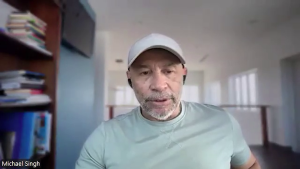
Mike Singh
Mike Singh, President, Belize Real Estate Association
“It’s a reputational harm on Belize in general. If there’s an impression out there that things are not being done right as a practice then it hurts the entire industry. The last thing we want is for Belize to be viewed as a jurisdiction where you cannot have certainty in title, which is not the case. If you compare us to, say, like Mexico, Mexico will not give a title to a foreign landowner. They will only give what they call a fideicomiso, which is a trust that has to be held by a Mexican attorney. So there’s no real title. And most of the countries in our region don’t actually provide a title like we do.”
 Belize is also preparing an Investor Residency Program that would offer permanent residency to individuals making a minimum commercial investment of two hundred and fifty thousand dollars. The program has been approved, but the legislation needed to activate it is still awaiting passage. And while foreign investment often dominates the conversation, Blake says government is also targeting Belizean entrepreneurs through its investment strategy and programs for micro, small and medium-sized businesses.
Lincoln Blake
“Our investment climate strategy, which is BIBCAP, focuses not only on foreign direct investment. We focus a lot on local investment, too. In fact, our MSME program is one of our pilot projects and initiatives. We, just like any other country, we do recognize that the micro, small, and medium enterprises are the pillars of the economy. They generate innovation, they generate over half of the employment, and they are the ones that actually grow. That’s where you find the emerging sectors.”
So, while investment continues to grow, the message from the report is clear: economic opportunity alone will not erase longstanding concerns. Belize must now turn promised reforms into measurable improvements in transparency, land administration, procurement and regulatory efficiency if it wants to strengthen investor confidence and protect its reputation as a viable place to do business. Britney Gordon for News Five.
Attention readers: This online newscast is a direct transcript of our evening television broadcast. When speakers use Kriol, we have carefully rendered their words using a standard spelling system.
Watch the full newscast here: