
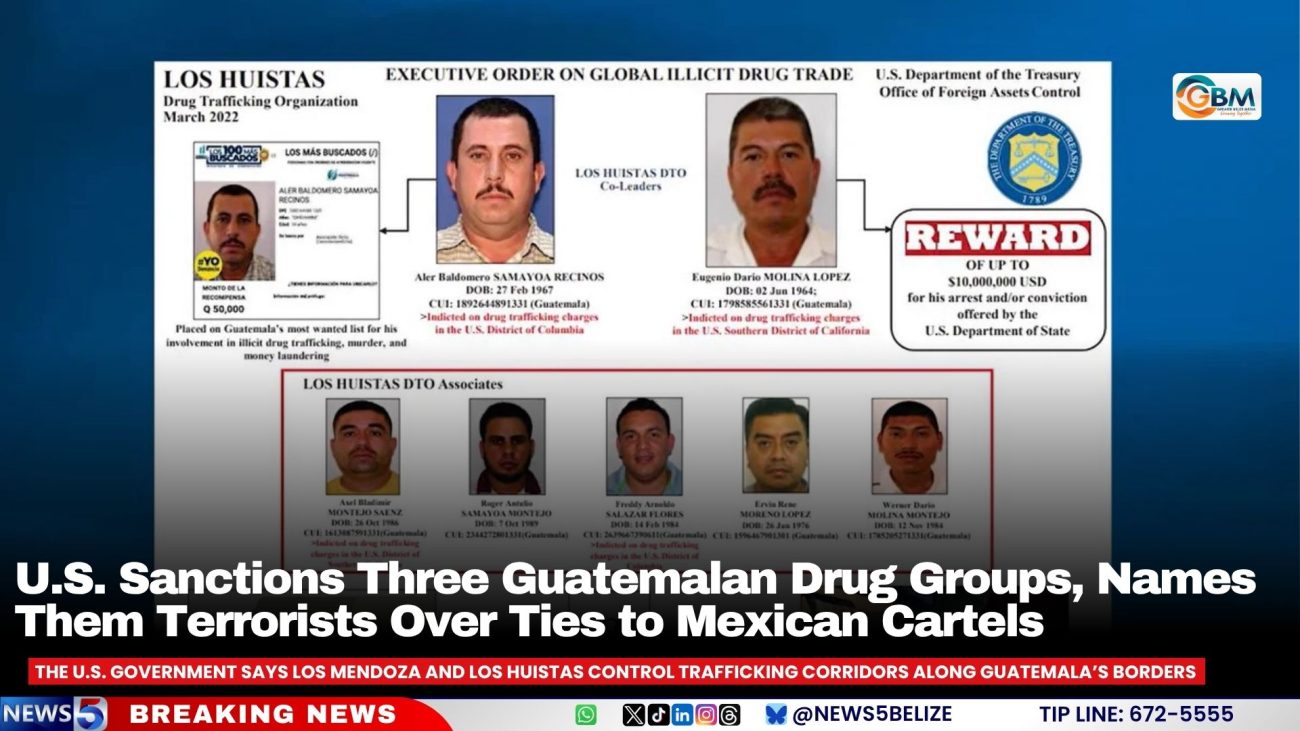
U.S. Sanctions Three Guatemalan Drug Groups, Names Them Terrorists Over Ties to Mexican Cartels
The United States has sanctioned three Guatemala-based criminal groups, accusing them of helping Mexico’s Sinaloa Cartel and Jalisco New Generation Cartel (CJNG) move drugs toward the U.S.
The U.S. Treasury Department sanctioned Los Mendoza and Los Huistas, and the State Department designated Los Lorenzanas as a Foreign Terrorist Organization and Specially Designated Global Terrorist. Treasury and State announced the actions on Friday, Nov. 13.
The U.S. government says Los Mendoza and Los Huistas control trafficking corridors along Guatemala’s borders with Honduras and Mexico, making them key logistics partners for the cartels. It says they help receive, store, protect and move drugs across borders.
“Today’s action exposes the ties between politically influential Guatemalan criminal organizations and Mexican foreign terrorist organizations that facilitate the flow of deadly narcotics into the United States,” said Treasury Secretary Scott Bessent.
He describes Los Mendoza as a family-based group founded in the 1980s, which it says provides the Sinaloa Cartel with access to border crossings, clandestine airstrips and storage in the departments of San Marcos, Huehuetenango and Petén. It also accuses the group of contract killings and money laundering. It says Los Mendoza has economic interests in Petén, Izabal and Guatemala’s border region with Mexico.
It says Los Huistas, active since the 1990s, is a link in the cocaine supply chain from South America through Mexico, with ties to local businessmen, law enforcement officials and politicians in northwestern Guatemala. The U.S. first sanctioned Los Huistas in 2022.
Secretary of State Marco Rubio called Los Lorenzanas one of Guatemala’s most powerful drug trafficking clans, and accused it of violence against civilians, government officials and military forces in Guatemala.
“We will not stand by while these foreign terrorist organizations corrupt Guatemala’s institutions.”
The sanctions block any property the groups hold in the U.S. or under the control of U.S. persons, and generally bar U.S. persons from doing business with them. Treasury also warns that foreign banks dealing with them risk secondary sanctions.