

Venezuela, Oil, and Power: Is the Monroe Doctrine Back?
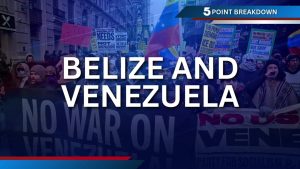
Venezuela is back in the global spotlight, and it’s not just because of its oil. Once again, the country finds itself at the center of a geopolitical storm fueled by power struggles, pressure from Washington, and deep questions about leadership and accountability. Allegations ranging from narco‑terrorism to human rights abuses continue to swirl around President Nicolás Maduro and his inner circle, even as dramatic claims involving U.S. actions add to the sense of uncertainty. At the same time, the region is shifting. Belize restructured its Petrocaribe debt, and the United States signals renewed interest in Venezuela’s vast energy reserves. Together, these developments raise a bigger question: Are we witnessing the start of a new phase of U.S. influence in the Western Hemisphere, or the modern revival of the Monroe Doctrine? We take a deeper look at the issue in this week’s Five Point Breakdown. Here’s Paul Lopez.
 Paul Lopez, Reporting
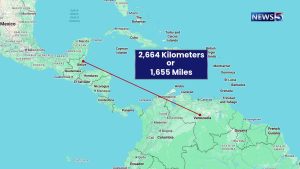
Venezuela has found itself back at the center of global discussion, this time following reports that President Nicolás Maduro and his wife, Cilia Flores, were taken from Caracas to face charges in New York. While the South American nation sits more than fifteen hundred miles away from Belize, the ripple effects of what happens there have been felt much closer to home. Despite the distance, Venezuela’s political drama continues to intersect with our own regional and national interests.
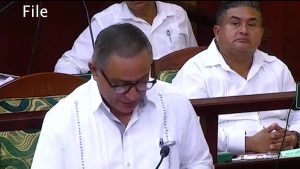
Prime Minister John Briceño
Prime Minister John Briceño (File: Dec 12th, 2022)
“Belize and Venezuela, President Maduro and I on behalf of Venezuela and Belize have agreed on restructuring terms on the Petro Caribe debts which will reduce the amount Belize owes under Petro Cairbe by anywhere between two hundred and sixty-seven million dollars and three hundred and twenty-seven million dollars.”
 Under the Petrocaribe agreement, Belize received millions of dollars’ worth of oil from Venezuela, a debt the country still owes. That 2022 debt restructuring was so substantial it reduced Belize’s debt‑to‑GDP ratio by six percent. Oil is the backbone of Venezuela’s economy. The country holds the largest oil reserves in the world, by a wide margin. That reality came sharply into focus after the U.S. removed President Nicolás Maduro and his wife, with President Donald Trump openly signaling America’s interest in Venezuela’s vast oil wealth.
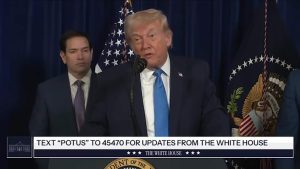
Donald Trump
Donald Trump, President, United States of America
“We are going to have our very large United States Oil companies, the biggest anywhere in the world, go in, spend billions of dollars, fix the badly broken infrastructure, the oil infrastructure and start making money for the country.”
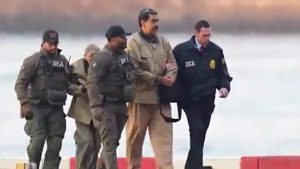 Was the ultimate goal to seize control of Venezuela’s oil resources? So, when the U.S. stepped up its military footprint in the Caribbean in 2025, was that part of the plan? The Monroe Doctrine, proclaimed by U.S. President James Monroe in 1823, was a U.S. foreign policy stating that further European colonization or interference in the Western Hemisphere would be viewed as hostile, while the U.S. would stay out of European affairs. Calvin Tucker, who works for Britain’s only socialist daily newspaper, has witnessed four elections in Venezuela, including the 2024 vote. He believes what we’re seeing now is the Monroe Doctrine reemerging, stripped bare.
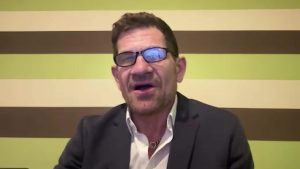
Calvin Tucker
Calvin Tucker, Morning Star
“The Monroe Doctrine says that the United States has the right to impose its will on its backyard as it sees it in Latin America and to dominate not only the country in Latin America but to prevent its European rivals at the time in its region. And the new Monroeism is a return to that basic philosophy and practical expression of U.S. military force.”
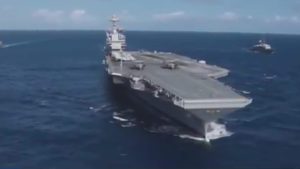 The U.S. military buildup in the region was already underway long before any public talk of Venezuelan oil. Officials said the expanded presence was part of a broader effort to combat transnational crime. Year after year, the U.S. identifies Belize as a major drug transit country, with drugs tracked from Venezuela.
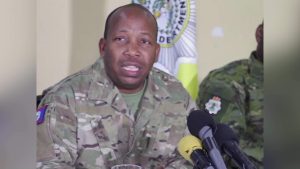
Chester Williams
Chester Williams, Commissioner of Police (File: Feb 27th, 2020)
“This morning early around twelve fifteen, twelve thirty thereabout, a tract was observed leaving Venezuela, heading our way.”
And today, Maduro is facing allegations involving narco‑terrorism and cocaine trafficking. The charges stem from a 2020 U.S indictment claiming Maduro is the head of drug trafficking group, Cartel de Los Soles. But Venezuelan authorities have repeatedly contended that the cartel does not exist.
 Calvin Tucker
“Maduro is accused of running a drug cartel, the Cartel of the Suns and it has just been revealed by the New York Times in the last few days that in fact the U.S. Justice Department is no longer pursuing their case against Maduro that he is the leader of this Cartel.”
Beyond the criminal charges, the United Nations has recorded serious human rights abuses under Maduro’s rule, ranging from extrajudicial killings to alleged crimes against humanity and election fraud tied to the 2018 and 2024 elections. His government also has a long record of restricting foreign media. Still, on Monday, UN Under‑Secretary‑General Rosemary DiCarlo called for respect for Venezuela’s sovereignty.
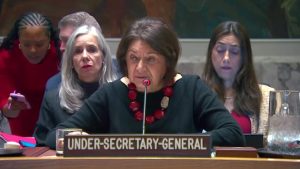
Rosemary DiCarlo
Rosemary DiCarlo, Under-Secretary-General, United Nations
“I remain deeply concerned that rules of international law has not been respected with regards to the third of January action.”
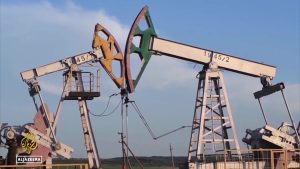 As the fallout from Maduro’s extradition continues and the U.S. expands its presence in the Caribbean, the stakes for Venezuela, and the wider region, are higher than ever. Oil wealth, sovereignty, and foreign intervention are tightly woven into a story that recalls both long‑standing doctrines and modern geopolitical ambitions. Whether this moment signals real change for Latin America or a return to familiar fault lines remains an open question. So, where does Belize stand on this issue?
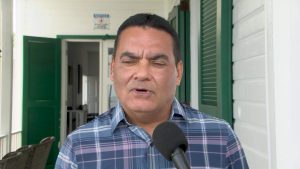
Francis Fonseca
Francis Fonseca, Foreign Minister
“We are a small country, and we are fully committed to the fundamental principles that really underpin the global order, international law, multilateralism, a commitment to the UN charter.”
Reporting for News Five, I am Paul Lopez
Facebook Comments