



Violence Goes Viral, but Who Is Paying the Price?
The punches may last only seconds, but the video can circulate for days. Instead of stepping in or calling for help, bystanders often reach for their phones, recording fights and sharing them online for views, laughs and reactions. But as violence becomes another form of social media entertainment, are we losing our sense of shock and empathy? Tonight, News Five’s Paul Lopez examines what our appetite for these viral videos may reveal about how society now views aggression and conflict.
 Paul Lopez, Reporting
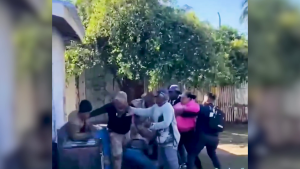
The violence is disturbing, but the online reaction may be just as troubling. Videos of fights draw hundreds of shares, views and laughing reactions, turning real conflict into social media entertainment. And this is not an isolated case. Similar clips continue to go viral, raising questions about whether we are becoming desensitized to violence and accepting aggression as a normal response to anger and frustration. We spoke with mental health counselor Aimee Jex about what this behavior may reveal about Belizean society.

Aimee Jex
Aimee Jex, Mental Health Counselor
“When we look at violence in our community, it starts at home. That pikney needs lashing. When that child grows up that how they will discipline. So from a very young age, we are normalizing what hitting is normal. Shouting at someone is normal. So when I go out into my community and I want attention, I will hit and I will should. So when we look at these things as normal, how else will we learn to control ourselves. I will get louder and louder and louder and when something makes me unhappy, I don’t think, mein I am really sad, that person hurt my feelings. I say, that person make me vex. So, when we look at these things, we are looking in our community, it is normal to be an angry person. It is normal to be someone who responds with hitting or some kind of violence.”
Violence rarely affects only those throwing punches. Innocent bystanders can get hurt, public spaces can descend into chaos, and communities are often left to pick up the pieces. Every incident also demands a response from law enforcement, placing even more pressure on already stretched public resources.

Hilberto Romero
ACP Hilberto Romero, Head, National Crime Investigation Branch
“Once those are brought to our attention, we see them on Facebook, we carry out an investigation. Once the persons are identified, we bring them into custody and they will be charged. So yes, once these persons can be identified, they will be charged.”
 Reporter
“Have you guys seen that video from the weekend with the crocodile and the fighting?”
ACP Hilberto Romero
“Yes, we have seen that and we have our Cyber Crime Unit dealing with that report.”
 Aimee Jex
“How do you know what you are feeling if someone walks pass you on the street and bumps into you and you respond with violence? What emotion is going through you, what are you experiencing. Actually, maybe it is pain? So how do you respond to pain with violence? You don’t say ouch, you cuss them out. And so, someone bumps you and you cuss them out before you even realize you are feeling pain. In that same situation it could be, someone said something mean to you and you need to be hurt because you hurt my feelings. Again, it is always looking for retribution, and we are not actually figuring out what we are feeling.”
 From unregulated emotions to violent reactions and law enforcement intervention, it’s a cycle that is normalized when viral violent videos are seen as entertainment.
 Aimee Jex
“As I tell people, I never get those videos, I never get those things, because I don’t allow it to come into my world. When someone would send it to me the first time I say, I am not interested in those kinds of things. Then they don’t send it to me after they don’t send me anything. So, those viral things I get to hear way after. We look at these community things and think of it as entertainment, first and foremost. We don’t think about it as domestic violence first and foremost, we look at it as that is something interesting.”
Mental health experts say breaking the cycle begins with recognizing our emotions before they erupt into violence and refusing to treat aggression as entertainment. Reporting for News Five, I am Paul Lopez.
Attention readers: This online newscast is a direct transcript of our evening television broadcast. When speakers use Kriol, we have carefully rendered their words using a standard spelling system.
Watch the full newscast here: