


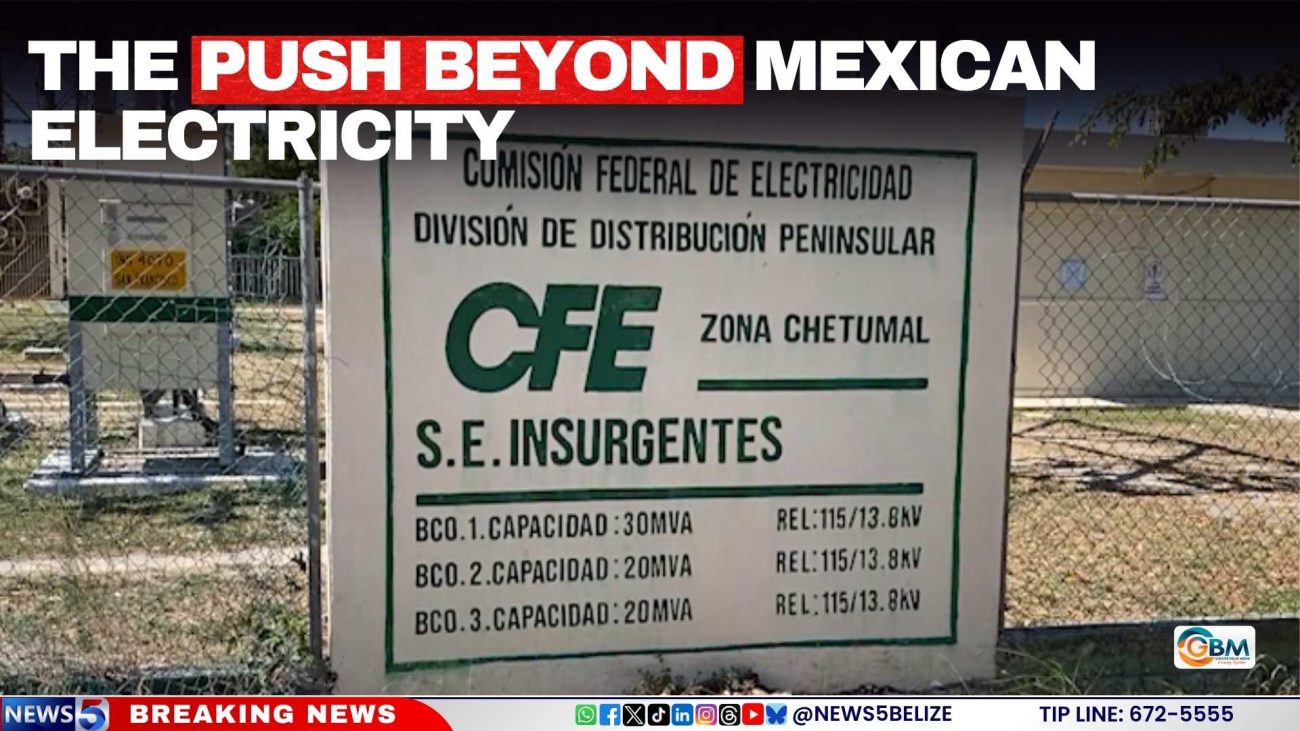
The Push Beyond Mexican Electricity
It has been nearly three decades since Belize began purchasing electricity from Mexico’s Comisión Federal de Electricidad, or CFE. It may have started as a source of additional power, but it has evolved into a significant dependence on imported electricity, and Belize is now carrying an estimated $30 million debt for that power.
Public Utilities CEO Dr Leroy Almendarez says the debt has ballooned because the cost of power was never properly passed on to consumers. “Cost of power is a pass-through,” Almendarez said. “if you buy power from any of these sources, that’s what the consumers are supposed to pay. It’s supposed to be just a direct pass-through. Now, that has not been happening.”
Almendarez said the gap between what BEL pays to its two primary suppliers, CFE and Hydro Belize, and what customers are actually billed, has compounded over time.
“If you buy for ten, but consumers are paying less, there’s a variance because you’re not really recovering what you paid for it,” Almendarez added. “That amount just continues to build, but you still have to pay for the power that you procured.”
And, with electricity demand continuing to grow and supply from Mexico proving insufficient at times, Belize is looking to change the equation by increasing the amount of power generated within Belize.
One of the key strategies being explored is “distributed generation”, including solar and battery storage.
The strategy would allow more electricity to be generated locally and fed into the national grid. It would reduce the pressure on Belize to depend on imported power.
A major part of that expansion, however, is battery storage. “If you don’t have anywhere to store that power, so that you can dispatch it later, then that becomes a challenge,” Almendarez added.
The approach is being considered as Belize prepares to procure additional generation following Cabinet’s emergency declaration over the country’s projected electricity shortfall.