


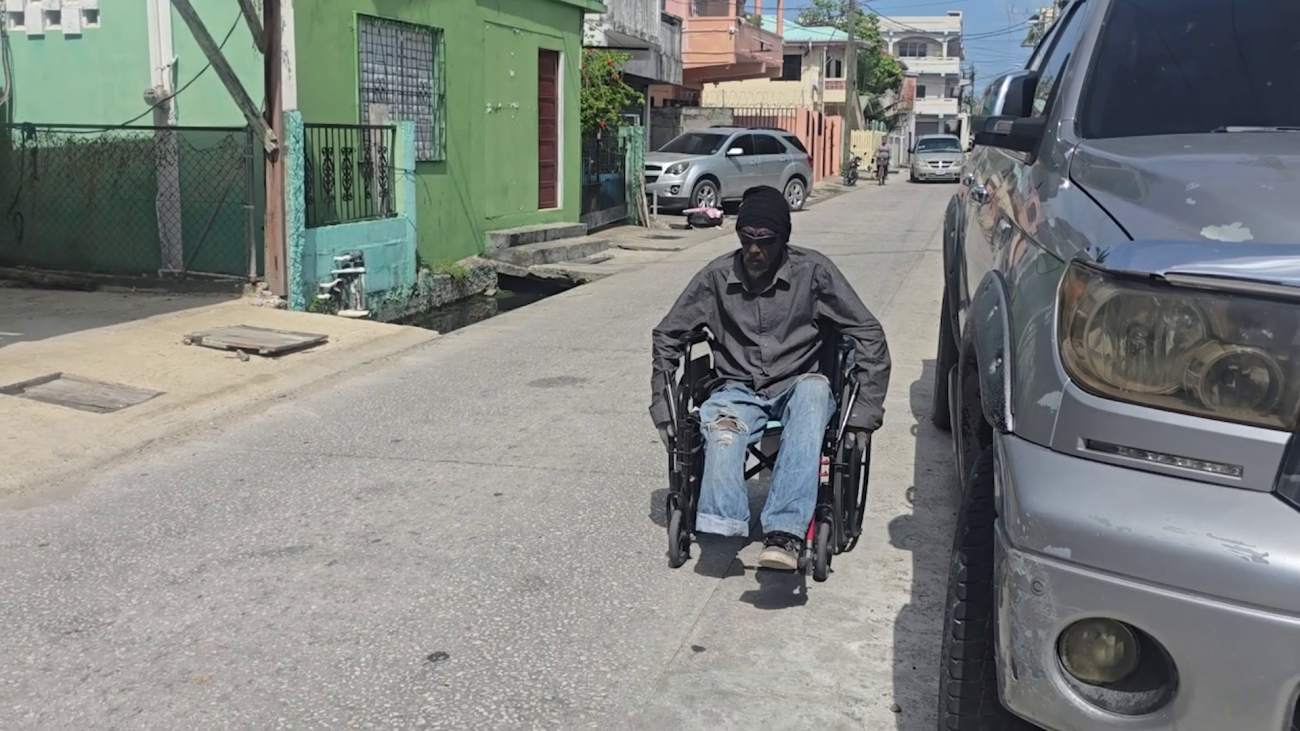
When Danger Strikes, Where Can Wheelchair Users Turn?
The freedom to move around safely is something many people take for granted. But for wheelchair users in Belize, limited mobility can affect not only their independence, but also their ability to escape danger. Advocates say that vulnerability can make people with physical disabilities targets of violent crime. News Five’s Britney Gordon looks at the fears they face and the changes they say are urgently needed.
 Britney Gordon, Reporting
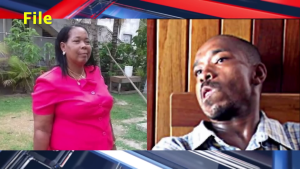
When gunfire erupts, some people can run for cover. For wheelchair users, escape may not be possible. Evadnie Jones and her son Luke were shot dead in their yard in 2025. Their murders followed the fatal shootings of wheelchair users Trayson Gibson and Gion “Gizmo” Bernard. Disability Desk Coordinator Marshall Nunez says the killings expose a disturbing lack of empathy in society.
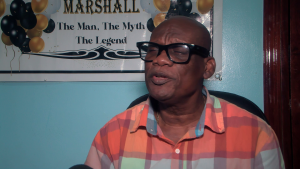
Marshall Nunez
Marshall Nunez, Disability Desk Coordinator, Ministry of Human Development
“The first thing we have to talk to the perpetrators of these very devious acts, right? The people, the young men who are shooting indiscriminately. That’s bad already. But when you do that to one vulnerable person, you know, wheelchair man. That is despicable. That’s unconscionable. Weh we heart deh?”
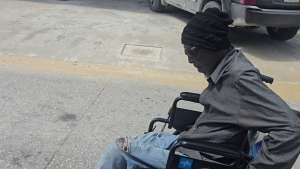 Life changed almost overnight for sixty-three-year-old Austin Burgess. Four months after losing a limb, he is learning to navigate limited mobility and reduced independence while living alone. His experience is a reminder that disability can affect anyone, whether from birth, illness or violence. Burgess is now urging Belizeans to show greater compassion to people facing those challenges every day.
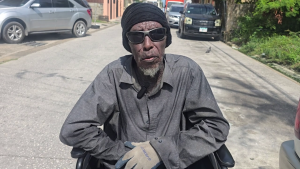
Austin Burgess
Austin Burgess, Wheelchair-bound
“One of these days, it might happen to you. I da mi never expected this. I de home good good one. Bam, bam, my foot ney start to hurt. My toes, right? But then all of a sudden, I end up da hospital. Ney cut off my foot. I never knew that I had post-circulation in the toes. Right? And I deh deh and this thing, di hurt me. And mostly at night. It was too late by the time I gone da the hospital.”
Burgess depends on the kindness of others to get by, something he previously did not have to do. He opens up about adjusting to life with limited mobility and greater vulnerability.
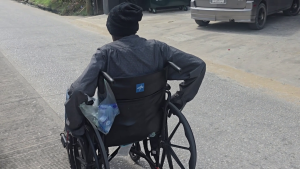 Austin Burgess
“It changed big time for me. Because then I have /people weh de deh for me. But like I said, they only just bring the stuff. You understand me? I eat if I eat and if I no eat, then that’s up to me. What happened is, I no got nobody to do nothing for me otherwise.”
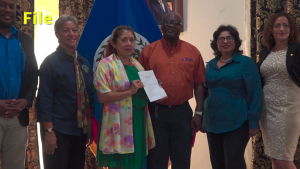 Belize has made significant progress in supporting persons with disabilities through the passage of its first-ever Disability Act in 2024. The Act puts stronger legal protections in place and pushes for equal access to education and healthcare. But Nunez says passing a law is only the first step. Belizeans must also change their attitudes and actions if the country hopes to achieve true inclusion.
Marshall Nunez
“This specific law that is set forth for people with disability, sets forth to protect their dignity and rights as human being. You cannot do nothing to defend them if they are killed. The last sets forth to try, as I said, to protect their dignity, to protect their inalienable right that they have to everything else within, right? But the best we could do is to reach out to the society, to the community and make it be sensitive to our vulnerable people, to the people with disabilities.”
Nunez shared Belize is preparing to launch a National Disability Commission, which will be responsible for leading public education and awareness campaigns about disability rights. Britney Gordon for News Five.
Attention readers: This online newscast is a direct transcript of our evening television broadcast. When speakers use Kriol, we have carefully rendered their words using a standard spelling system.