


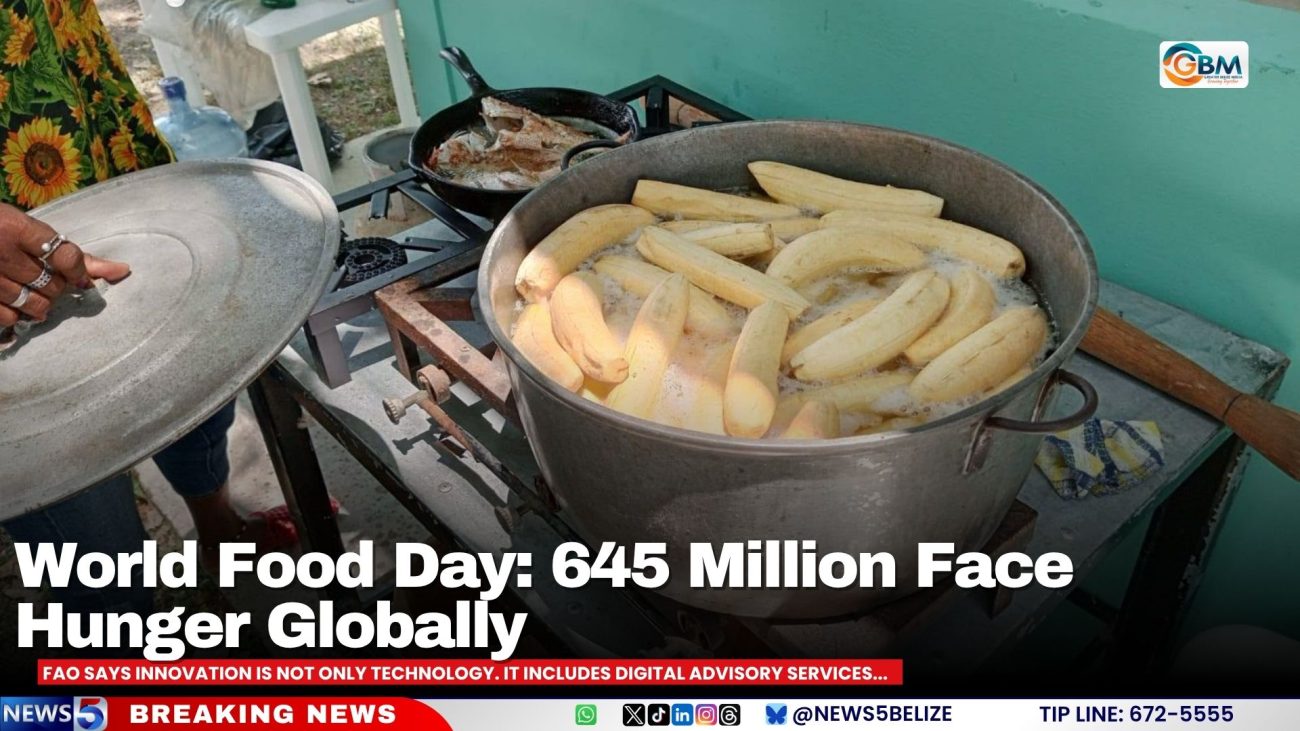
World Food Day: 645 Million Face Hunger Globally
World Food Day is marked today under the theme “Innovate today. Nourish tomorrow,” with the Food and Agriculture Organization of the United Nations (FAO) saying ending hunger is within reach because the world already produces enough food to nourish everyone.
Around 645 million people faced hunger in 2025, FAO says, and 2.69 billion, nearly one in three people, could not afford a healthy diet. It says conflict, economic instability and climate shocks are putting pressure on agrifood systems.
FAO says innovation is not only technology. It includes digital advisory services, improved seeds, farmer field schools, cooperatives and traditional land and water practices, and says preventing crises before they happen can strengthen resilience.
Food is also being lost along the way, FAO says. About 13 per cent of all food produced is lost after harvest and before it reaches stores, and a further 19 per cent is wasted in stores and in homes.
FAO says even when women manage farms the same size as men’s, the gap between men’s and women’s land productivity is 24 per cent, and women farmers need more access to skills, finance and technology. It says about 1.3 billion young people aged 15 to 24 are involved in agrifood systems and are a critical force for jobs and change.
Funding for research is slowing, FAO says. Global investment in agrifood research and development grew 2.7 per cent a year from 1980 to 2015 but only 1.9 per cent a year from 2015 to 2021.
Farming also puts pressure on resources. FAO says agrifood systems account for about 70 per cent of global freshwater withdrawals and that over 60 per cent of land degraded by human activity is agricultural land. It says contaminated food causes about 420,000 deaths a year and makes around 600 million people sick.
FAO says governments, the private sector, researchers, civil society, producer groups and the UN system all have a role, with governments investing in research and rural infrastructure and businesses bringing investment, supply chains and jobs to underserved communities.