


BEL Says Illegal Electricity Connections Are Costing Everyone, Including Paying Customers
Illegal power connections aren’t a victimless problem, according to Belize Electricity Limited.
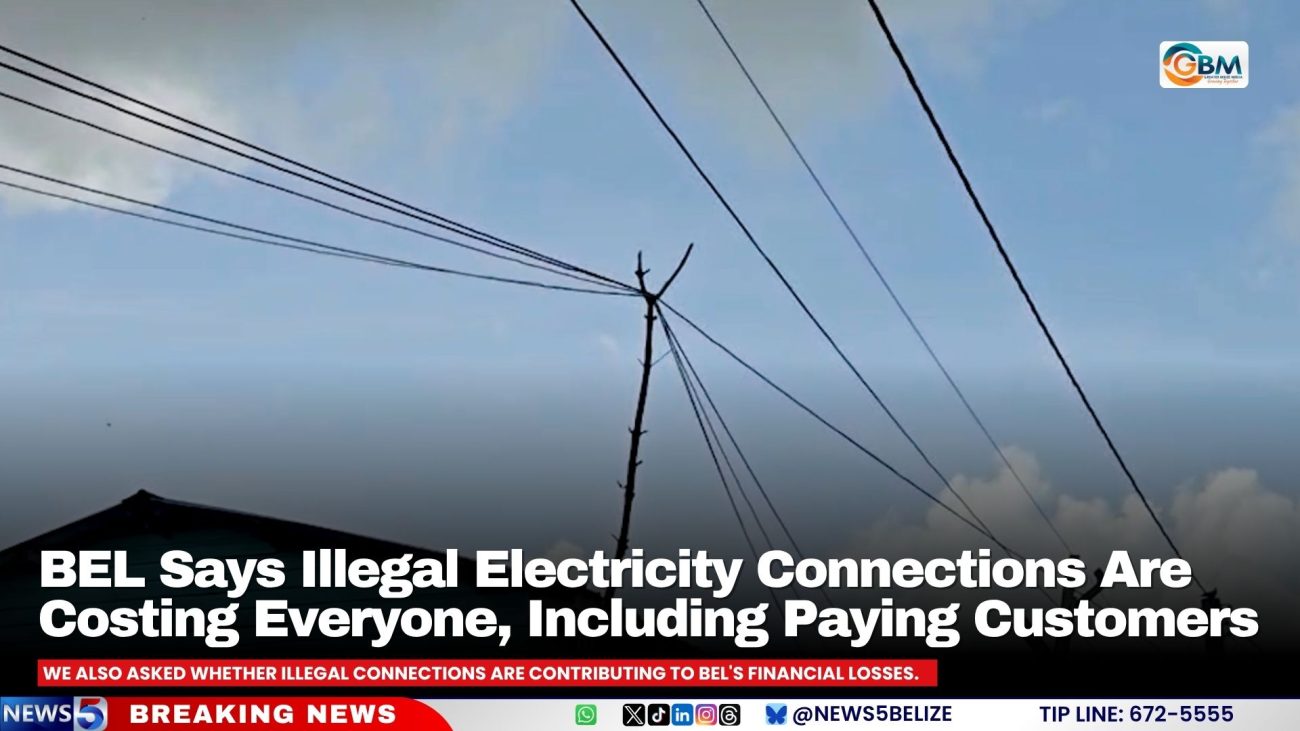
Across the country, unauthorised lines and tampered meters continue to syphon electricity off the national grid, creating both safety hazards and financial losses for BEL. In some communities, makeshift wiring runs through trees or sits exposed in flood-prone areas, putting residents at risk of electrocution and fire. And because the problem keeps shifting from district to district, BEL says it’s becoming harder and more expensive to get ahead of it.
News Five put the issue directly to BEL Executive Chairman Lynn Young. We asked if BEL has any plan to address the scale of electricity theft happening across Belize. “Very concerned, very concerned,” he said, adding that BEL will do what it can to reduce the problem.
Young was reluctant to lay out details publicly, comparing the effort to a cat-and-mouse game. Telegraphing the company’s strategy, he suggested, would simply let offenders relocate ahead of enforcement.
We also asked whether illegal connections are contributing to BEL’s financial losses. Young confirmed they are. When the company generates electricity it isn’t getting paid for, he said, the cost doesn’t just disappear. It affects BEL’s bottom line and, by extension, everyone else. Keeping the lights on under those conditions drives up costs, he said, which in turn pushes BEL toward requesting higher rates. He called it a definite priority for the company to address.
This isn’t a new challenge for the utility. Back in 2022, BEL reported losing thousands of dollars annually to illegal connections and said at the time it was open to regularising affected households, but pointed to inadequate infrastructure in some communities as the biggest obstacle standing in the way.