


Protecting Belize’s National Animal: The Belize Tapir Project’s Conservation Efforts
Driving Conservation Through Research and Education
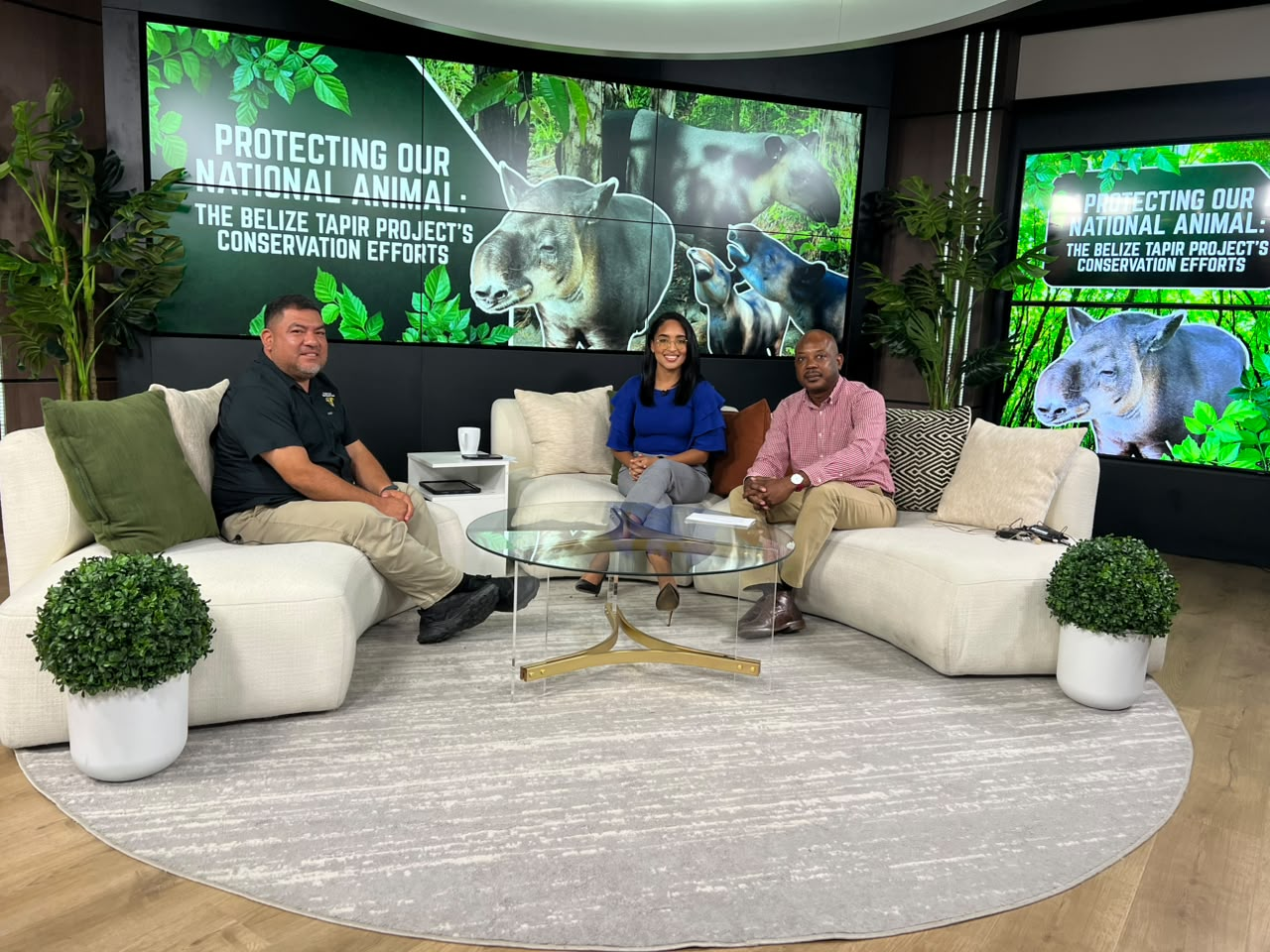
Belize is home to one of Central America’s most iconic wildlife species—the Baird’s tapir, the country’s national animal. On today’s episode of Open Your Eyes, Dr. Celso Poot, Managing Director and Founder of the Belize Tapir Project, highlighted the organization’s ongoing efforts to protect tapirs through research, public education, and community involvement.
Founded in 2008, the Belize Tapir Project was established after Dr. Poot observed an alarming increase in tapirs being struck by vehicles, particularly along the Burrell Boom Road. His research led to recommendations for wildlife crossing signs and public awareness campaigns encouraging motorists to reduce their speed in areas known to be wildlife corridors.
While these initiatives have helped reduce collisions in some locations, Dr. Poot explained that roadkill remains a nationwide concern, affecting not only tapirs but many other wildlife species throughout Belize.
Frederick’s Remarkable Return to the Wild
One of the Belize Tapir Project’s most recent success stories is Frederick, an injured tapir rescued earlier this year after wandering into a family’s yard in Blue Creek, Orange Walk.
Working alongside the Belize Wildlife & Referral Clinic, the Belize Zoo, the Forest Department, and members of the Blue Creek community, conservationists spent two months rehabilitating Frederick before successfully releasing him into the Rio Bravo Conservation and Management Area.
Before his release, Frederick was fitted with a GPS tracking collar, allowing researchers to monitor his movements and better understand how rehabilitated tapirs adapt after returning to the wild. Since his release, Frederick has traveled approximately 125 kilometers, providing valuable information about habitat use, movement patterns, and future conservation strategies.
Dr. Poot noted that the project has also deepened researchers’ understanding of the space tapirs require to survive, with recent studies showing they may use anywhere from 8 to 24 square kilometers depending on habitat quality and resource availability.
Citizen Science to Help Protect Wildlife
As development continues across Belize, the Belize Tapir Project is expanding its conservation efforts through a new Road Ecology Project, aimed at collecting nationwide data on wildlife road fatalities.
Rather than focusing solely on tapirs, the initiative encourages Belizeans to report any wildlife killed on the country’s highways. Using a newly developed mobile application, members of the public can photograph roadkill and record its GPS location, helping researchers identify wildlife crossing hotspots and better understand where mitigation measures are needed.
According to Dr. Poot, the information gathered will provide the scientific evidence necessary to guide future infrastructure planning, including the installation of wildlife underpasses, fencing, and other crossing structures that reduce collisions between vehicles and animals.
Protecting Habitat for Future Generations
While Belize continues to support one of the healthiest remaining populations of Baird’s tapirs, the species faces increasing pressure from habitat loss, road expansion, and human development throughout its range.
Dr. Poot explained that although scientists cannot determine an exact tapir population, current ecological models indicate that populations across Central America continue to decline. Conservation efforts therefore depend not only on protecting individual animals but also on preserving the forests and natural corridors they rely on to survive.
He also highlighted one of Belize’s recent conservation successes: researchers documented one of Latin America’s first recordings of a jaguar and its cub safely using a wildlife underpass, demonstrating that properly designed infrastructure can benefit multiple species.
As Belize continues to grow, the Belize Tapir Project is encouraging the public to become active participants in wildlife conservation. Through research, education, and community collaboration, the organization hopes to ensure that Belize’s national animal continues to thrive for generations to come.