


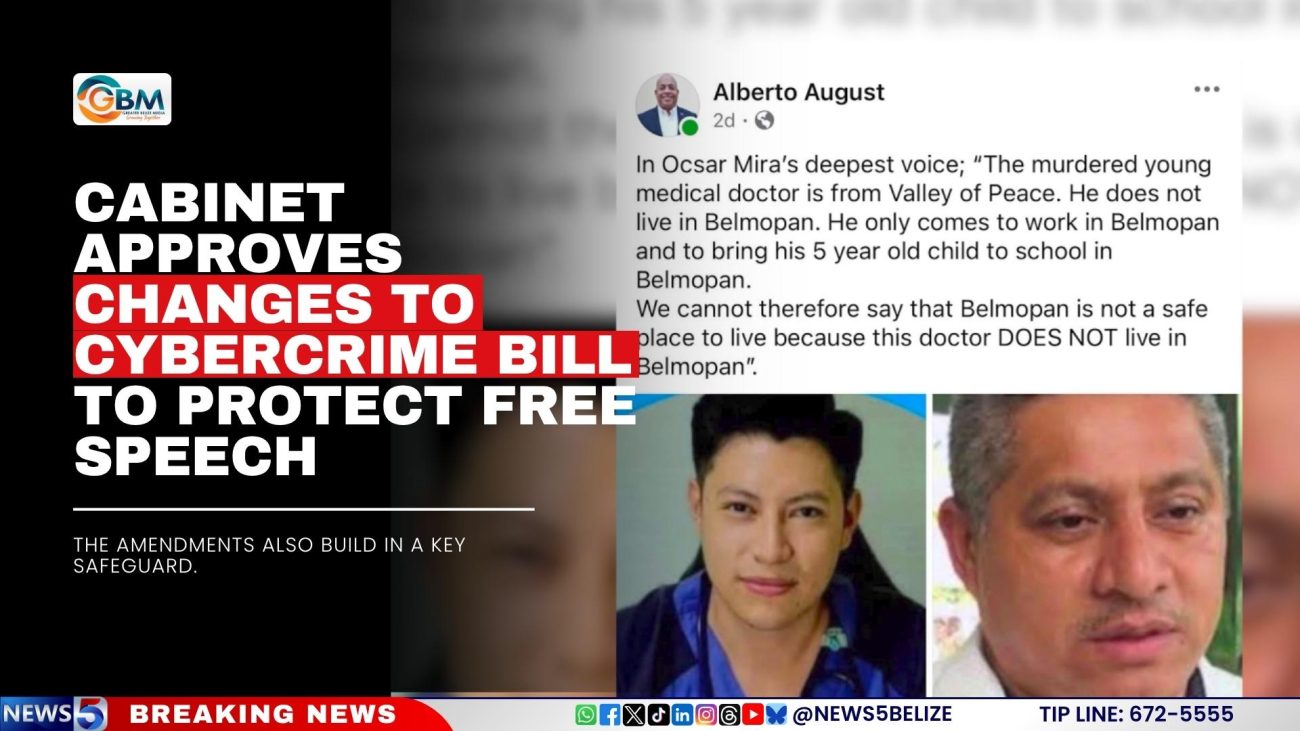
Cabinet Approves Changes to Cybercrime Bill to Protect Free Speech
Cabinet has approved amendments to the Cybercrime Bill aimed at narrowing the scope of the offence to better align with constitutional protections for freedom of expression.
Cabinet, the changes are meant to strike a balance: preserving government’s ability to go after serious forms of tech-facilitated abuse, including malicious deepfakes, impersonation, extortion, threats, and targeted harassment, while shielding free expression, political debate, journalism, satire, and public accountability from being caught in the same net.
The amendments also build in a key safeguard. Before any prosecution under the law can move forward, it will now require the written consent of the Director of Public Prosecutions.
The push for reform follows the collapse of the cybercrime case against Alberto August, which first raised questions about how far the law could reach. That case, triggered by a complaint from former Police Minister Oscar Mira over a Facebook post, sparked national debate over free speech, online criticism, and the boundaries of cybercrime legislation. In the aftermath, Attorney General Anthony Sylvestre said the government would review specific provisions of the act to ensure it could not be used to criminalise defamation, while stressing that cyberbullying remains a real and harmful problem that still needs regulation.
“It’s not the entire act which is subject to review. There are only specific provisions because one has to be cautious because cybercrime legislation is necessary. It’s important and necessary to regulate the conduct of persons on social media and in any other forum where bullying takes place. So cyberbullying is real. The concern, and it’s a valid concern that was raised by the public, was whether certain provisions might be such that they actually address, as one of my colleagues had referred to it, criminalising defamation. So in that respect, the concern was to look at those provisions that may be regarded, or possibly can be regarded, as criminalising defamation and ensuring that it, in fact, doesn’t do that,” Sylvestre said. “We don’t want to have a situation where you have on your law books provisions that are in the realm of the possible criminalising of defamation. And so those are things that are under review, and we’re hopeful that we might be able to have an amendment at the next House meeting.”
Sylvestre also noted that the Attorney General’s Ministry did not advise authorities on the cybercrime charge against Alberto August since criminal prosecutions fall outside the Ministry’s role. Cabinet’s approval of the amendments now delivers on the review Sylvestre outlined in July. According