


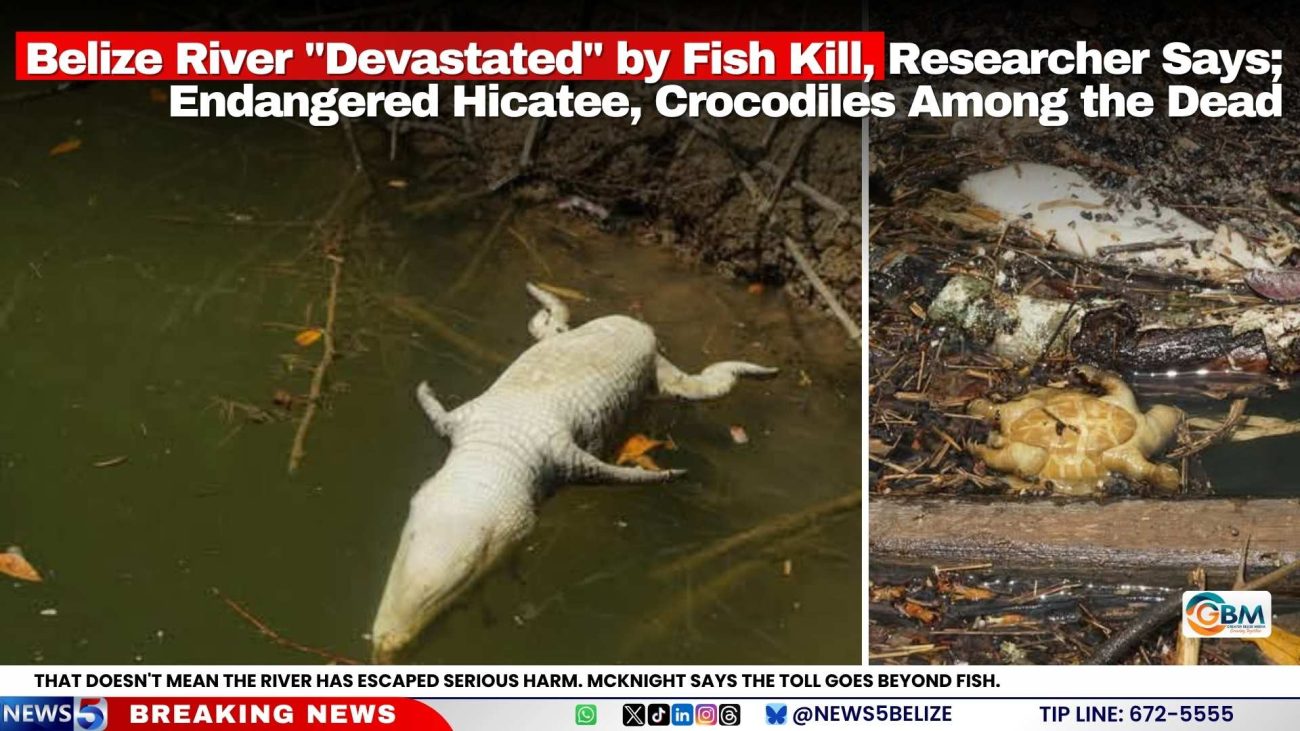
Belize River “Devastated” by Fish Kill, Researcher Says; Endangered Hicatee and Crocodiles Among the Dead
The die-off along the Belize River may be slowing, but researchers say the damage already done could reshape the river’s ecosystem for years to come, with critically endangered hicatee turtles and crocodiles now confirmed among the animals killed.
Dr Donald McKnight, research director at the Savannah Field Station near the Belize Zoo and an aquatic ecologist, has been out on the river assessing the aftermath. He says whatever caused the kill appears to have moved through the system, aided by the river’s flow.
“The good news is that whatever this was seems to have passed through the system. Belize River has a pretty good flow rate, so it seems to have kind of cleared itself out. So we’re still seeing a few new fish die here and there, but mostly it seems like we’re not seeing big die-offs anymore. Most of the dead fish are fish that died several days ago.”
That doesn’t mean the river has escaped serious harm. McKnight says the toll goes beyond fish.
“There are still a lot of dead fish in the system, and it’s not just fish. We’ve seen several of the hicatee, which are critically endangered species that we work a lot with to try to protect, as well as crocodiles. It had a pretty big and pretty devastating impact on the river.”
Residents in the area told News Five the water had darkened noticeably before gradually clearing again, a detail McKnight says points toward the likely cause, something introduced into the river from an outside source, rather than a naturally occurring event.
“That’s the real question that we’re trying to solve: what the actual cause was. Potentially this was some sort of agricultural runoff, for example, if a retention pond had spilt over. It could have been algal blooms, or it could have been some chemical in the water,” he said.
“Because of that colouration change, it looks like this was water that came into the system from somewhere else. Typically algal blooms don’t happen in flowing systems like the Belize River. Usually an algal bloom could happen in a side channel or in a lagoon somewhere and then spill over into the river. But it looks like something was introduced into the river from another source.”
“I do think it was something that ran off into the Belize River, and probably from some agricultural source. But we’re still collecting samples and coordinating with others to try to pin down exactly what the source was.”
The long-term consequences, he says, could extend well beyond the fish already lost. Predators and scavengers that feed on the dead fish risk being poisoned in turn, potentially spreading the damage further into the surrounding ecosystem. And within the river itself, the losses are hitting some of the most vulnerable and most ecologically important species hardest.
The Department of the Environment’s investigation into the fish kill remains ongoing. A precautionary advisory issued on August 5th is still in effect, warning the public not to consume fish or other aquatic resources from the affected areas of the Belize River Valley and not to use untreated river water for drinking, cooking, food preparation, or for livestock or pets.