


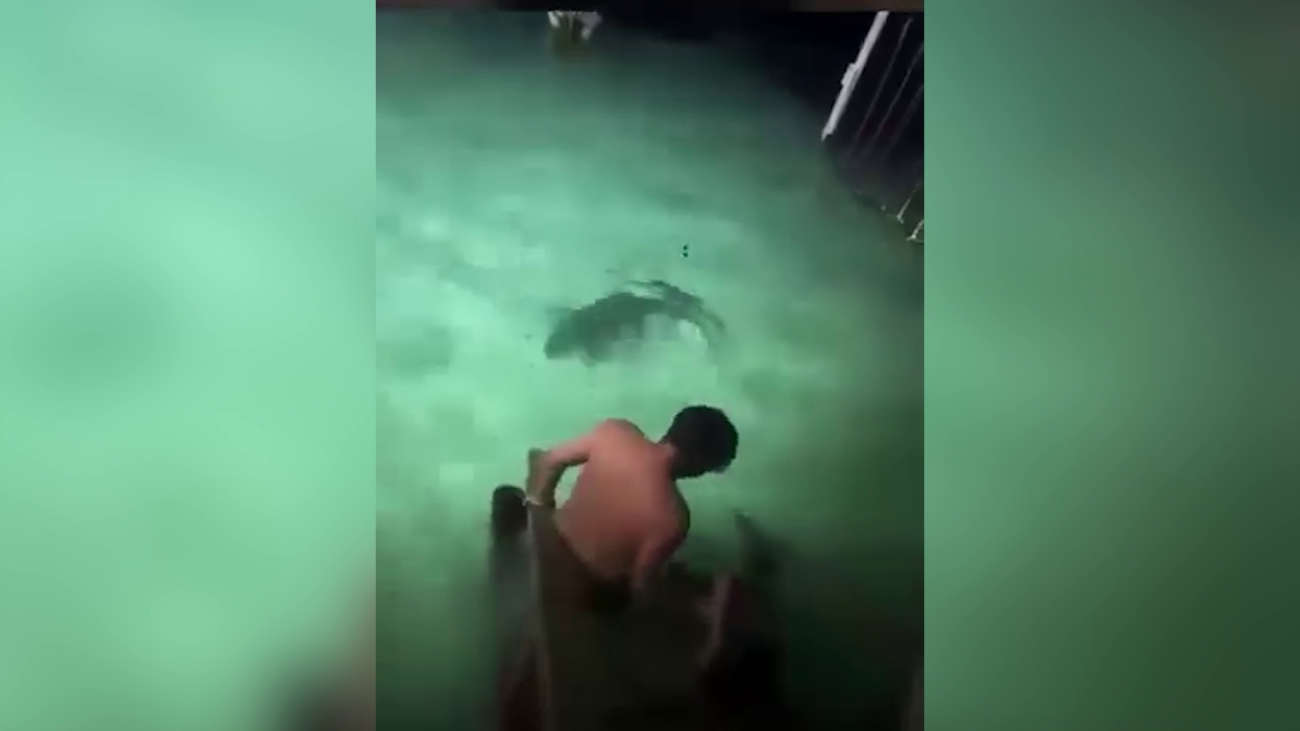
Communities Warned as Crocodile Sightings Increase
Crocodile sightings are raising concern in several communities, but the Forest Department says fear should not replace common sense. Acting Chief Forest Officer Yanira Pop says crocodiles are part of Belize’s natural ecosystem, and keeping people safe means reducing the things that attract them into populated areas. That includes not feeding them, staying a safe distance away, and properly disposing of food waste. Pop says human safety remains the priority, but protecting communities will also require residents to respect these protected animals and work with authorities to prevent dangerous encounters.
Yanira Pop
Yanira Pop, Acting Chief Forest Officer
“Wildlife encounters can become very dangerous when people do not understand wildlife behavior and when intentionally we encourage wildlife to become comfortable around us. That is why we are taking these concerns very seriously. We are fortunate to say that we have significant areas where people and wildlife share the same landscapes. Our tourism depends heavily on our natural environment. Our communities depend on rivers, on mangroves, on wetlands, on lagoons, on our coastal ecosystems, and wildlife depend on DCM ecosystems for food, for shelter, for reproduction, and for survival. As our communities grow, tourism increases and development expands. The areas where people and wildlife interact also increase. This means that human conflict encounters are sometimes, and in most cases, unavoidable. The question is not whether we can completely eliminate wildlife from areas where people live. The question is how do we reduce unnecessary risk while allowing wildlife to remain where it naturally belongs? This is the concept that we refer to as coexistence. It does not mean approaching a crocodile or feeding it, swimming next to it, taking a photograph from a few feet away, and it certainly does not mean attempting to touch, capture, or relocate animals ourselves. Coexistence means giving wildlife space and changing our behavior so that unnecessary encounters are avoided. But looking at the legal framework from this, to add a little bit more to this discussion, the Wildlife Protection Act Chapter 220 defines wildlife to include all domesticated animals, birds, reptiles, as well as their parts, which are the eggs and the nests. Important for today’s discussion, nonetheless, is that both species of crocodiles found in Belize are included in Schedule I of the Wildlife Protection Act, and these two species are the American or Saltwater crocodile and the Merlitz crocodile. This means that we cannot freely handle it, capture it, kill it or otherwise interact with it.”
The Department shared that while crocodiles are protected under national and international conservation frameworks, public safety remains a priority, and reducing conflicts depends on responsible behavior, particularly avoiding feeding crocodiles.
Attention readers: This online newscast is a direct transcript of our evening television broadcast. When speakers use Kriol, we have carefully rendered their words using a standard spelling system.
Watch the full newscast here: