


DOE Investigates Illegal Rice Farm Near Belize River
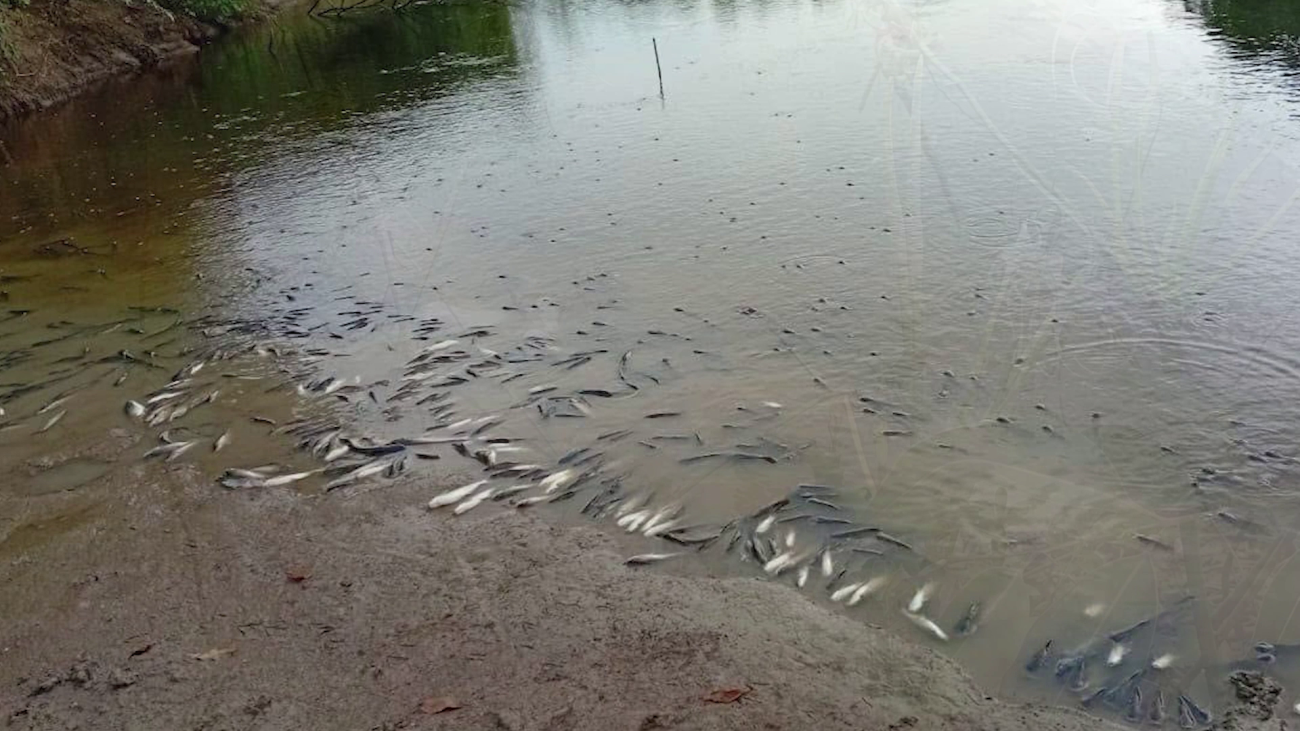
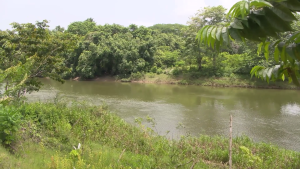
Investigators probing last week’s massive fish kill in the Belize River Valley are now looking closely at a rice field near Labouring Creek. Environmental officials say floodwaters from the area may have affected water quality before flowing into the Belize River. Chief Environmental Officer Anthony Mai says early findings suggest the farm may have been developed without the required environmental clearance.
Anthony Mai
Anthony Mai, Chief Environmental Officer
“I don’t want to issue the name is because we wrote to the Lands Department to request a formal copy of the land tenure. First, we need to verify that this person actually owns the land before we issue any particular name. But yes, so the Department of Environment did our internal checks. And we have found, at least according to our records, that the person does not have environmental clearance for this area, for the development of this area, which is a clear violation of the environmental regulations. A project of this size, in her estimation, would have required to undergo the EIA process. And so violation of that process, the penalty is between fifty thousand to one hundred thousand. And so what we will do is when we receive confirmation from the Lands Department that this person owns the land, we will signal the person an opportunity to provide any permits. That’s the way how the process works. And if you can’t, then again, the person will be held accountable for the violation. And so I just want to highlight that again. Having a rice field so close to a water system like the Belize River is concerning for the Department of Environment. It’s just because of the way how rice is grown. So normally a rice field is flooded with water to avoid any pests or disease. And when you want to harvest, you would discharge that water. And the current configuration of this field with the canal in the middle, discharging directly into Labouring Creek, which discharges directly into Belize River. That’s a major concern for us. So we need to look at this as a serious issue. What we have found so far is just one trace of agrochemical or pesticides within the canal from Santander. But we do have a list of, for example, in the Santander field, there’s about eight chemicals of interest that we have found. At Santander canal, there is thirty-two. At the effluent pond, fifteen. And upstream Santander, there’s ten chemical of concern. So we still have to go through additional process to look at the possibility of where these substances came from. We still need to go through another process to determine the concentration of these items, of these chemicals within this area. So there’s more work for us to do.”
 DOE to Present Fish Kill Investigation Results at Community Meeting
As investigators wait for final lab results in the Belize River Valley fish kill, environmental officials say they expect answers by the end of next week. Chief Environmental Officer Anthony Mai says the incident has highlighted the need for tighter oversight of farming activities and agrochemical use within the watershed. Meanwhile, the Department of the Environment is working with local experts to improve fish kill investigations and strengthen monitoring of Belize’s rivers and aquatic ecosystems.
Anthony Mai
Anthony Mai, Chief Environmental Officer
“The latest information that I have is probably by the ending of next week. We will have all the information. And that will be the delay, because we are planning the village meeting on the twenty-ninth. So by the twenty-ninth, we have to have all the information. What we want to do is there is a Belize River watershed management plan. It has not been formally adopted. But I think now, more than ever, we need to look at the watershed management plan. We need to strengthen it. And we need to get it formally endorsed by cabinet. And then we implement it. The reason why I mentioned the watershed management plan, because it’s a comprehensive document, basically. And it really spells out what different agencies are responsible for in terms of managing development industry within this greater watershed. Again, I maintain that the Belize River, as you all know, is one of the more critical rivers for Belize because majority of our population depend on it. And we can’t get this wrong. And so we need to look at the watershed management plan. We need to hold the agencies that have responsibility to manage development within the area accountable. And again, the farms, agricultural development within the area have a very critical role to play in terms of improving the practices that they do. And like I said, each individual farm has a role to play. And so it is our responsibility to reach out to them to ensure that they are managing the farm the best way that they can. And again, but there’s different agencies with different responsibility that has to put equal pressure on them to do what needs to be done.”
Investigators are also analyzing multiple agrochemicals detected at several sampling sites as they await laboratory results to determine their concentrations and possible role in the incident.
Attention readers: This online newscast is a direct transcript of our evening television broadcast. When speakers use Kriol, we have carefully rendered their words using a standard spelling system.
Watch the full newscast here: