


Two Days Into the School Year, a Village Wonders If Its School Will Survive
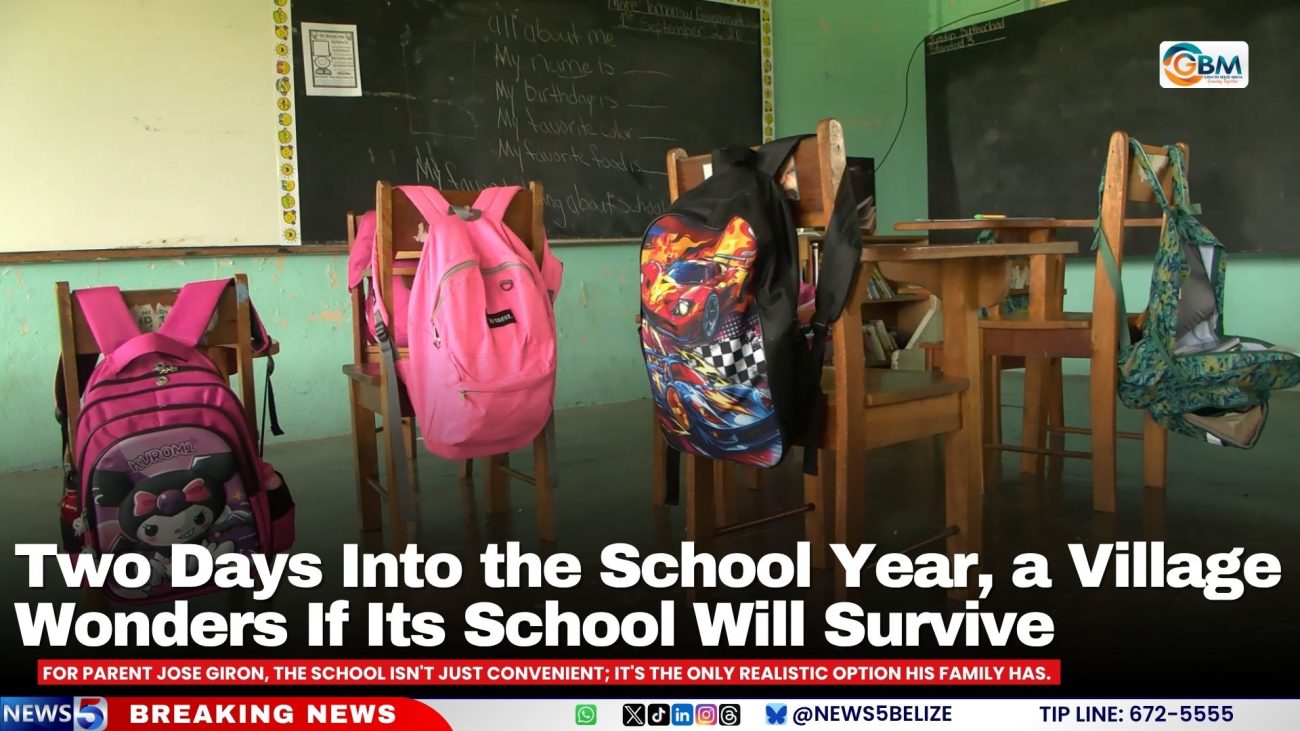
More Tomorrow Village didn’t expect a crisis this early in the school year. But just two days in, More Tomorrow Primary School is running on a staff of two, teaching more than thirty children, and parents are worried it won’t hold.
At the centre of the strain is Elizabeth Tush, who left Belmopan to teach here. “I like the place. It’s more peaceful, and the kids need more education. Especially on reading. Especially on writing. I saw that they need a lot of help with that. That’s why I said I was going to stay and help these kids.”
The math doesn’t work in the school’s favour. Students span Infant One all the way through Standard Six, but with only Tush and Principal Dominina Pop on staff, the entire school has been collapsed into three rough groupings, lower, middle, and upper. Pop, who’s expected to retire next year, is left managing the youngest students largely on her own. “For me, I have three classes that I’m managing. The principal has two classes, which is the lower division, without teachers, so I’m not sure how she’s managing it.”
For parent Jose Giron, the school isn’t just convenient; it’s the only realistic option his family has. “All my children study right here, and that’s a great opportunity for the children, because we can see them go to school and come back, and they can come eat and get a little rest in the break time. I don’t know what the real issue is for it to get to this point, but I hear they want to close the school, but we already spent on uniforms and pay the fee.”
The word that the government might shut the school down spread quickly through the village, and Education Minister Francis Fonseca moved to shut that rumour down directly. No closure decision has been made, he said, but he didn’t sugarcoat how hard the school has been to staff. “Nobody wants to go to teach there. They say the conditions are too harsh. You have to understand, we’ve been trying. I know last year we made accommodations to try and improve everything. We facilitated even a mother and daughter, both living together, both teaching there. But even they have gotten frustrated. So it’s a difficult situation. It’s a small school, so we have looked at options, one being whether it would be easier to provide transportation to take them somewhere else. But we’re discussing it with the community.”
Behind the staffing gap is a simpler math problem: rising rent, transportation costs, and teachers often paying for their own classroom supplies make a remote posting like More Tomorrow a hard sell. The village thinks it has an answer. Village Chairman Michael Myvette says building housing for teachers right in the community could change the equation entirely, especially given how isolated the village becomes when the weather turns.
“Sometimes when the weather is bad, then the road gets flooded, and then nobody can pass. So if we have teachers in the community, then it will be better for the students.” For now, the Ministry says a meeting with parents and community members is set for today, the first real step toward figuring out whether More Tomorrow Primary gets the staff it needs or loses the fight to keep its doors open.