



Grant Delays Push Tertiary Students Deeper into Debt
A government grant is supposed to ease the financial burden of higher education. But some Belizean students say delays in receiving that assistance are doing the opposite, leaving them with late fees, personal loans and unpaid tuition balances. Students complain that months can pass without clear answers from the Ministry of Education’s Financial Aid Department. Some have been forced to use money from their own pockets, while others say they completed their studies without receiving the assistance they were promised. Tonight, News Five’s Britney Gordon speaks with students who say the financial aid system is adding to the very hardship it was created to prevent. Here’s that story.
 Britney Gordon, Reporting
For students depending on government assistance, every delayed payment comes with a price. Tuition deadlines do not wait, late penalties continue to climb and unanswered calls leave students uncertain about whether help is actually coming. One Belizean studying abroad says schools divide tuition into several payments throughout the semester. When financial aid arrives late, however, students must absorb penalties that the grant does not cover.
 On the Phone: Belizean Student
“They split up the tuitions into like five parts. You pay the initial inscription, which is like a large chunk of it, but it’s like almost like a down payment, and then you pay like little parts of it so throughout the semester, and most schools operate like that here. So if you don’t pay your tuition on time each month, you get charged a late fee, and those late fees are like ten to forty percent depending on the school. So it, it really racks up the bill high because then our grant doesn’t cover those late fees, so it comes out of our pocket when we don’t get our aid on time.”
And when personal funds run out, the choices become even more difficult. Students say they must either put their education on hold or take on debt, often with few financing options available.
 On the Phone: Belizean Student
“We either have to make the tough decision to drop out of school because there is no more money personally or no more grant aid, or we just have to go and apply for a loan at the bank or with DFC. And to be honest, there isn’t much opportunities for student loans outside of DFC. I questioned with Belize Bank, I questioned with Atlantic Bank. They don’t necessarily have student loans for higher education. So it’s either take out a personal loan, which is hard when you’re a student, or go to DFC.”
 For one recent graduate, the wait continued even after he completed his studies. He says he applied for government assistance but never received the promised funding. The unpaid balance has prevented him from collecting his diploma, despite having met the academic requirements for graduation.
 On the Phone: Recent Graduate
“Apart from the academic stress that, you know, students usually face, the, we had to face financial stress because we, you know, we face this uncertainty whereby you, you think about, okay, where can I get enough funds to pay off the remaining tuition expenses? And even each year, each semester, the tuition raises, okay? So we had to work out on plan B, C, and D. And, uh, well, I, in my, in my case, I had to, you know, I had to take out a loan from DFC to pay off a part of the tuition.”
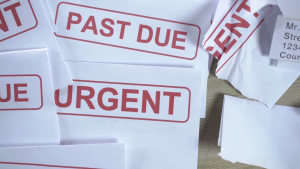 The graduate says he was initially told that funding for the fiscal year had been exhausted and that he should apply again the following year. He did exactly that, but says the responses stopped, leaving him to repeatedly call, email and message the department for an update.
On the Phone: Recent Graduate
“So I reapplied as just like they told me to, and nothing, not even a single answer. They did the same thing, delays after delays, and no answers, even after countless messages, countless emails, countless calls as well. It’s kinda like begging, you know? And I imagine that there are people that if you don’t insistently message, they don’t receive any kind of help, any at all.”
Students accept that funding is limited and delays can happen. What they won’t accept is silence as deadlines pass and debts grow. They want faster payments, timely updates and clear answers from government. We contacted the Ministry of Education for a response to the students’ concerns, but up to news time, we had not received one. Britney Gordon for News Five.
Attention readers: This online newscast is a direct transcript of our evening television broadcast. When speakers use Kriol, we have carefully rendered their words using a standard spelling system.
Watch the full newscast here: