



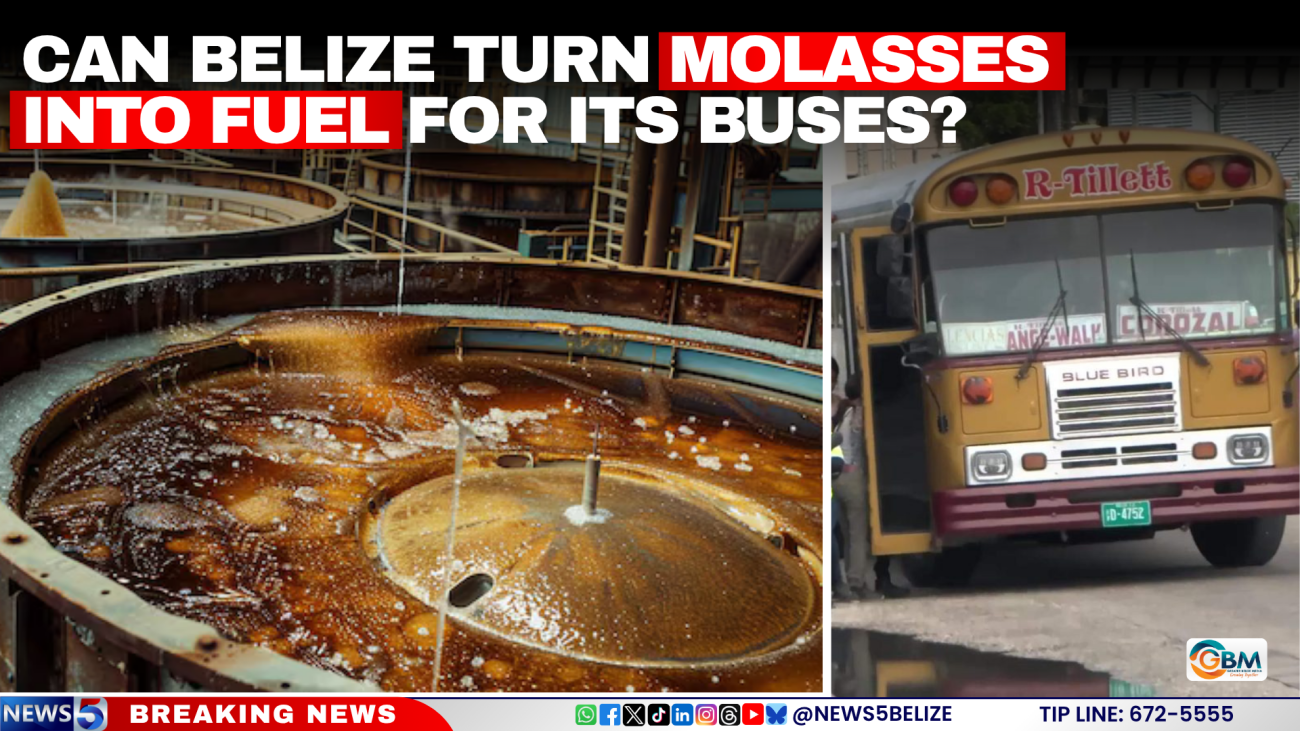
Can Belize Turn Molasses Into Fuel for Its Buses?
The Belize Bus Association (BBA) wants to introduce ethanol-powered buses as part of a public transportation overhaul, but Transport Minister Dr Louis Zabaneh says the proposal will need to be assessed to determine its feasibility and the investment required.
“I understand they’re talking about biofuels and so on in the north. So now we have to look at what’s really possible, what kind of investment will it take and so forth,” Zabaneh said.
He says the National Bus Company (NBC) underwent independent analysis before Government proceeded with the initiative, and similar assessments will be necessary to determine the viability of the BBA’s proposals.
The BBA’s plan centres on converting molasses from the sugar industry into ethanol to power buses, potentially creating a new market for a by-product of sugar production while reducing reliance on imported fuel.
Economist Rudolph Castillo says the association will first need to secure official government support to pursue funding for a feasibility study.
“A lot of the assumptions have already been proven. Like I say, ethanol is not nothing new. Converting molasses to ethanol has been done in Brazil, for example. I mean, that’s a major example,” Castillo said.
He says the feasibility study will focus on validating the market and determining the capital needed to attract investors.
The proposal would begin with a pilot involving two buses to test fuel consumption, performance and compatibility with different engines under Belize’s conditions. Castillo says the association hopes to eventually expand to 25 buses once the feasibility study is completed.
“So after everything works out in the feasibility, we do 25. The ethanol plant will start with that,” he said, explaining that production capacity would be expanded in stages as demand grows.
The BBA is considering a plant with an eventual production capacity of around 600,000 gallons of ethanol annually. Castillo says the modular approach would allow the plant to expand alongside the rollout of buses rather than requiring a large investment upfront.
The association is also proposing digital ticketing, online bookings and card payments, alongside the formation of a cooperative intended to help operators access better prices, financing and modernisation opportunities.