


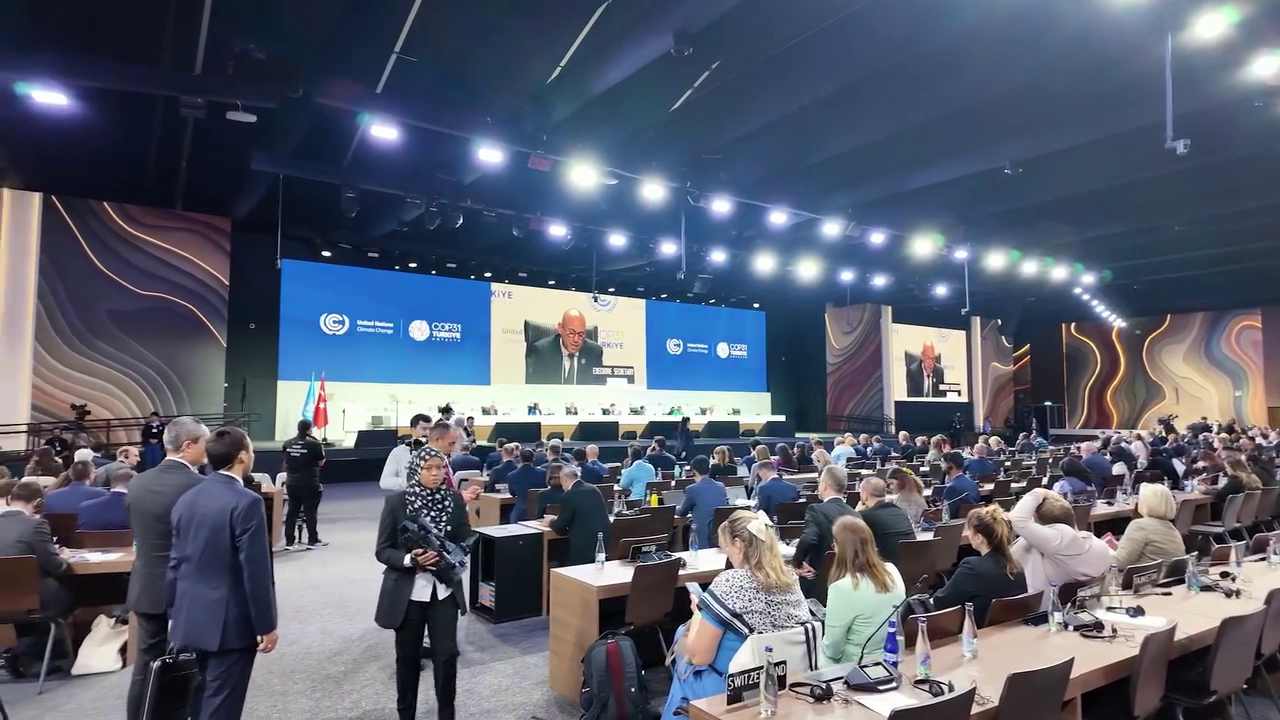
Belize Won’t Join COP31 Consensus: “It Would Move Us Away From the 1.5 Path”
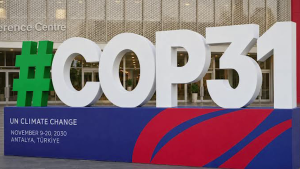
COP31 is over, but for Belize and the wider Caribbean, the hard part may be just beginning. The talks in Türkiye closed without the outcome vulnerable countries were fighting for, and Belize joined other small and vulnerable nations in refusing to join consensus on the final decision, which it said would move the world away from the 1.5 degree path. Belize says the text fell short on climate finance and on a transition away from fossil fuels, two things countries already living with rising seas, floods and storms cannot afford to lose. So with the conference behind us, what does this outcome mean for the Caribbean, and where does the fight for climate action go from here? Britney Gordon reports.
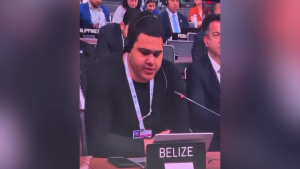
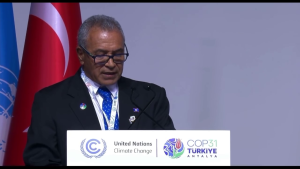
LTJG Ed’n Newfield
LTJG Ed’n Newfield, Belize Representative
“Belize regrets that despite all of our efforts, there has been unyielding views that could not be reconciled with our ultimate mission here. We have studied the cover decision carefully. It is our considered view that it would move us away from the one point five path. For these reasons, Belize cannot accept the cover decision, and it will not join consensus on it.”
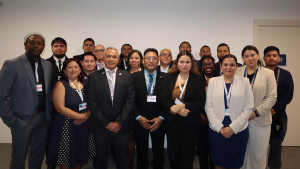 Britney Gordon, Reporting
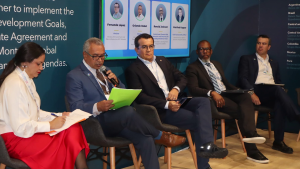
Belize walked away from COP31 without signing on to the conference’s final agreement. Representatives argued that the proposed outcome failed to match the urgency of a deepening climate crisis. Yet for a country already grappling with mounting climate-related losses, rejecting the deal was not a rejection of climate action itself, but a demand for stronger commitments and meaningful support from the world’s biggest polluters. Dr. Colin Young, Executive Director of the Caribbean Community Climate Change Centre, says negotiations collapsed because a group of fossil fuel-dependent countries resisted efforts to build upon climate commitments made at previous conferences.
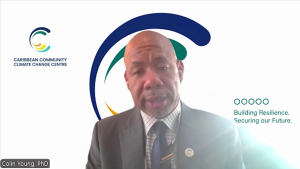
Colin Young
Dr. Colin Young, Executive Director, Caribbean Community Climate Change Center
“These countries are refusing to include any mention of transitioning away from fossil fuels. So it is a frustrating outcome, yes. But we see this as a betrayal of the commitments that were already made that by countries, those who are most responsible. So we didn’t get a text that reflected the urgency of the moment. We didn’t get a text that spoke quantitatively about the amount of money that countries were to provide to those of us who are most vulnerable.”
Belize entered COP31 with an urgent call for action. Representatives warned that the cost of climate inaction could leave Belize facing hundreds of millions of dollars in flood-related losses while placing lives and future development at risk.
Orlando Habet
Orlando Habet, Minister of Sustainable Development & Climate Change
“We therefore call on developed countries to increase the trajectory of their adaptation finance commitments so that the goal of tripling adaptation finance is fully achieved. Science must guide this effort. Belize calls for all three IPCC working group reports to be available by 2028 to inform the second global stock take. The most vulnerable cannot afford delayed science or delayed action.”
 A major point of contention at COP31 was the language in the proposed decision text. Belize and other vulnerable nations opposed efforts to weaken references to previous commitments, particularly the transition away from fossil fuels and the scaling up of climate finance.
 Dr. Colin Young
“One of the critical issues was this idea of tripling adaptation finance. But Britney, if you’re going to triple something, it means you have to know the baseline, right? Because if you have a baseline, then you can triple it, and in this case, the 2025 baseline is widely regarded as about forty billion per year that countries, developed countries were to provide to developing countries, which meant that if you triple that, you should be then providing about one hundred and twenty billion US dollars per year. Unfortunately, we had groups of countries, including, for example, the EU, who refused to get the issue of a baseline in any decision text.”
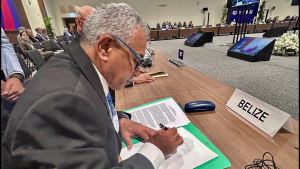 So, with negations falling apart and climate experts warning that the world is now on track to exceed the 1.5-degree Celsius warming target. So, what’s next for Belize and other vulnerable nations? At COP31, Belize advanced regional climate initiatives by supporting new carbon and biodiversity investment opportunities and become the first Caribbean nation to sign the Ambition on Melting Ice Declaration. The declaration reinforces its commitment to stronger climate action and efforts to address rising sea levels and other climate threats.
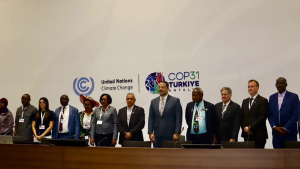 Orlando Habet
“Belize remains fully committed to implementing the Paris Agreement. The gap between ambition and delivery must not become a permanent burden on the most vulnerable. Judge this conference not by pledges announced, but by protection delivered by and for 1.5, for justice, and for our people.”
Despite the outcome of COP31, Belize and its regional partners say they will continue pursuing climate adaptation efforts at home while pushing for stronger global and greater accountability from major polluting nations. Britney Gordon for News Five.
Attention readers: This online newscast is a direct transcript of our evening television broadcast. When speakers use Kriol, we have carefully rendered their words using a standard spelling system.
Watch the full newscast here: