


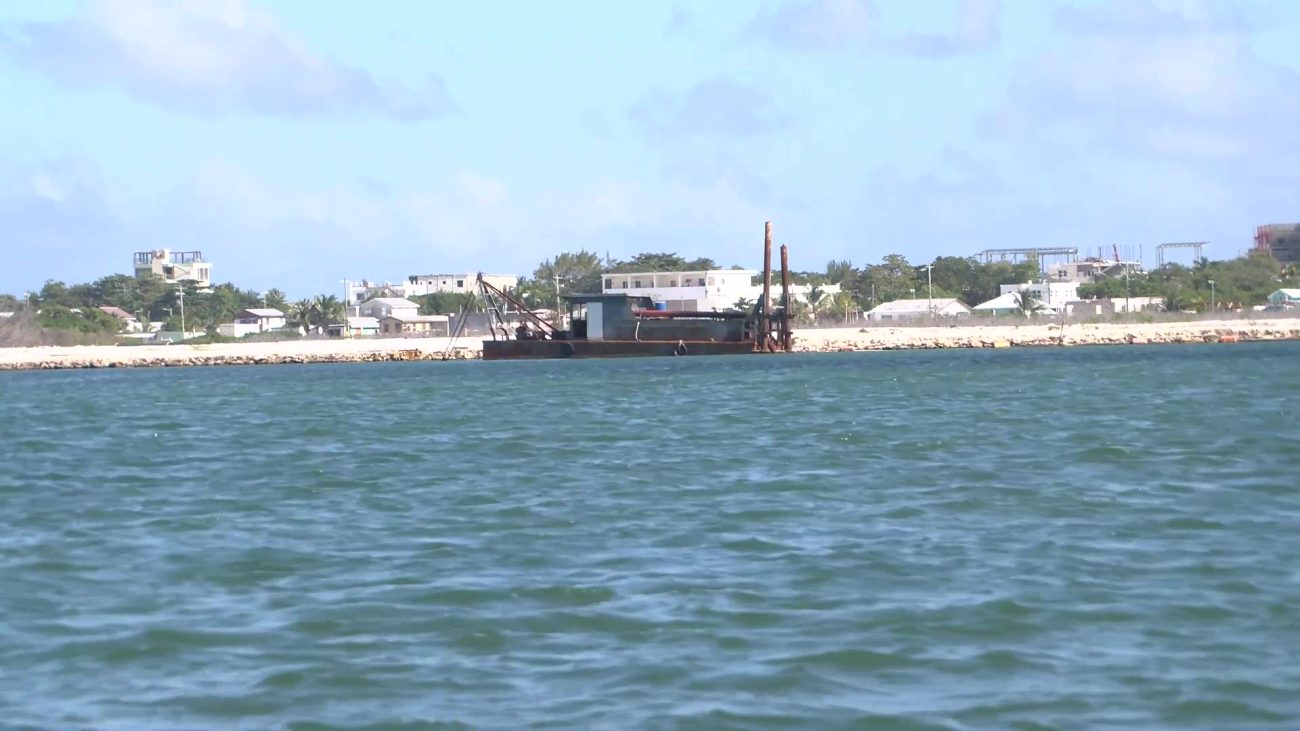
Zetina Flags Risks as Perez Defends Dredging
Dredging on Ambergris Caye is kicking up more than sand tonight, it’s stirring concerns about the island’s future. During our visit last week, UDP caretaker Gabriel Zetina pointed us to several active dredging sites, warning that the work is reshaping the marine environment and putting wildlife at risk. He’s questioning whether Area Representative Andre Perez is keeping a close enough eye on these operations to protect the industries the island depends on. But when we asked Perez about one major project we toured, he pushed back, saying the dredging is actually bringing benefits to the community.
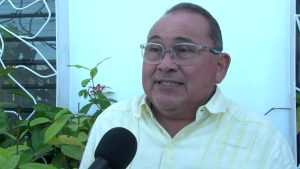
Andre Perez
Andre Perez, Area Representative, Belize Rural South
“Listen, that project has been ongoing and they have gotten their clean licenses and everything. As per law, they got their license working along with the town council because they did get sand from, the council got sand from the company. But it’s legitimate, done their studies and I think by now they’re about to be wrapping up. It’s an area that is privately owned. It is not government owned land that was acquired by anyone. Those lands have been privately owned and the private owners bought it and they did their work by dredging that specific area that actually was shallow. That eventually many boats there, especially water taxis, were having trouble. So basically, they were just clearing an area that is traversed by many vessels. So really and truly, I do not see in any way that that should be any problems, but rather opening up the channel for more vessels to be able to move there. Because the waters over there are very shallow. So it has its pros and cons, but in the end, that channel has been cleared up.”
Paul Lopez
“Can you divulge what their plans are?”
Andre Perez
“I have no idea. I think that is something that is going to be a development for housing or condos, whatever. I have no idea, but it’s private. So they decide what they want to do it.”
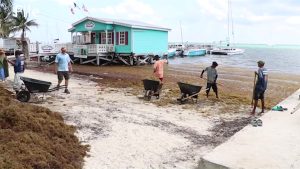 Dredging Debate Deepens Just as Sargassum Surges Ashore
Even as he defends the project and the clearing of shallow channels for marine traffic, Perez is also facing another challenge along Belize’s coastline: the early arrival of sargassum. With coastal communities already seeing mats of seaweed drift ashore, the Ministry of Blue Economy is scrambling to deploy barriers, equipment, and long‑term strategies to repurpose the invasive biomass, underscoring the mounting pressures on Belize’s marine environment from multiple fronts.
Andre Perez
Andre Perez, Minister of Blue Economy
“You know, it’s always concerning, but we have been preparing especially. I did mention also when we had the Open Your Eyes show is that we’re planning out as a Sargassum task force about getting the funding. The barriers are going to be installed. We’re getting beach rigs, especially for Placencia. You know, it’s from all angles we’re going to be working. And of course, we have to get those up and running because they’re being serviced right now. The harvesters, we are going to be getting equipment to receive the machinery to put in place. So it’s all hands on deck. It’s going to be a constant battle, but it’s not something that we’re sitting on our laurels, but we are planning that as the Sargassum season comes in, we are prepared for it.”
Paul Lopez
“But realistically, how much people can you help? I mean, it appears as if given the amount of Sargassum, you and your team will be overwhelmed.”
Andre Perez
“We will, but it doesn’t mean… Well, that is where we have to talk about long-term plans, whereby we are engaging with companies who will be able to come in and convert that material into energy. That is also a long term process, but it’s also in discussions as to get the Sargassum and at the same time trash to convert into energy. And that is something that is going to be a long term project. It doesn’t happen overnight, but it’s something that Sargassum is here to stay with us. So we need to work along with it. We don’t have the answers this year, but certainly in the next three, four or five years, there’s going to be a plan that we are able to harness the Sargassum and trash to turn it into energy, waste energy.”
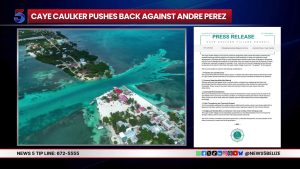 Caye Caulker Village Council Blocks Controversial Sand Trade
What started as a routine update on Caye Caulker’s road woes has now sparked a full‑blown public rejection of Area Representative Andre Perez. Last week, Perez told News Five that one idea on the table is a swap: send white marl from Ambergris Caye to Caye Caulker in exchange for sand, a resource the island has in short supply. But tonight, the Caye Caulker Village Council is shutting the door on that proposal. Council leaders say Caye Caulker’s sand isn’t up for trade; it’s a limited natural asset they want protected for residents and future development. They also argue San Pedro’s struggles with white marl are a red flag, pointing out that when the weather turns wet, those marl‑filled roads turn to mush and become nearly useless. And there’s more. The Council says any dredging tied to this exchange could harm fishermen who rely on nearby traditional fishing grounds. They insist no agreement was ever reached, despite discussions with Perez, and residents echoed that stance at a recent public meeting. Tonight, the Village Council is drawing a clear line: protect the island’s resources, put the community first, and leave Caye Caulker’s sand where it is, and they’re calling on the Area Representative to respect that decision.
Attention readers: This online newscast is a direct transcript of our evening television broadcast. When speakers use Kriol, we have carefully rendered their words using a standard spelling system.
Watch the full newscast here: