


Is This the Future of San Pedro’s Beaches?
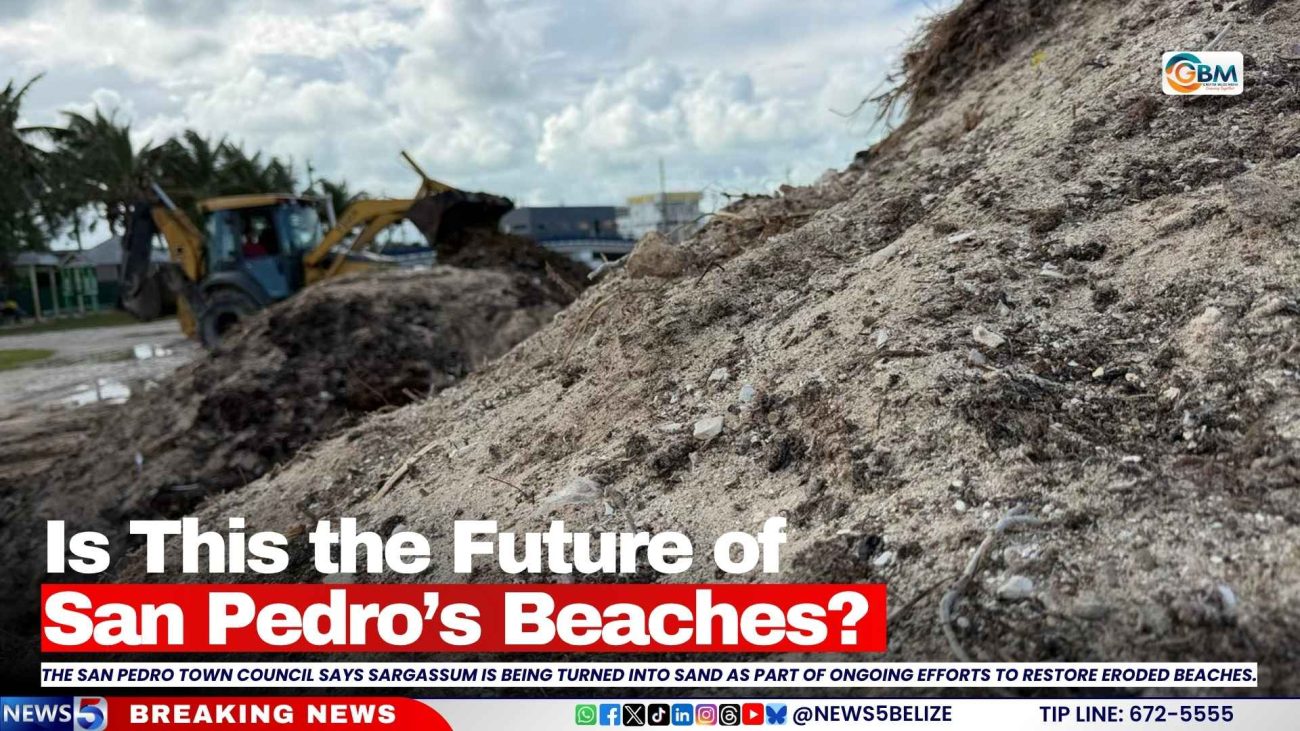
The San Pedro Town Council says sargassum is being filtered for sand as part of ongoing efforts to restore eroded beaches.
The council explained that the material is left to break down naturally using sun exposure and periodic mixing, a method that they say has already been used successfully over the past two years to restore “sizable sections of beach.”
The initiative now falls under the council’s Beach Management Unit as part of a larger, long-term beach nourishment strategy.
Residents and visitors are being urged not to dump trash, coconuts, or other debris into the piles, as it slows the conversion process and affects the quality of the results. “It may not look pretty right now, but it works,” the post noted.
The council says these sites will be visible in several areas around town as the work continues.
As a response to the impact of sargassum on Belize, a Sargassum Task Force was created to minimise the effects.
Sargassum is a brown seaweed that floats in large clumps and produces a strong odour when it washes ashore. While it supports marine life at sea, excessive buildup on beaches has negatively affected Belize’s tourism industry.
The origin of the seaweed is still being studied. While it was first believed to come from the Sargasso Sea in the North Atlantic after it appeared in the Caribbean in 2011, a stronger outbreak in 2015 suggested otherwise. According to Science Magazine, satellite images showed massive blooms forming off the coast of Brazil and stretching toward Africa before ocean currents carried them into the Caribbean. Scientists are still researching the exact cause of this rapid growth.