



Women’s Health: Contraceptive Access Caught in Policy Crossfire
Tonight, a policy change from the Ministry of Health and Wellness is putting women’s health and access to medication at the center of a national debate. New regulations now require prescriptions for drugs once sold over the counter, including contraceptives, a move officials say protects public safety, but critics warn could reverse decades of progress in reproductive rights. News Five’s Shane Williams reports on why many are sounding the alarm.
 Shane Williams Reporting…
A move meant to tighten control over medication use is now touching off a wider social debate about access to healthcare and reproductive rights. The Ministry of Health’s plan to require prescriptions for certain medicines, including contraceptives, is raising concern among advocates who say it could make family planning even harder, especially for women already facing barriers. For the Belize Family Life Association, the country’s leading family planning agency, the moment feels all too familiar, and it’s prompting renewed concern about hard‑won progress.
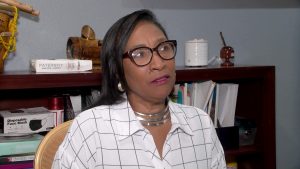
Joan Burke
Joan Burke, Executive Director, BFLA
“I reflect on the existence of BFLA and how BFLA came about in 1985 and it was basically to respond to the issue of adolescent pregnancy. And now forty years later for us to be faced with a situation where we can find some girls and young women and either or and as well as older women find themselves in a similar position, and maybe even worse. Having access to contraceptives, easy access is a part of empowerment. And giving individuals, especially young girls and women the opportunity to make decisions and to maintain that level of autonomy over their bodies.”
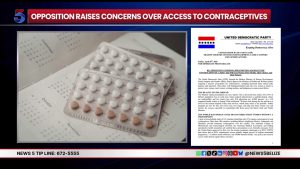
The Opposition argues that the policy misses the reality on the ground. With more than half of Belize’s population living in rural areas, access to doctors is already limited.

Earth Lopez
Earth Lopez, UDP Shadow Minister, Human Development & Gender Affairs
“We believe that as women, we all want to have the right to choose – freedom of choice. And as women of Belize we all want to feel safe. And a part of being safe is for us to have the autonomy over our body, for us to be able to choose when we want to have children and with whom. And for a Belize City woman who has her doctor scheduled appointment yearly, she has transportation set, this new policy position might be an inconvenience for her. But for a rural woman in Belize, a woman who doesn’t have a set job, for the woman who may be living in domestic violence situation, this new policy of the government is actually going to stop them. It’s actually gonna prevent them from accessing contraceptives, which is very important for her safety.”
On this issue, the Prime Minister agrees with the Opposition, warning that while drug misuse must be addressed, a one-size-fits-all policy may not work for Belize.
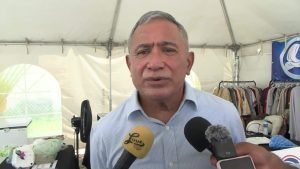
Prime Minister John Briceño
Prime Minister John Briceño
“Now Belize, coming to Belize now. I do agree that we just can’t follow that a develop country does. We need to be able to make adjustment to our needs. On the issue of birth control, of course you know I get it last night. When Rosanna saw it she was like, weh wrong with you all? When it comes to contraceptives because it is important to make this easy for women to avoid unwanted pregnancies and I agree with her. We need to sit down with the Ministry of Health to talk about it and see how best we can navigate around.”
 Burke says the consequences of inaction could be severe. For many women, a prescription doesn’t just mean a doctor’s visit it means time off work, travel and added cost.
Joan Burke
“I can see an increase in adolescent and teenage pregnancy. I can see an increase in maternal death. I can see an increase in deaths due to unsafe and clandestine abortion. And so that’s my reaction. I know it’s quite a bit, but ever since I heard of this decision I’m having sleepless nights because I can’t just see more and more women and girls – more women and young girls being affected by this decision. I also think about the women who are in rural communities who won’t have any access at all. And some women, we know that women, even today in 2026, they are in relationships of power and control and to get a seventy seventy-five dollars for a doctor’s consultation to basically get a packet pill that is maybe ten dollars. So what used to cost that woman could very well be eighty-five dollars.”
The Ministry of Health has not yet indicated whether exemptions for contraceptives and medications for other chronic diseases will be considered and plans to hold a press conference on matter to provide clarity on the new regulations but tonight, calls for more consultation and reconsideration are growing louder. Shane Williams for News Five.
Attention readers: This online newscast is a direct transcript of our evening television broadcast. When speakers use Kriol, we have carefully rendered their words using a standard spelling system.
Watch the full newscast here: