


Garifuna Communities Fighting to Preserve Ownership of Traditional Lands
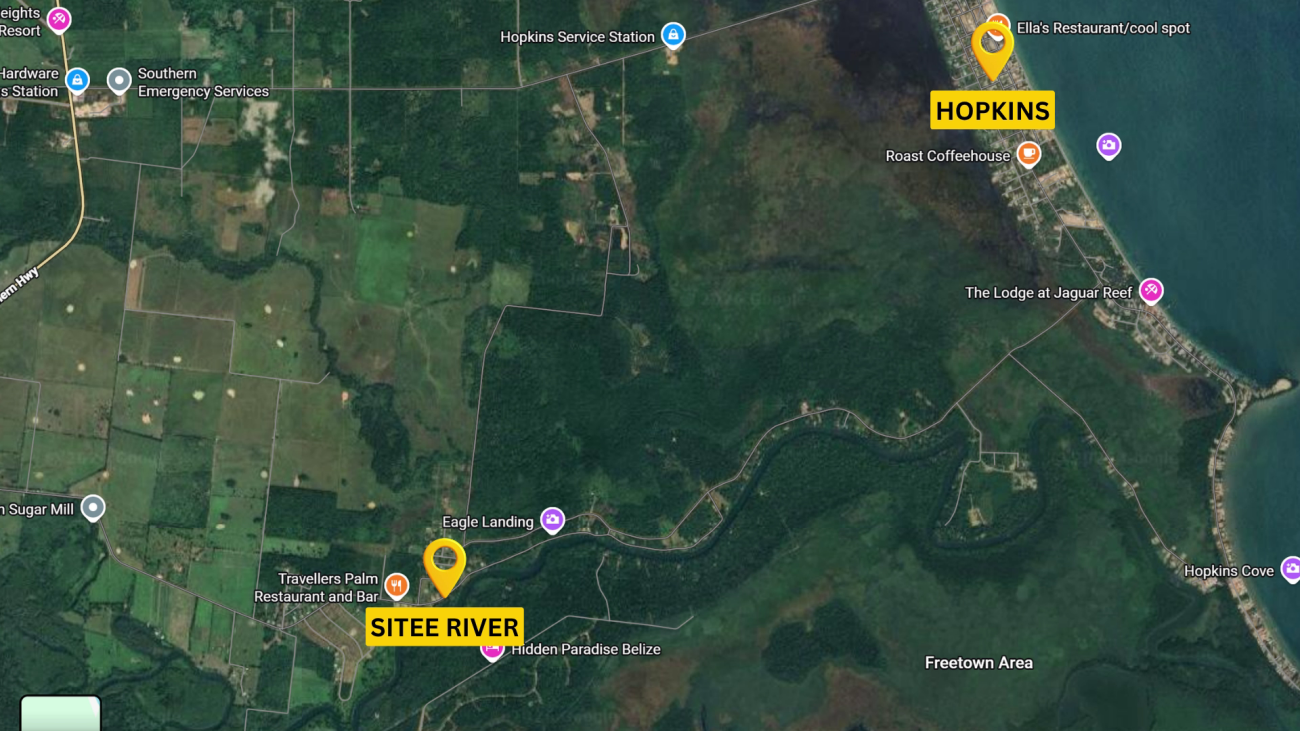
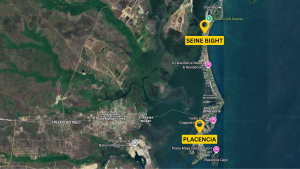
A technical effort to draw boundary lines is quickly turning into a debate over identity, land, and who gets to decide the future of Belize’s southern coast. The government has moved to define village boundaries along the Placencia Peninsula, appointing an independent commission to settle long-standing questions between communities like Sittee River and Hopkins, and Placencia and Seine Bight. But for the National Garifuna Council, this is about far more than maps. They warn that the exercise comes at a time when traditional Garifuna lands are increasingly slipping into foreign hands, raising fears about displacement and the erosion of cultural heritage. Now, what seemed like routine boundary work is sparking deeper concerns about Indigenous rights and ownership in one of Belize’s most rapidly changing regions.
 Shane Williams, Reporting
What happens when the traditional lands of Indigenous communities become prime investment opportunities? That concern is now closely tied to a government-led push to formally define village boundaries between Hopkins and Sittee River, and Placencia and Seine Bight.
Clifford King
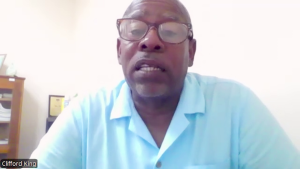
Clifford King, Director of Local Government, Ministry of Rural Transformation
“The commission began its work in October of last year and is anticipating to complete the work by August or September of this year. And the commission’s job, Shane, is to make some logical recommendations to the minister about the recommendation to delineate the space between these two villages.”
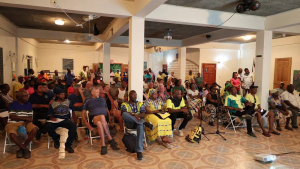
The commission includes representatives from Elections and Boundaries, Natural Resources, the Attorney General’s Ministry, the National Association of Village Councils, the judiciary and the private sector. Consultations have already taken place, and stakeholders are now being asked to submit their final input. But the National Garifuna Council insists the issue goes far beyond local governance.
Ifasina Efunyemi
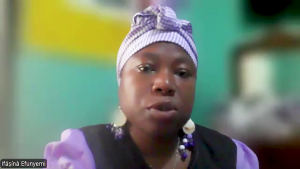
Ifasina Efunyemi, Assistant Treasurer, National Garifuna Council
“What is happening to us here in Belize is what has happened to Garifuna going Honduras, still happening to Garifuna going Honduras, and also in Guatemala. Wherever we have occupied. As Indigenous peoples and Afro descendants alike, our relationship with the environment is such that we behave as stewards of the land and marine resources where we occupy. Our relationship with the environment is a respectful one, not an exploitative one. And we certainly do not exploit it to the extent that we destroy the environment. And here come people now claiming… After we have been stewards of these lands, and we have been stewards of these lands since before 1800.”
For them, the issue is tied directly to the protection of traditional Garifuna territories at a time when coastal development continues to intensify.
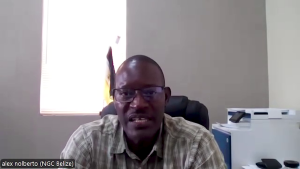
Alex Nolberto
Alex Nolberto, President, National Garifuna Council
“What I see happening is that they are trying to separate the issues of the territorial, traditional Garifuna territory and this village boundary conversation, and I don’t see how you can separate the two, right? They are one and the same in my view, and hence the reason why now this fight has to be elevated to address Garifuna territory, to look at traditional Garifuna spaces and to protect them. So this has gone beyond a village boundary, in my view, and now it’s time to take the gloves off and deal with this situation with the greatest of surgical precision and holistically once and for all.”
Government officials acknowledge that communal land rights and village boundaries are connected discussions but maintain that they are distinct matters requiring separate consideration.
 Clifford King
“The matter of village boundaries i- is in regards to the jurisdiction for a village council. The matter of communal land is an issue that is now being taken up by the indigenous people of Belize which is a related matter, as I’m saying, but it is a different matter. But again, these are kinds of things that I think the commission will certainly want to understand how they intersect, where they intersect, if they intersect.”
As the commission races to finish its work, the stakes go beyond drawing lines on a map. For many Garifuna residents, the final decision could shape how they protect their identity and hold on to land increasingly under pressure from development. Shane Williams for News Five.
Attention readers: This online newscast is a direct transcript of our evening television broadcast. When speakers use Kriol, we have carefully rendered their words using a standard spelling system.
Watch the full newscast here: