



Belize Explores “Data Embassies” for Digital Security
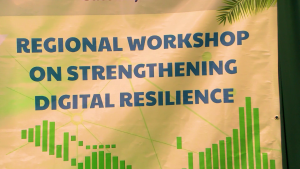
As storms, cyber threats, and system failures become real risks, leaders are rethinking how to protect the country’s most valuable asset, its data. This week, Belize is hosting regional experts and policymakers for a high-level workshop focused on digital resilience and a cutting-edge concept known as “data embassies.” The idea is simple but powerful: store critical government information safely beyond national borders so it remains secure even in the face of disasters. It’s a new frontier in national security, and one that officials say could safeguard Belize’s digital backbone for the future. News Five’s Shane Williams reports.
 Shane Williams Reporting…
Governments are moving their most critical records online, but what happens when disaster strikes? That question is driving a regional workshop in Belize focused on digital resilience and “data embassies.” The concept: store secure copies of vital data, like birth records, land titles, and IDs, in another country, while keeping full control. It’s a bold plan to protect essential information from hurricanes, cyberattacks, and system failures.
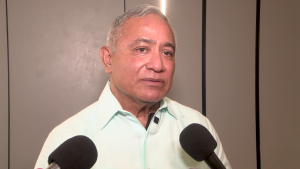
Prime Minister John Briceño
Prime Minister John Briceño
“And data embassies is simply like an extension of your embassy that you have in a different country, which is considered your own space as a country, almost like for instance, the embassy in Belize in Washington. That’s ours and the laws do not apply to that space. And so we are finding more and more now that everything is based with data, and there are constant threats: violence, you have wars, you have hurricanes for instance in the region, earthquakes and cyber attacks. And so the idea is just for us to be able to look at different countries and say okay, I’m going to leave my data let’s say in Barbados or in St. Kitts. And then all of a copy of my data is stored in that country. And now that belongs to Belize is governed by Belizean law, is going to be Belize, Belizean jurisdiction.”
 For Belize, officials say the country may already have a head start. Chief Executive Officer in the Ministry of E-Governance, Jose Urbina, says legislation passed several years ago laid the groundwork for the possibility of storing government data beyond Belize’s borders.

Jose Urbina
Jose Urbina, Chief Executive Officer, Ministry of E-Governance
“I also strongly believe that the legislative foundation that Belize has by launching a suite of legislations in late 2021 was key and fundamental to where we are today. And when we link data embassies with the National Digital Agenda and the legislation we already have in place is very – I couldn’t tell then that the legislation was so future-thinking in that the legislation allows for Belize to do data sharing across borders and does not limit data within the government of Belize to reside within the government of Belize.”
Success will rely on regional interest and buy-in from governments that are at different stages of their own digital transformation journeys. In the Turks and Caicos Islands, Minister of Innovation, Technology and Energy Erwin Jay Saunders says his country is still strengthening the legal protections needed to support modern digital systems.
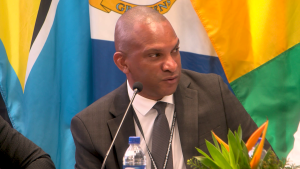
Erwin Jay Saunders
Erwin Jay Saunders, Minister of Innovation, Technology & Energy, Turks & Caicos
“Now we’re bringing together a suite of legislation to around a number of things, including the main one for us is the data protection legislation because we’re about four years into rolling out our national ID and we’re like well down the road but a lot of it requires new legislation. So we’re, just about ready to go. We don’t have some of the legislation relating to data sharing. And I’m certainly glad, happy that I came here, that this came up because most of our focus has been on data protection.”
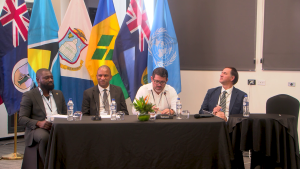 But while the concept offers security and continuity, it also raises important questions about sovereignty and trust. Grenada’s Minister of Information and Communication Technology, Ron Redhead, says governments must ensure that even when data is housed abroad, ownership and access remain firmly under national control.

Ron Redhead
Ron Redhead, Minister of Information and Communication Technology, Grenada
“ We do also have data protection legislation and it’s more so now a conversation in relation to data embassies in terms of how can we even protect the country from companies who would obviously have the capacity to set up our data embassies from withholding it, in a sense, from the host country and the question of data sovereignty. So it is similar with the concern of the average Grenadian where when you take my data, what happens to it? am I protected only based on legislation?”
The workshop aims to help Caribbean nations safeguard critical data and keep essential services running during crises. For small, vulnerable states, digital resilience isn’t a future goal, it’s fast becoming a national security priority. Shane Williams for News Five.
Attention readers: This online newscast is a direct transcript of our evening television broadcast. When speakers use Kriol, we have carefully rendered their words using a standard spelling system.
Watch the full newscast here: