


Are Government Invoices Being Split to Dodge Scrutiny?
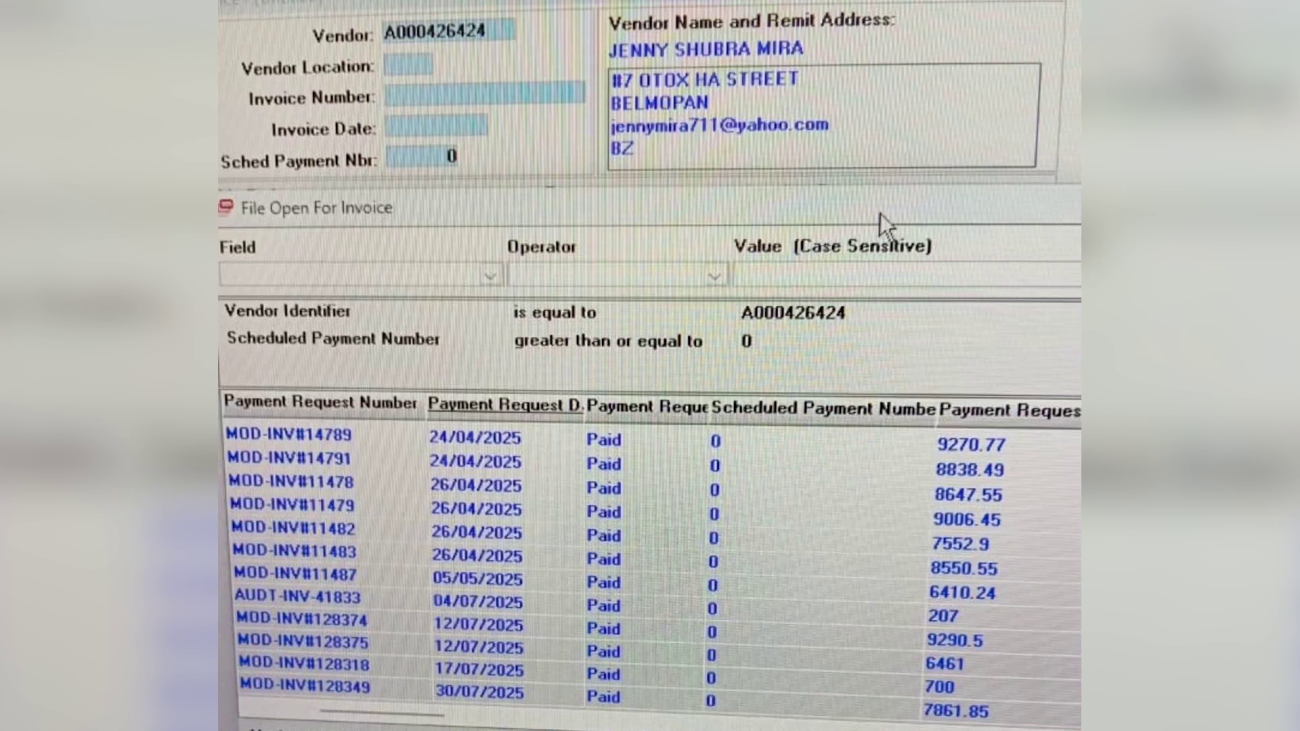
Buried in dozens of payment records to supplier Jenny Mira is what appears to be a deliberate effort to keep invoices just under ten thousand dollars, right below the threshold that would trigger tighter government oversight. For those familiar with public finance, that limit is key. Once you cross it, spending faces additional scrutiny from the Ministry of Finance and other watchdogs. So, is this a coincidence or a calculated move to dodge the system? We put that question directly to Ministry of Defense CEO Francis Usher and Minister of Transport Dr. Louis Zabaneh, asking if this practice amounts to sidestepping the very checks meant to ensure accountability.
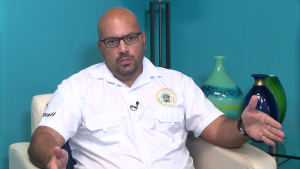
Francis Usher
Francis Usher, Chief Executive Officer, Ministry of National Defense and Border Security
“I became a CEO in March of last year, there has never been a time where I’ve gone to a supplier and said, “Hey, um, I know this chair costs $20,000, but break it up into two quotations of $10,000 or, or of less than $10,000.” I’ve never done that Um, I saw the allegation or the insinuation last night of a, um… I think it was one. First, there was an invoice of eighteen thousand, and then it was canceled, and it was broken back down into nine and nine. Um, that was before my time. I can’t quite, um, answer why that would have happened. I do know that there are thresholds, uh, within the financial system. Below ten thousand dollars is discretionary spending within the ministries. So typically, the account section of each ministry can click the button for the final payment. When they click Approve, the money is deposited. Um, after, I think from ten to fifty thousand dollars, it goes over to the Ministry of Finance and Treasury for fur-further approval, and after fifty thousand doll– for a local contract, I mean. And then after fifty thousand dollars, it has to go to the contractor general for her to, to give her stamp of approval. I think I can only speculate. I, I can say firstly that it has not happened in my time.”

Louis Zabaneh
Dr. Louis Zabaneh, Minister of Transportation
“I can only speak of things that, that are in my ministry and that I am aware of. We, we operate according to what the regulations are. And in fact, the team that’s being built at the NBC, I can tell you, we have made it very clear to them that besides competence, which is very important, integrity is critical. I hope you, you, you record this and you put this there. People know who they’re talking to when they’re talking with me, right? I have my standards that I’ve maintained before I came out, uh, came into government, and by the grace of God, we will maintain them until we finish our service to our people. That’s how I operate, and I believe and I hope that all my colleagues operate the same way because that’s why we, we came. We were brought into government, uh, because people have confidence in us that we will do the right thing. And that’s not hard to do if you just go to work and know that you’re serving people.”
Usher says the practice is less a reflection on government ministries and public officials than the crafty maneuvers of vendors who have learned how to streamline their payment for services provided.
Attention readers: This online newscast is a direct transcript of our evening television broadcast. When speakers use Kriol, we have carefully rendered their words using a standard spelling system.
Watch the full newscast here: