


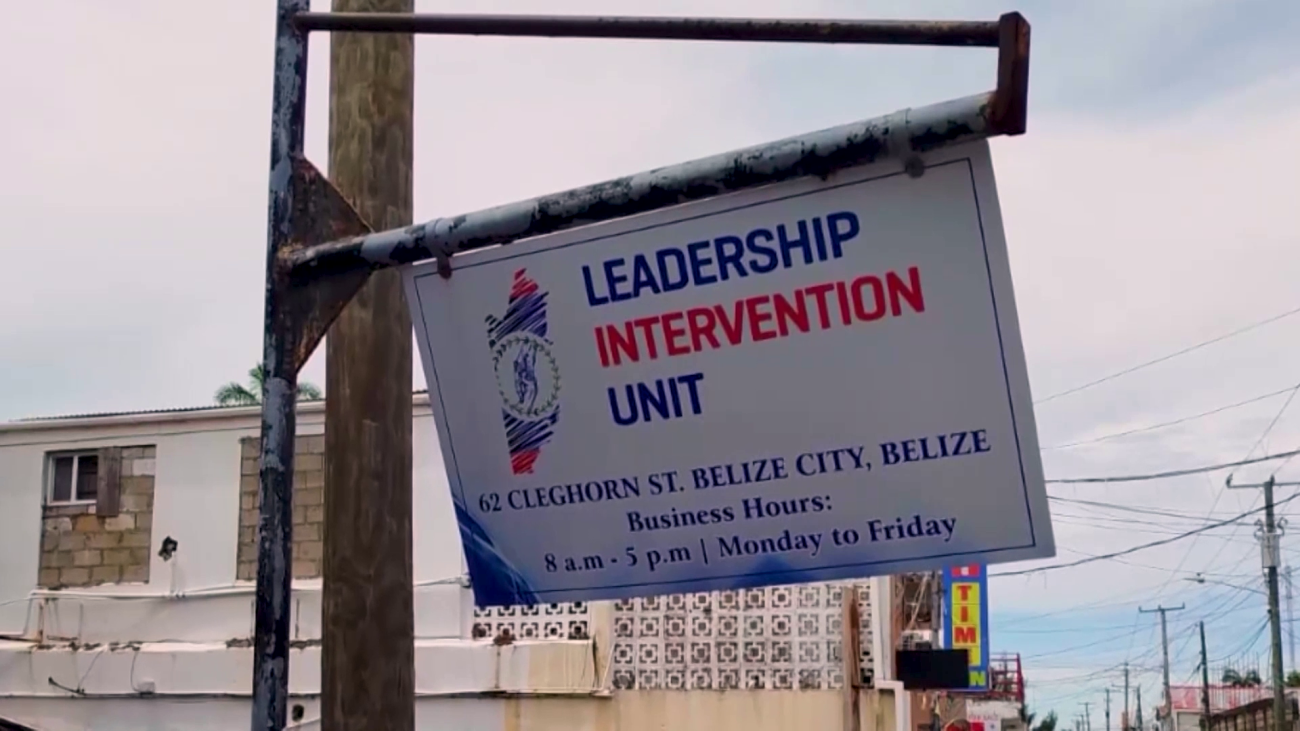
Future of LIU Unclear as Pressure Builds for Measurable Results
With the Leadership Intervention Unit now on pause, questions are swirling about its future and whether it can justify the public funds it has received. The pressure intensified after Home Affairs Minister Oscar Mira made it clear he won’t support continued spending without measurable results. Today, we sat down with Acting LIU Director Andrew Dawson, who pushed back on that stance and offered his take on the program’s impact and what could come next. Here is what he had to say.
Andrew Dawson
Andrew Dawson, Acting Director, Leadership Intervention Unit
“I really believe, I don’t think the Minister’s position would have been not having accountability. I would believe that we have structures in place that speaks to accountability. One of the reasons why the program switched to a Digi Wallet payment was that previously we were using a check system that had some loopholes created and we transitioned to a system that has more oversight and accountability. We can argue there is always room for improvement. I do think there is a system or structure that does not need some type of improvement or constant reassessment. And there was room for improvement when it comes to the work program. Accountability is something we tried to strive for, but as my minister mentioned there was a lot of things we wanted to ensure was corrected before we try to move forward. I just believe it is being misinterpreted. I am an advocate for social intervention and changing the livelihood of these individuals. It is bigger than a work program or paying people to “hold it down”. It is to impact or affect change with the livelihood of these individuals or their mindsets and while we do that we have to have some type of cushion for these individuals who are unable to traverse and get employment.”
Andrew Dawson Warns of Financial Gap After LIU Pause
And Dawson is pushing back against claims that the LIU work program was established to pay gang members to keep the peace. Dawson further argues that not all members of the work program were considered gang members. He spoke about the financial void created by the absence of the work program.
Andrew Dawson
Andrew Dawson, Acting Director, Leadership Intervention Unit
“It does create some type of void, because the financial strain is there for these individuals. Cost of living is high. No matter how they obtained the money, it is money that goes into their households. So there is a void when that money is paused. How it contributes to crime, I can’t speak to that. I don’t believe there is any intentions for these people who benefited from these programs to go and cause any crime. Who would not feel a way if you expect that finance to come in and it does not come in anymore; you have to find a way to fill that gap. It does create some issues, because not all these individuals are employable or able to walk and got to a call center and next workplace and say I want to be employed. We have other issues, barriers, the education level, criminal record, a lot of barriers for them to infused back into the normal working environment. So, it does create some tension as it relates to these individuals not knowing where the other meal comes from. But that is where the LIU comes in. we are trying to look at other alternatives and ways we can create some income generating programs where these persons are being paid to say, just hold it down. And that has never been the case, let me put it on record. We have never had an intention to say we are paying people to hold it down. It was a social protection program.”
Dawson says the LIU is looking at new ways to engage its members and generate meaningful income for their families.
Attention readers: This online newscast is a direct transcript of our evening television broadcast. When speakers use Kriol, we have carefully rendered their words using a standard spelling system.
Watch the full newscast here: